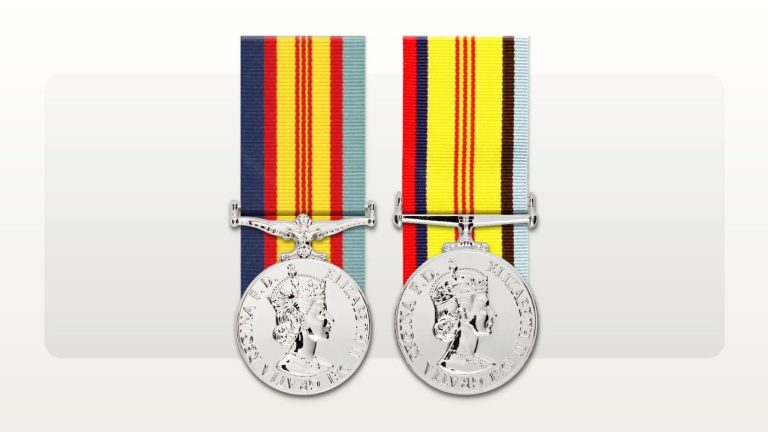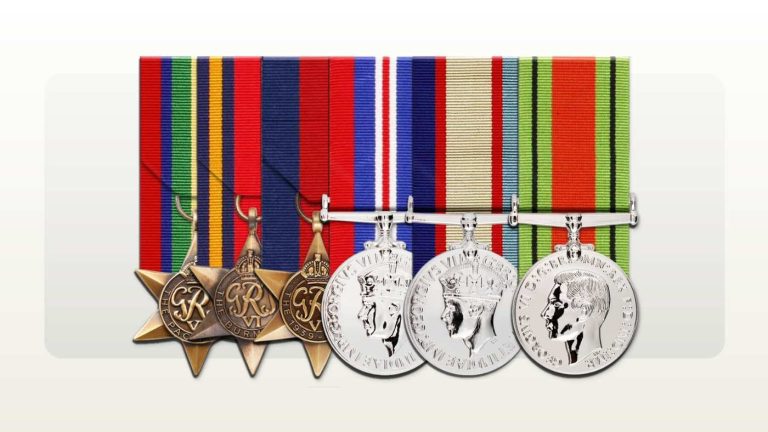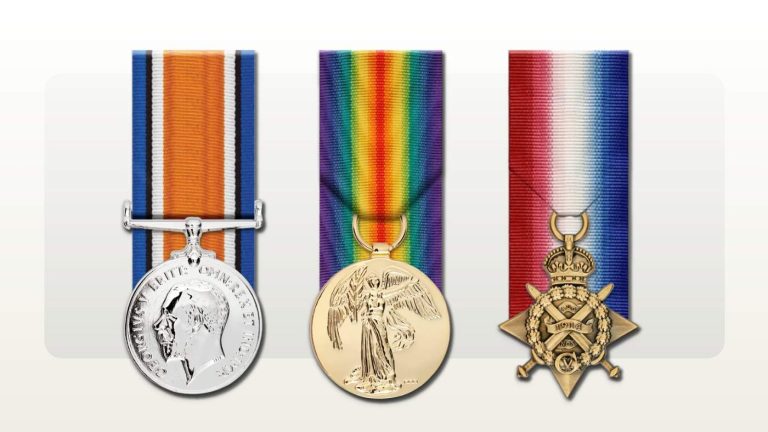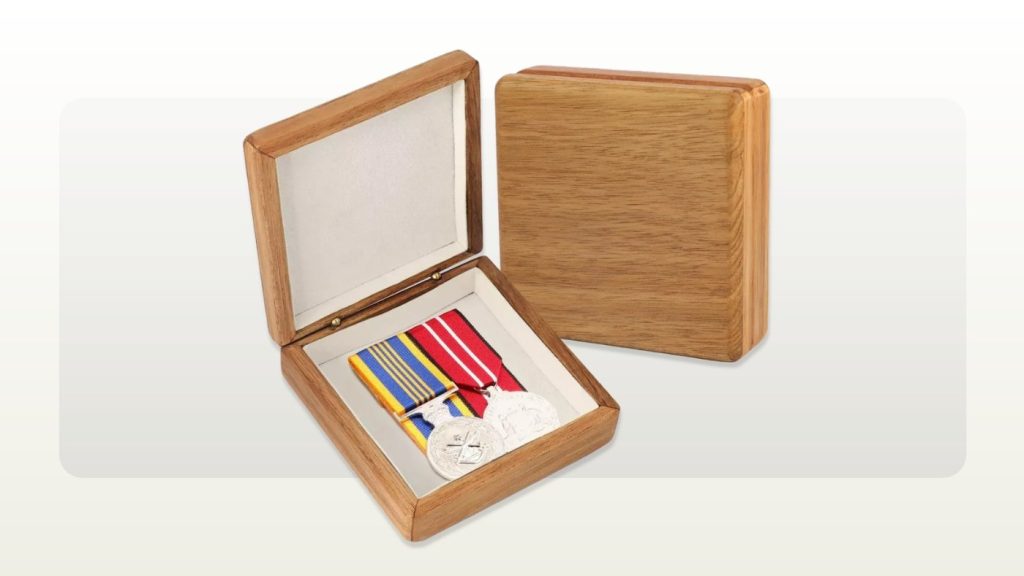
Many families carry a story about a medal that nobody can find. A grandmother remembers "the bravery medal", an uncle says a clasp was never sent, or a parent always said the service "should have earned something". Unissued medal family research starts by writing that story down as a claim to be tested, not a fact, and keeping it separate from the awards your documents already confirm.[1][4]
This guide shows how to record the claim, check it, apply to Defence where an award may be unissued, and plan a medal rack that shows only what you can stand behind.
Rack Builder arranges the awards you select in the correct order of wear, but it does not determine entitlement; the customer remains responsible for checking the recipient's official award record.[8][9]
Why a family story is not the same as an entitlement
Entitlement belongs to the original member and is decided by Defence or the relevant awarding authority, not by family memory or a retailer. Defence's fact sheet on unissued awards explains that entitlement belongs only to the original member, so unissued awards are granted to an approved claimant "as a gesture of respect" to the deceased member.[6]
Stories change as they are retold, and records are not always complete either. The National Archives notes that service records may not include information about which service medals a person was entitled to.[4] Treat the story as a lead that tells you where to look.
Step 1: Write the story down exactly as it was told
Before you search anything, record the claim in plain words and keep the original wording.
- Who told the story, and when
- The exact words used, for example "a medal for Borneo" or "a bravery award"
- Which conflict, operation or period it relates to
- Whether anyone has seen the medal, a photo of it, a certificate or a letter
- What the family believes happened to it: never issued, lost, given away or held by another relative
This record stops a guess turning into a fact as the project moves along.
Step 2: Separate what you know from what you have been told
Give every item in the medal list a status. A simple four-level scale works well.
| Status | What it means | What you can do with it |
|---|---|---|
| Confirmed and held | The medal is in the family's possession, or an official document confirms issue | Include it in the rack |
| Confirmed, not yet issued | An official source confirms the entitlement but the medal was never sent | Apply to Defence; plan the rack around it |
| Possible | A record mentions it, or a strong family source, but no confirmation yet | Hold it out of the rack until confirmed |
| Unverified story | Family memory only | Record it; do not mount it |
Write the source beside each status, for example "service record, page 3" or "letter from Defence dated [date]". Our guide to what awarded, issued and approved to wear mean explains why these labels matter before you order.
Step 3: Check the records that can confirm or rule it out
Start with the official sources that hold the evidence.
- Service records. The National Archives of Australia holds Army, Navy and Air Force service records, including First and Second World War records. First World War Army and Navy records are available online, and some Second World War records are too. Records after the Second World War are held by both the National Archives and Defence.[4]
- Medal annotations. Defence's First World War fact sheet notes that a set of medal stamps can be found in First World War service records, and that an "N E" annotation means the member was not eligible for that award.[5]
- Honours and gallantry. If the story is about a bravery award or a Mention in Despatches, check the Australian War Memorial. It notes that citations, where available, are in its Honours and Awards database, and that mentions for good service over a period, rather than a specific action, may not have a citation.[7]
If the records do not answer the question, note "not found in [record], checked [date]" against the claim rather than deleting it.
Step 4: Ask Defence to assess the entitlement
When a service or campaign award may be unissued, the decision sits with Defence.
Defence says requests about Defence awards are submitted through its online Awards application form, and its application page sets out how unissued service awards of deceased members are granted.[3] Its policy page lists the immediate family entitled to be granted unissued awards in descending priority: spouse or de facto spouse, child, grandchild, parent, then sibling.[2] Those not listed as immediate family can apply for special consideration.[3]
Defence's 2017 fact sheet adds that other relatives or institutions may be considered case by case, and refers to "Full Medal Assessment" and "List of Previous Awards" application types.[6] Defence's current application page does not use those names; it says families wishing to obtain a list of entitled awards can request one using the Awards application form.[3] Check the current form for the options available today.
Plan for time. Defence says that if an outcome is not received within 6 months, applicants can contact Defence for an update.[3]
Some stories cannot be settled this way. Defence's First World War fact sheet says Defence cannot assess First World War honours eligibility, and honours cannot be gifted or replaced.[5] The Defence Honours and Awards Appeals Tribunal can review eligibility decisions only where they relate to service after 3 September 1939.[12] If the story concerns an honour or an early award, the outcome may be that it stays recorded as unconfirmed.
For background on replacements and unissued awards, see Medals of Australia's guide to replacement war medals and unissued awards.
Step 5: Record the outcome, whatever it is
Keep a short decision log with the medal list: the claim in the family's words, the sources and dates checked, the result (confirmed, not confirmed or ruled out), the evidence for it, and what the rack will show. An honest log can say "the family believes a further award was earned; no record has been found". That protects the recipient's record and gives the next generation the full picture without overstating it.
Step 6: Plan the rack around confirmed awards only
Build the rack from the awards you can confirm. In the Rack Builder builder you choose "Custom Rack", then an award type ("National and Military Awards" or "Civil and Service Awards") and a country, which sets the award and order of wear rules, then add the medals and clasps.[8] If a confirmed award is not in the medal library, report it through the missing medal form with the full award name, issuing authority and a reliable source.[8] Our article on what to do when an award or clasp is not listed covers that step.
If a Defence assessment is still under way, you do not have to order straight away. Save the rack and return when you have the remaining details. An account is needed to save a rack, and saved racks expire after 90 days, so keep your own copy of the medal list and decision log.[8][9] Unusual or conflicting groups are flagged for manual review before production.[1]
When the group is confirmed, choose the format: full-size medals for ceremonial wear and display, a ribbon bar for day wear, or a medal frame with an engraved plate for a permanent display.[8] A frame plaque holds three lines of up to 22 characters each, so keep any wording about service factual and short.[8]
A worked example: a story about a missing campaign medal
This is a hypothetical example, not a real customer, and it does not determine anyone's entitlement.
A granddaughter has her late grandfather's medals in a tin. Her mother always said he "never got his medal for the islands". The granddaughter writes the story down word for word, with the date and who told it. She lists the medals in the tin as "confirmed and held" and the islands medal as "unverified story".
His National Archives record shows his units and dates but does not settle the medal question.[4] As a grandchild, she sits third in Defence's priority list, and her grandmother and her mother, his only child, have both died, so she applies online through the Awards application form.[2][3] While she waits, she builds the rack from the medals in the tin and saves it, noting the 90 day expiry.[8]
Defence confirms and issues one further campaign medal. She updates the log, adds the medal to the saved rack and orders.
What to check, and what to send if you have a question
- The family story, recorded word for word, with who said it and when
- A status for every medal: confirmed and held, confirmed not issued, possible, or unverified story
- The record checked for each claim, with the date
- Any Defence application, its type and the date lodged[3][6]
- That only confirmed awards are in the rack
You do not need to send a full service record or personal identifiers to ask about a layout. A short enquiry like this is usually enough:
"I am building a rack for [recipient: self or relative] under [award type and country]. My saved rack reference is [reference]. One award is [confirmed by document name / awaiting a Defence assessment]. I am unsure about [award, clasp or layout]. I need it by [date]."
Where to get help
Start with How it works for the four building steps and the Rack Builder FAQ, which explains how to find what medals a relative was entitled to.[1][8] For a question about a saved rack or a missing award, use the Support page and include your saved rack reference or order number, or call (02) 6123 2996.[10] Check Shipping and returns for production guidance before setting a required date.[11]
If the gap showed up when you compared the medals with an official record, our guide to what to do when a service record is missing medals covers the next checks.
When the confirmed list is ready, build the rack in Rack Builder and review the finished arrangement before checkout.
Frequently asked questions
What should I do if a family story mentions a medal that was never issued?
Write the story down exactly as it was told, then check it against the service record and official sources. If a service or campaign award may be unissued, apply to Defence through its online Awards application form. Until the entitlement is confirmed, keep the medal out of the rack and record it as unverified.[3][4]
Who can apply for a deceased relative's unissued medals?
Defence lists the immediate family entitled to be granted unissued awards in descending priority: spouse or de facto spouse, child, grandchild, parent, then sibling. Defence says those not listed as immediate family can apply for special consideration, with a statement that fully describes their justification for the claim.[2][3]
How long does a Defence medal assessment take?
Defence says that if an outcome is not received within 6 months, applicants can contact Defence for an update. You can save a rack in Rack Builder while you wait, but saved racks expire after 90 days, so keep your own copy of the medal list.[3][8]
Can Defence confirm a family story about a First World War bravery award?
Defence's First World War fact sheet says Defence cannot assess First World War honours eligibility, and honours cannot be gifted or replaced. The Australian War Memorial's Honours and Awards database holds citations where they are available, so check there and record the result.[5][7]
Can Rack Builder tell me whether a relative was entitled to a medal?
No. Rack Builder arranges the awards you select in the correct order of wear for the chosen jurisdiction and flags unusual groups for review, but it does not determine entitlement. Check the recipient's official award record before ordering.[1][8][9]
Sources
Source pages reviewed 13 October 2026. Numbered citations in the article open the sources below.
- Rack Builder: FAQ How Rack Builder arranges medals; unusual or conflicting groups flagged for manual review; how to find what medals a relative was entitled to.
- Department of Defence: Granting of Unissued Service Awards of Deceased Members Immediate family in descending priority: spouse or de facto spouse, child, grandchild, parent, sibling.
- Department of Defence: Application process (Honours and awards) Awards application form; unissued service awards of deceased members; special consideration with a statement; list of entitled awards; contact Defence if no outcome within 6 months.
- National Archives of Australia: Researching war service Army, Navy and Air Force service records; online copies; post-1945 records held by NAA and Defence; records may not show medal entitlement.
- Department of Defence: DHA Fact Sheet, World War I Medals: Recognising Australian Service (PDF) November 2021: medal stamps in WWI service records; "N E" means not eligible; Defence cannot assess WWI honours eligibility.
- Department of Defence: DHA Fact Sheet, Unissued Service Awards of Deceased Members (PDF) Version 2, August 2017: entitlement belongs to the original member; gesture of respect; other relatives or institutions case by case; Full Medal Assessment and List of Previous Awards.
- Australian War Memorial: Mention in despatches Last updated 24 October 2023: citations in the Honours and Awards database where available; good-service mentions may have no citation.
- Rack Builder: How it works Building steps, missing medal form, saved racks (account, 90-day expiry), formats and frame plaque limits.
- Rack Builder: About The builder does not determine entitlement; the customer checks the recipient's official award record.
- Rack Builder: Support Support form with saved Rack Builder reference or order number; phone (02) 6123 2996.
- Rack Builder: Shipping and returns Review, production and delivery timing guidance.
- Defence Honours and Awards Appeals Tribunal: Apply for a review Reviewable decisions must relate to service after 3 September 1939.