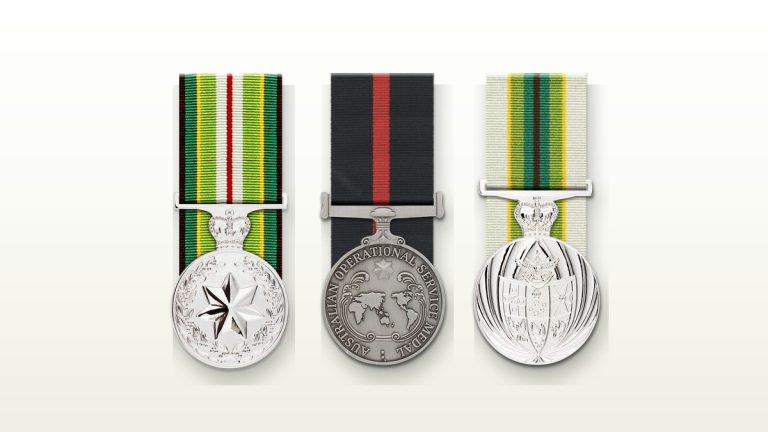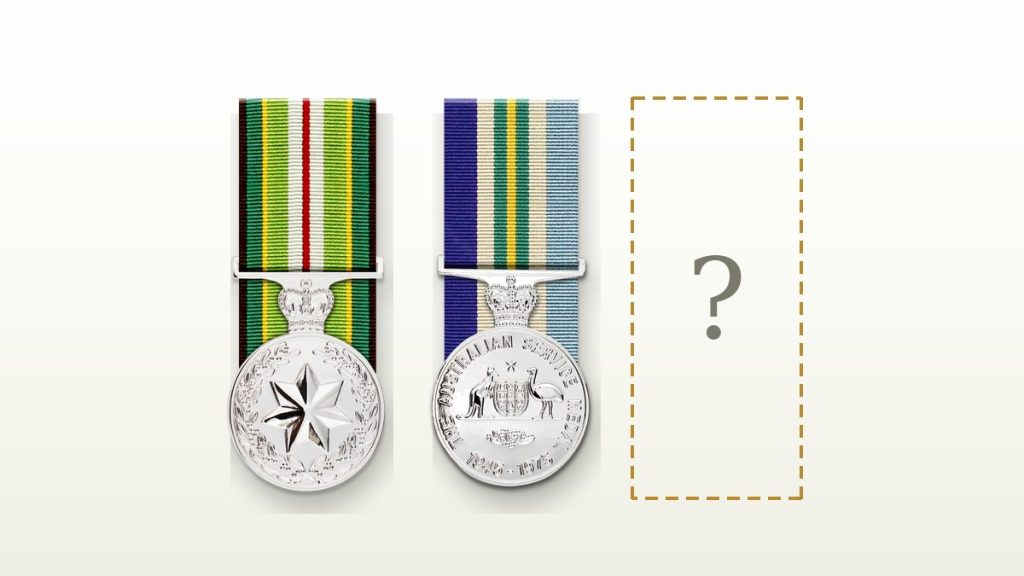
You have checked a service record, but a medal you expected to find is not there. Perhaps it appears in a family photograph, sits in an old presentation case or is mentioned in a letter. Should you include it in the medal rack?
A missing entry is a reason to investigate, not a final answer. The National Archives of Australia explains that service records may not show which medals a person was entitled to or whether those medals were issued.[1]
Before you add or remove an award, work out what is missing and ask the right authority to clarify it. This guide focuses on Australian Defence service and campaign awards, rather than police or other organisations' awards.
First, identify whether the record, award list or physical medal is missing
The phrase "missing medals" can describe different problems. Start by choosing the question that matches your situation:
- Incomplete award list: you do not know all the medals the person is entitled to.
- Unclear issue history: you want to know which awards were previously issued.
- Missing physical medal: an award was issued, but the medal has been lost, stolen or damaged.
These are practical ways to describe your enquiry. Defence's form support guide distinguishes between a full assessment, a list of previously issued awards and replacement medals. Do not assume that the same request answers all three questions.[3]
An older service file may predate an award introduced later
Check when the award was introduced, not only when the person served. For example, the Australian Service Medal 1945-75 was approved in 1995. It recognises qualifying service connected with declared non-warlike operations between 3 September 1945 and 16 September 1975.[5]
An original document written decades earlier would predate that award. This helps explain why an older document may not tell the whole story. It does not establish that your relative qualifies: the relevant operation and service criteria still need checking.[5]
Treat a possible later award as a research question. Do not add it simply because the service dates look close.
Request a full assessment when the complete entitlement is unclear
Defence allows members, former serving members and families to request a full assessment to obtain a list of entitled awards. Start with its official application-process page and follow the Awards application form link.[2]
The published support guide describes "Full Assessment (Campaign and Service Awards)" for people unsure which awards they or the member may be entitled to. It separately describes "List of Previous Awards" for obtaining a list of previously issued awards when purchasing replicas.[3]
The distinction matters: a list of what was issued is not the same request as checking the full entitlement. Follow the current form instructions, and ask Defence for help if the right option is unclear.[3]
Describe the exact gap and keep your supporting evidence together
Prepare a short explanation before starting the form. Include the award name or service period in question, the documents you hold and what you need clarified. Defence asks for useful supporting information and says applications cannot be saved and resumed after the form is closed before submission.[2]
A suggested enquiry might read: "I am researching this member's awards. The service file and later correspondence appear to show different information. Please assess the full entitlement and clarify the award or clasp listed in the attached note."
Adapt that wording to the facts you actually hold. It is an example, not an official form or a requirement to use particular words.
Keep a copy of what you submit. Record each document's date and page number so you can find the relevant passage again. Leave uncertain details clearly marked instead of filling gaps with guesses.
Use the records process when service details need correcting
An incorrect service date or personal detail is a different problem from uncertainty about an award. Defence's personal information request process includes requests to amend or annotate incomplete, incorrect, outdated or misleading personal information. Its My Service Records pathway also provides access to records held by Defence.[6]
Requests for someone else's records have consent and identity requirements. For a deceased member, Defence asks for proof of the relationship and death. Follow its instructions before submitting personal information.[6]
Changing a note on your own copy does not correct the official record. Keep the original document and your proposed correction separate.
Check different rules for unissued medals and replacement medals
A medal that was never issued is not the same as one that was issued and later lost. Defence has a process for unissued service awards of deceased members, including a family priority order and special-consideration provisions. Being a relative does not automatically settle who may receive the award.[2]
For medals already issued, Defence's replacement policy sets out the circumstances in which lost, stolen or damaged medals may be replaced. It also identifies awards administered elsewhere. Check that policy before assuming Defence can replace every item in a family collection.[4]
Commercial replicas are another option for presentation. Defence's guidance acknowledges that they can be purchased from medal dealers. Buying a replica, however, is separate from resolving the recipient's entitlement or obtaining an official replacement.[4]
A hypothetical example shows what to hold back from the order
Imagine you have a relative's old service file, a later letter confirming one medal and a photograph showing another ribbon. The medal in the letter is not mentioned in the old file.
Keep the letter with your research and note the discrepancy. Record the unidentified ribbon as unresolved, rather than choosing a similar-looking medal. Ask for the assessment or issue history that answers the outstanding question.
Until you receive clarification, do not treat the photograph as confirmation of an extra award. This example illustrates a research approach; it does not assess anyone's eligibility or suggest that a photograph should be ignored.
Keep the application reference and use official review pathways
Keep Defence's application reference number. Its guidance allows you to seek clarification or provide additional information for reassessment after a decision. It also says you can request an update if no outcome arrives within six months; that is not a guaranteed completion deadline.[2]
For an unsuccessful eligibility decision, the Defence Honours and Awards Appeals Tribunal explains when an independent review is available. A formal Defence decision must come first, and not every matter falls within the Tribunal's jurisdiction. Read its application guidance before proceeding.[7]
Finalise your Rack Builder selection after the award questions are resolved
Once the outstanding questions are answered, compare the confirmed award information with your proposed rack. Rack Builder's published process lets you select medals and clasps, compare formats and review the arrangement before ordering.[8]
Keep any unresolved award outside the final order. A digital preview helps you plan presentation; it should not be treated as an official decision about entitlement.
A medal missing from the builder's library is a separate issue again. Rack Builder support accepts reports about awards not yet listed and can help with product or builder questions. That is different from asking Defence whether the person is entitled to the award.[9]
Once the award list is confirmed, our guide to building a medal rack from a service record walks through the full evidence-to-rack workflow.
The next step is simple: clarify the missing information first, then build from the confirmed list. Visit Defence's application guidance for award enquiries, or explore how Rack Builder works when you are ready to plan the rack.
Sources
Source pages reviewed 30 September 2026. Numbered citations in the article open the sources below.
- National Archives of Australia: Researching war service Service-file limitations and where to find additional records.
- Department of Defence: Application process Full assessments, unissued awards, reassessment and follow-up guidance.
- Department of Defence: Online application form support guide Distinguishes full assessment, previously issued awards and replacements.
- Department of Defence: Replacement medals Replacement eligibility, responsible authorities and commercial replicas.
- Department of Defence: Australian Service Medal 1945-75 Approval in 1995, the service period covered and operation-specific criteria.
- Department of Defence: Personal information requests Requesting records, corrections, consent and proof of relationship.
- Defence Honours and Awards Appeals Tribunal: Apply for a review Who can seek review, prior Defence decision and jurisdiction limits.
- Rack Builder: How it works Published workflow for medal selection, formats and order review.
- Rack Builder: Support Help with the builder, products and awards missing from the library.