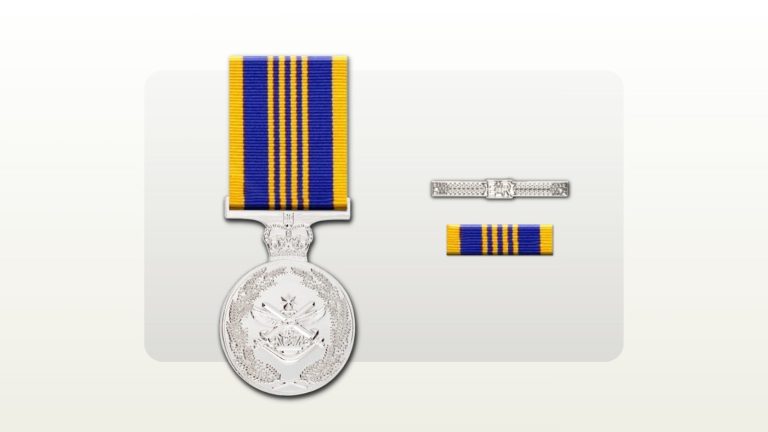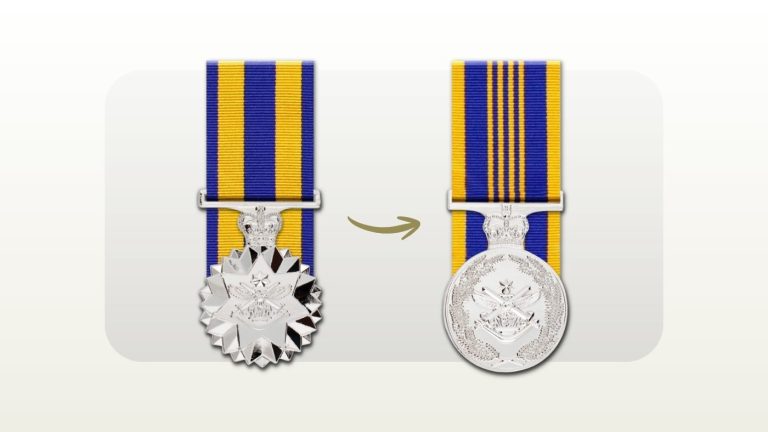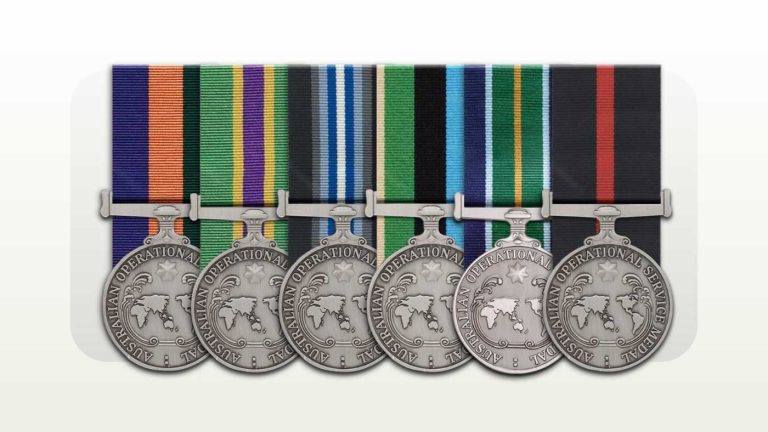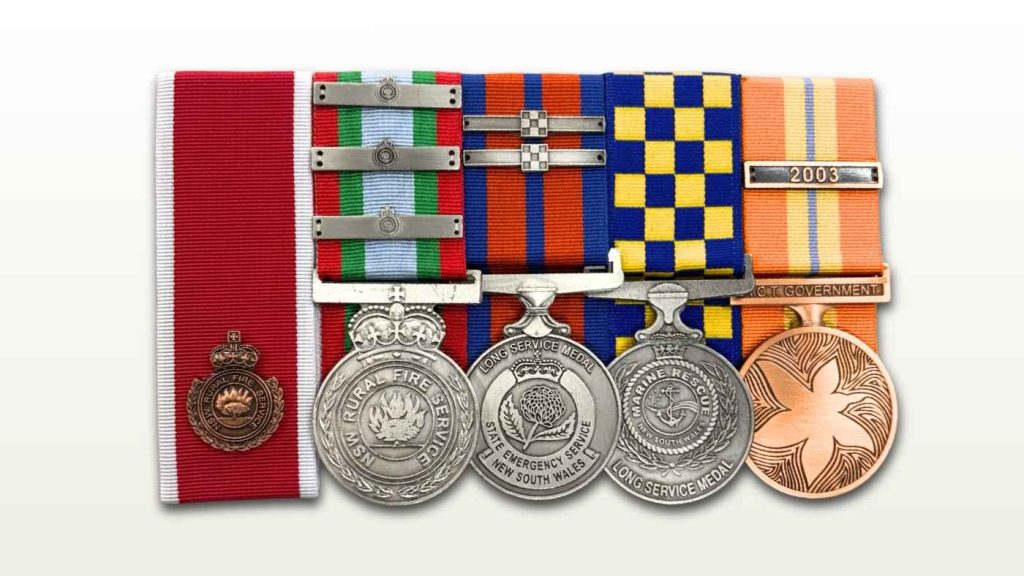
You have an award certificate, a medal in its box or a letter saying something has been approved. Does that mean the medal is ready to go on your rack? Not necessarily. An award decision, the supply of a medal and permission to wear it answer different questions.[1][2][5]
This guide explains those differences so you can read your paperwork with more confidence. These are plain-English distinctions, not three compulsory steps that every award follows. The right checks depend on the award and whether you are preparing a uniform, civilian outfit or family display.
'Awarded' means formal recognition, not just possible eligibility
Think of 'awarded' as recognition formally given to the recipient. It is different from believing that someone qualifies, submitting an application or being nominated. Look for confirmation from the organisation responsible for the award rather than treating an application acknowledgement as the outcome.[1][2]
The Order of Australia provides a useful example. A nomination is researched and considered before an award is recommended. The Governor-General then considers and approves recommendations, and successful recipients receive congratulatory letters. Presentation at an investiture, the formal award ceremony, happens later in that process.[1]
Campaign and service awards have their own assessment processes. Defence offers a full assessment for members, former members and families seeking a list of entitled awards. Use that pathway when entitlement needs clarification rather than assuming all awards follow the nomination example above.[2]
'Issued' concerns the medal supplied, not just the award decision
Issue concerns the physical medal supplied to represent an award. Defence describes approval, engraving and dispatch as parts of its process for unissued awards. Medals for current serving members are sent to their unit for presentation.[2]
This means an approved award and a medal in your hands are not necessarily the same stage. Defence's replacement policy specifically covers awards that were approved and dispatched but never received. A dispatch record therefore does not prove that the recipient actually received the medal.[3]
When reading paperwork, keep 'approved', 'dispatched', 'presented' and 'received' as separate details where they are recorded. Do not turn a delivery question into a conclusion that the award itself was never made.
'Approved to wear' depends on the award and the setting
Permission to wear becomes especially important when your group includes a foreign award. The Governor-General's website publishes the Schedule of Approved Countries and Awards, which identifies foreign awards approved for acceptance and wearing by Australian citizens.[4]
That schedule concerns the award's status in Australia. It is not a list confirming every individual recipient. Finding a medal on it does not, by itself, show that you have been awarded that medal.
There can also be additional service requirements. The February 2026 foreign award guidelines state that wearing a foreign award on an official uniform or while on official duty remains subject to the relevant service or agency's dress regulations. Requests should go to its chief officer or delegate.[5]
For Australian Defence Force personnel, Defence provides an application pathway for foreign service awards to be worn on ADF uniforms. Its guidance asks for documentary evidence and relevant service details. Do not assume an overseas presentation settles the Australian uniform requirements.[2]
Read what an approval covers before treating it as complete
When you see the word 'approved', ask what the letter actually confirms. Does it approve the award to a named person? Does it concern an award's inclusion on the Australian foreign awards schedule? Or does it authorise wearing on official duty? Those decisions should not be treated as interchangeable.[2][5]
Do not assume that every Australian needs the same individual application. The Department of Foreign Affairs and Trade (DFAT) says Australians generally do not need separate government approval for scheduled foreign awards, but identifies additional requirements for ADF personnel and DFAT officers. Your circumstances matter.[6]
An unlisted foreign award should not simply be added to an official left-breast rack. The 2026 guidelines set out separate conventions for unofficial foreign awards. When the position is unclear, seek official advice rather than deciding from the medal's appearance.[5]
The order of wear tells you where an award belongs
After clarifying the award's status, check its position. The Australian Order of Wearing Honours and Awards sets out the wearing sequence and is periodically reviewed. It helps you arrange awards; it does not establish that a particular person received them.[7]
Avoid arranging medals by the date the parcel arrived or the order in which you bought them. Defence gives specific sequencing rules and exceptions for foreign awards. It also explains that some older Imperial British awards are treated as Australian awards, so 'made overseas' is not a reliable shortcut.[8]
Defence also warns that commercial medal-ribbon posters are visual reference guides, not authorities for wearing awards. Use the official guidance to resolve a disputed position.[8]
Buying or inheriting a medal does not make you its recipient
Defence recognises that replica medals can be purchased from commercial suppliers. That purchase provides a physical item; it is not a decision granting an honour. Keep the recipient's award evidence separate from the receipt for a replica.[3]
An inherited medal also remains an award to the original recipient. The Department of the Prime Minister and Cabinet describes the custom of wearing deceased relatives' medals at commemorative events. It notes that the Returned and Services League (RSL) encourages wearing them on the right breast to show they are not your own. This is not a transfer of the honour.[9]
Keep that commemorative custom separate from official uniform requirements. Before combining your own medals with a relative's, check the guidance that applies to the occasion and your service.
Two hypothetical examples show why separate checks matter
An award is approved, but the parcel never arrives. Your official letter and dispatch information concern different parts of the process. Keep both, and ask the issuing authority about delivery rather than assuming the award was cancelled. Defence has a specific lost-in-transit pathway.[3]
A serving ADF member receives a foreign medal. The overseas certificate records the award, but the member still needs to check its Australian approval status and the requirements for wearing it on their uniform. A certificate and possession of the medal do not answer every wearing question.[4][5]
These examples illustrate the distinctions. They do not assess anyone's eligibility or authorise a particular medal to be worn.
Use Rack Builder to plan presentation after the status is clear
For each award, keep three short notes: the evidence of the award or confirmed entitlement, what you know about issue or receipt, and any applicable wearing approval. Label unresolved points as questions. These are suggested research notes, not official status labels or Rack Builder features.
Once the relevant questions are resolved, Rack Builder's published workflow lets you choose the service or jurisdiction, add medals and clasps, compare formats and review the arrangement before ordering. A digital preview helps with presentation; it is not an official award or entitlement decision.[10]
Use Rack Builder support for builder, mounting, format and product questions. Take award and approval questions to the responsible authority. Keep unresolved items out of your final order until you have clarification.[11]
For the full records-to-rack workflow, see our guide to building a medal rack from a service record. If an award seems to be missing from the record, start with what to do when a service record does not list every medal.
For Defence-administered awards, start with Defence's application guidance when a decision needs checking. Explore how Rack Builder works when you are ready to plan your confirmed set. Understanding the paperwork first gives you a firmer basis for every medal you add.
Sources
Source pages reviewed 13 October 2026. Numbered citations in the article open the sources below.
- Governor-General: How nominations are considered Order of Australia example: nomination, approval and later presentation.
- Department of Defence: Application process Entitlement assessments, approval, dispatch and foreign-award applications.
- Department of Defence: Replacement medals Approved and dispatched but not received; commercial replicas.
- Governor-General: Accepting and wearing foreign awards Schedule of Approved Countries and Awards.
- Governor-General: Foreign award guidelines, February 2026 (PDF) Gazette C2026G00100: paragraphs 1, 6, 8, 9 and 13; official-duty requirements.
- Department of Foreign Affairs and Trade: Honours and awards Scheduled foreign awards and additional ADF or DFAT requirements.
- Governor-General: Australian Order of Wearing Honours and Awards Official order-of-wear schedule and periodic review.
- Department of Defence: Wearing honours and awards Foreign-award sequencing, Imperial awards and commercial-poster caution.
- Department of the Prime Minister and Cabinet: Wearing awards Commemorative wearing of deceased relatives' medals.
- Rack Builder: How it works Published selection, format and order-review workflow.
- Rack Builder: Support Builder, product, mounting and format enquiries.