
History
In 1782 General George Washington created the Badge of Military Merit, a heart of purple cloth for singularly meritorious action, and the young republic's first decoration for the common soldier. It lapsed after the Revolution and slept for a century and a half until the United States revived it as the Purple Heart on 22 February 1932, the bicentennial of Washington's birth. Since then it has been awarded in the name of the President to members of the United States armed forces wounded or killed by enemy action, one of the few decorations earned by circumstance rather than recommendation.
A small number of Australians have received it while serving with or alongside American forces, from the advisers of the Australian Army Training Team Vietnam attached to US units to exchange personnel in later conflicts. For an Australian, its wear follows the foreign awards rules: government approval, and a place after all Australian honours in order of the date of award.
Design & ribbon
The medal
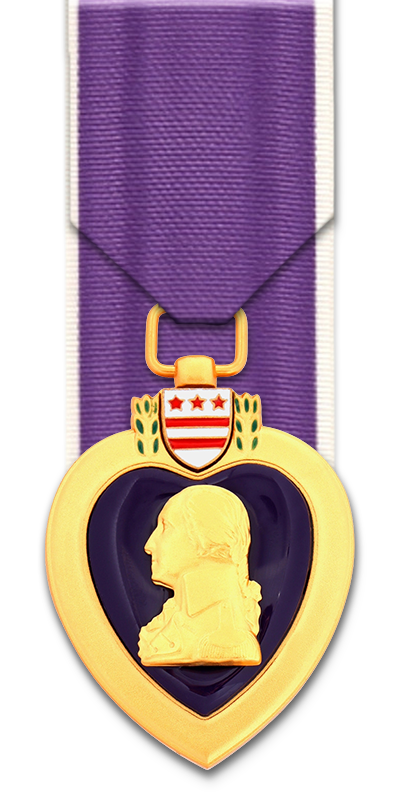
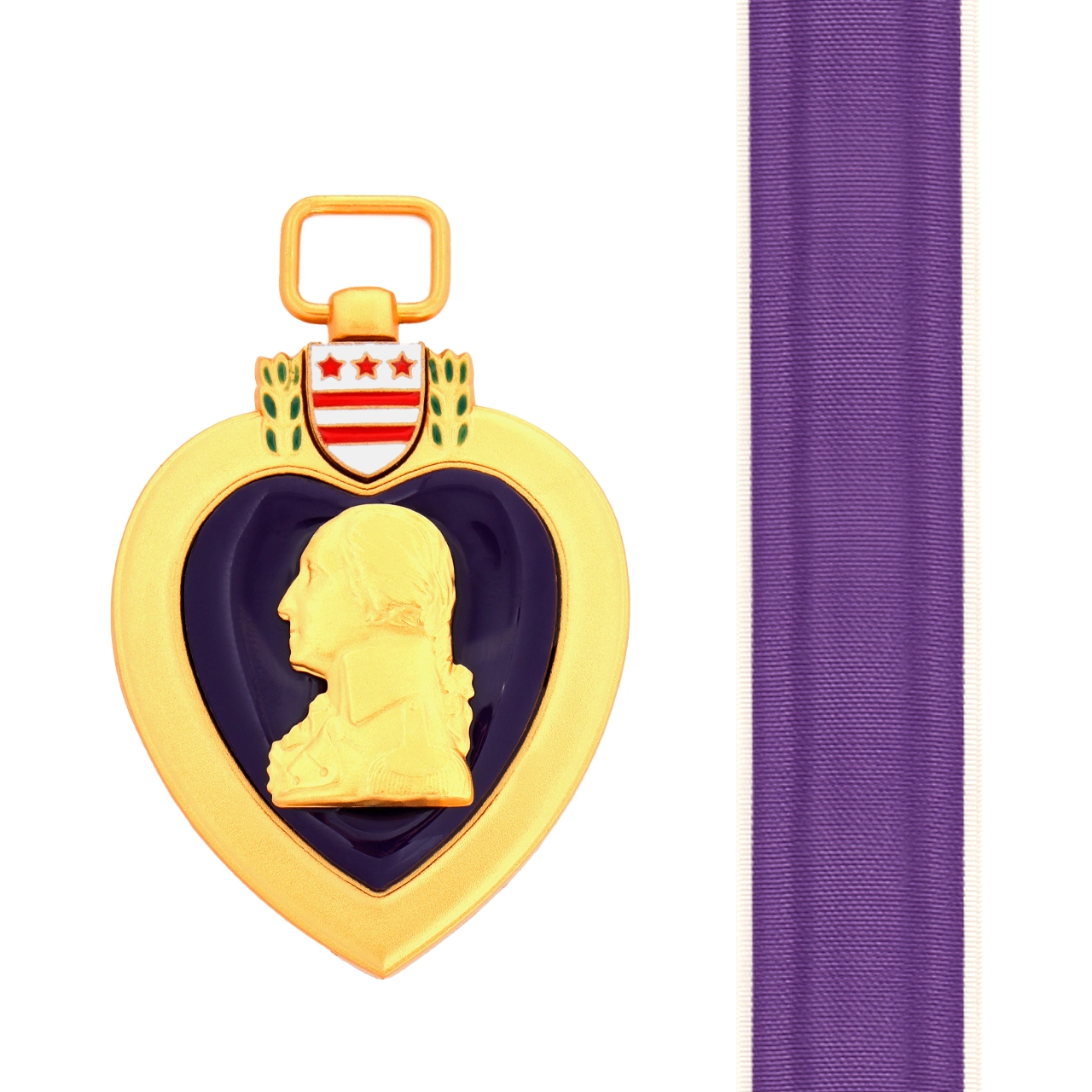
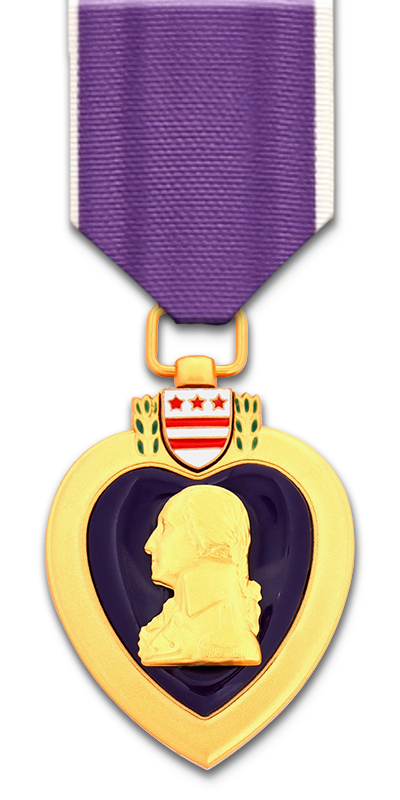
The medal is a purple enamel heart within a gold border, bearing the profile of George Washington in the uniform of a general of the Continental Army. Above the heart sits the shield of Washington's coat of arms between sprays of green leaves. The reverse carries a raised bronze heart with the words FOR MILITARY MERIT beneath the shield and leaves.
The ribbon
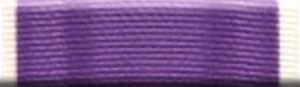
Purple with white edges, after Washington's original badge.
The ribbon is purple with narrow white edges, the colours of the original cloth badge.
Clasps
Subsequent awards are marked with devices added to the ribbon of the medal. The United States Army, Air Force, and Space Force use an oak leaf device while the Navy, Marines, and Coast Guard are awarded stars.
Eligibility
The Purple Heart is awarded in the name of the President of the United States to members of the US armed forces wounded or killed by enemy action, under criteria set by the United States Department of Defense.
- Entitlement follows the wound itself: injuries from enemy action requiring treatment by a medical officer, and deaths in action, qualify without further recommendation;
- Personnel of allied nations serving with United States forces have received the award in various conflicts, including a small number of Australians;
- For Australians, acceptance and wear require approval through the foreign awards process, with the medal worn after all Australian honours in order of the date of award. There is no post-nominal in Australian usage.
Order of wear
Foreign and international awards approved for acceptance and wearing are worn after all Australian honours and awards, in order of the date of award. The precise arrangement should be confirmed against the current Australian Order of Wear.
Frequently asked questions
What is the Purple Heart awarded for?
Wounds or death caused by enemy action while serving with the United States armed forces. It is awarded in the name of the President, by entitlement rather than recommendation.
How did Australians come to hold it?
Through service with or alongside American forces, most notably the advisers of the Australian Army Training Team Vietnam attached to US units, and exchange personnel in later conflicts.
Can an Australian wear it on a rack?
With government approval through the foreign awards process, yes: after all Australian honours and awards, in order of the date of award.
What is its connection to George Washington?
It revives his 1782 Badge of Military Merit, a purple cloth heart and the first American decoration open to ordinary soldiers. The modern medal carries his profile and his family's coat of arms, and was created on the 200th anniversary of his birth.
How are multiple awards shown?
By oak leaf clusters on the ribbon in Army and Air Force usage, or gold stars in the sea services. A second medal is never issued.
Does it carry a post-nominal?
No, not in Australian usage.