
History
When the 1979 peace treaty between Egypt and Israel needed independent verification and United Nations involvement proved politically impossible, the treaty partners built their own force: the Multinational Force and Observers, established in 1981 to monitor the security arrangements in the Sinai. Its medal was created on 24 March 1982 by the MFO's Director General, recognising honourable performance of duty by the military and civilian members of one of the longest running peacekeeping missions in the world.
Australia has served with the MFO from the beginning, first with helicopters and aircrew in the force's early years and since 1993 through Operation Mazurka, with ADF members posted to the Sinai in six to nine month rotations for headquarters, observer and support roles. The Australian Government has officially accepted the MFO Medal for wear, and eligible members are approved through the Governor-General on advice processed from theatre.
Design & ribbon
The medal
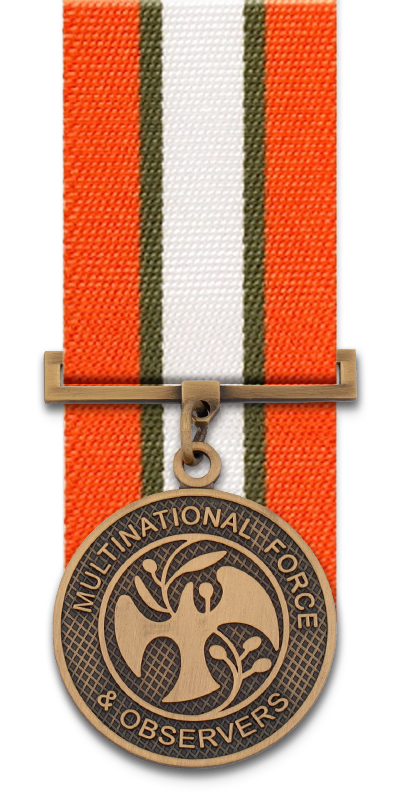
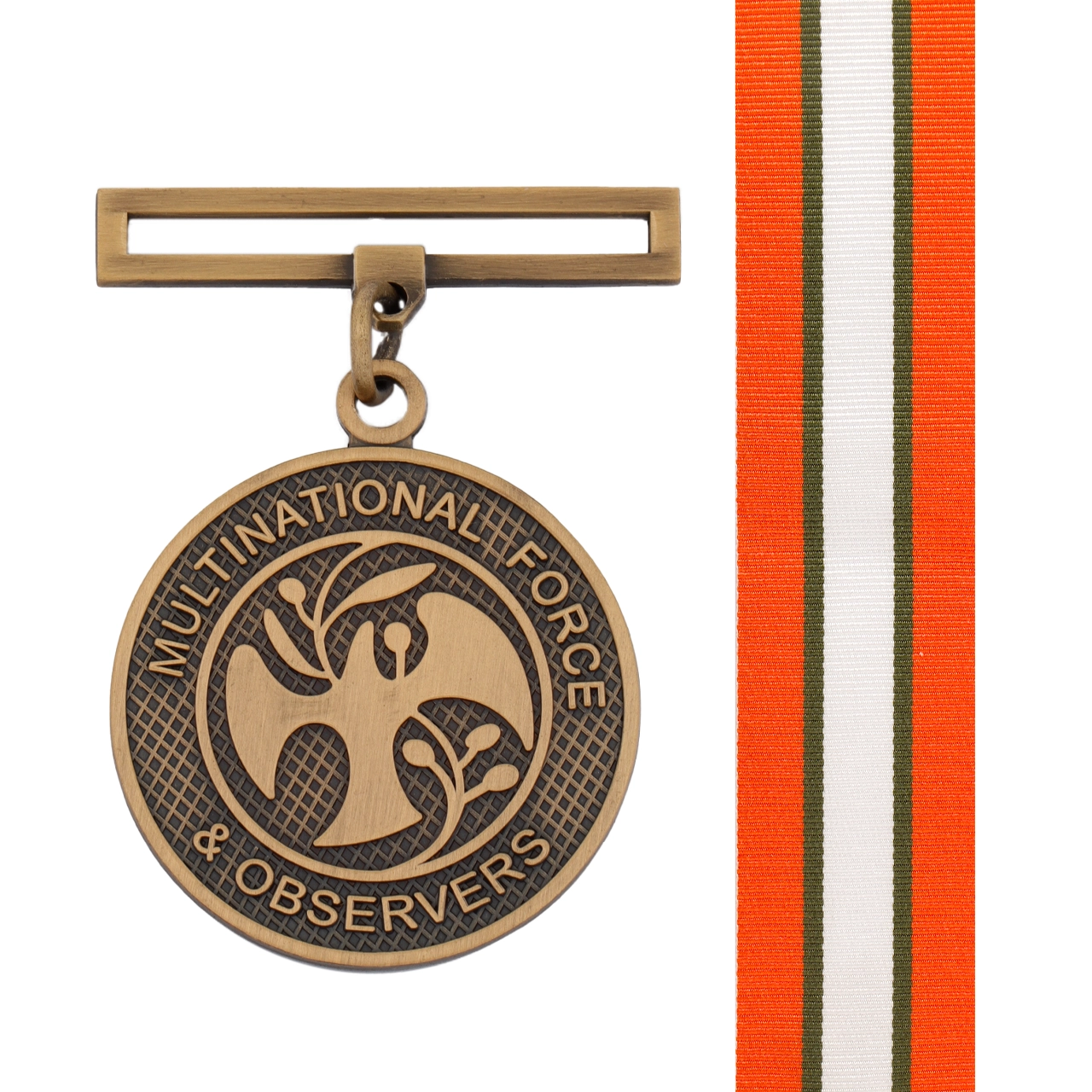
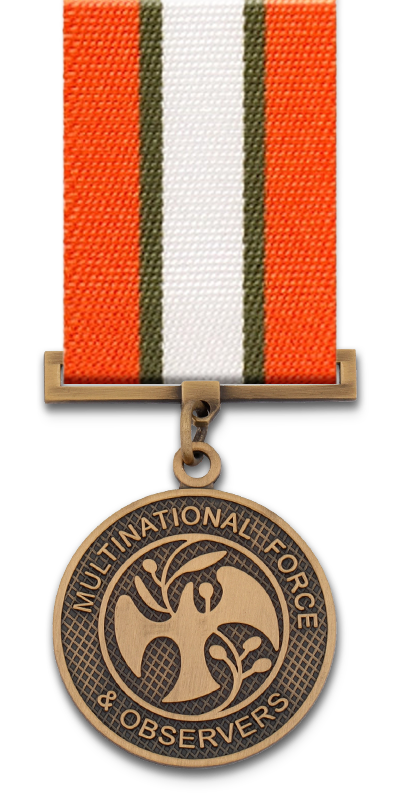
The medal is bronze and circular. The obverse carries the emblem of the Multinational Force and Observers, a dove of peace within olive branches, surrounded by the organisation's name; the reverse bears the words UNITED IN SERVICE FOR PEACE.
The ribbon
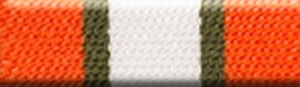
MFO orange for the desert, white for the dove, green for the olive branches.
The ribbon is MFO orange with a central white stripe flanked by narrow green stripes: orange for the Sinai desert, green for the olive branches, and white for the dove of peace.
Clasps
The medal is awarded once, with further qualifying service marked on the ribbon rather than by additional medals.
Numerals (further service)
Each additional six month period of qualifying service with the MFO is denoted by a silver numeral worn on the ribbon, beginning with the numeral 2 for the second qualifying period.
Eligibility
The medal is awarded under the authority of the Director General of the MFO for honourable performance of duty with the force, and has been officially accepted by the Australian Government for wear by ADF members.
- The standard qualifying period is six months, a minimum of 170 days of cumulative service, with exceptions for those who die in service, are medically evacuated for reasons attributable to their duty, or complete a shorter contingent tour agreed between the Director General and the contributing nation;
- Only one medal is awarded to an individual; each additional six month period of qualifying service is denoted by a silver numeral on the ribbon, beginning with the numeral 2;
- The names of eligible Australians are processed from theatre for approval through the Governor-General. There is no post-nominal.
Order of wear
Foreign and international awards approved for acceptance and wearing are worn after all Australian honours and awards, in order of the date of award. The precise arrangement should be confirmed against the current Australian Order of Wear.
Frequently asked questions
What is the Multinational Force and Observers Medal awarded for?
Six months, a minimum of 170 days, of honourable duty with the Multinational Force and Observers, the non United Nations force that monitors the Egypt-Israel peace treaty arrangements in the Sinai.
Can Australians wear it?
Yes. The Australian Government has officially accepted the MFO Medal for wear by ADF members, worn after all Australian awards with other foreign and international awards in order of the date of award.
What is Operation Mazurka?
Australia's contribution to the MFO, running since 1993, with ADF members posted to the Sinai in six to nine month rotations for headquarters, observer and support roles. Australian aircrew also served with the force in its early years from 1982.
How is a second tour recognised?
By a silver numeral on the ribbon, beginning with 2. Only one medal is ever issued to an individual.
Why is the MFO not a United Nations force?
United Nations involvement in verifying the treaty could not be agreed, so Egypt, Israel and the United States established an independent multinational force in 1981, which contributing nations including Australia have sustained ever since.
Does it carry a post-nominal?
No.