
History
The Australian Service Medal 1945-1975 was established on 22 February 1995. It recognises the service of Australian Defence Force members and certain other persons in specified peacekeeping and non-warlike operations from 3 September 1945 to 16 September 1975.
Like its warlike counterpart, it was issued retrospectively to give an Australian award for service that had originally been recognised under the United Kingdom system, and it was issued in addition to those earlier medals. It is the non-warlike companion to the Australian Active Service Medal 1945-1975.
Design & ribbon
The medal
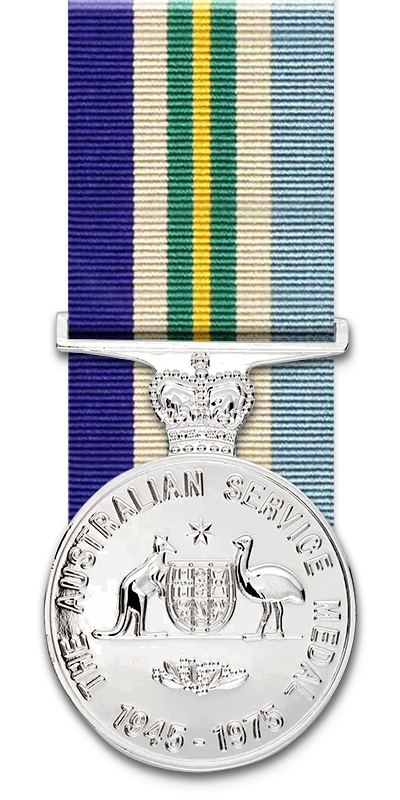
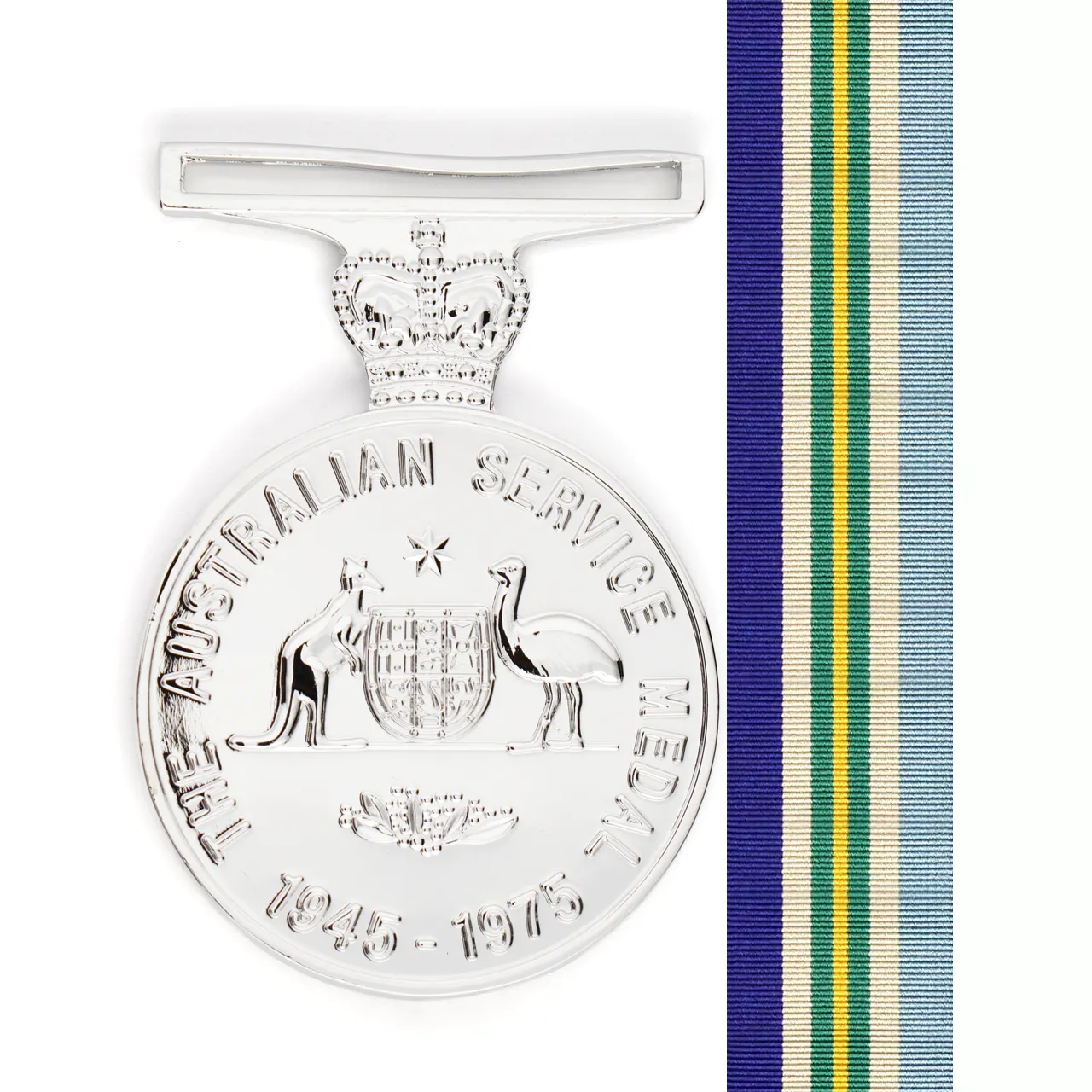
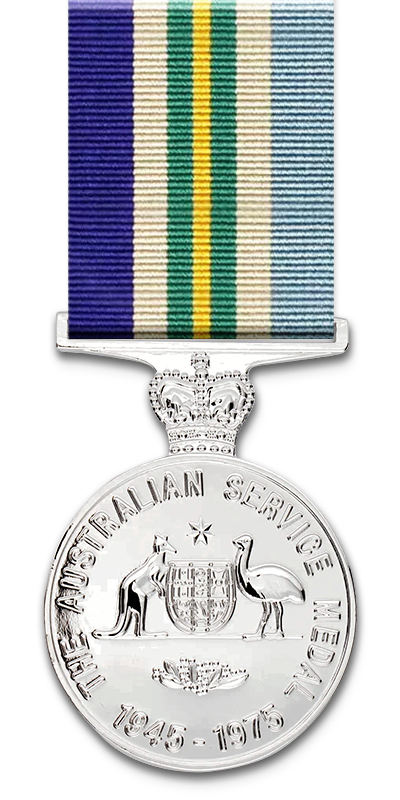
The Australian Service Medal 1945-1975 is a nickel-silver medal ensigned with the Crown of St Edward. The obverse features the Commonwealth Coat of Arms above a spray of golden wattle, surrounded by the words THE AUSTRALIAN SERVICE MEDAL 1945-1975. The reverse shows the Federation Star and golden wattle, with a panel for the recipient's details.
The ribbon
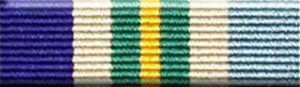
A central gold flanked by green, then silver-grey, dark and light blue, drawn from the Australia Service Medal 1939-1945.
The ribbon has a central gold stripe flanked by two green stripes, which are in turn flanked by stripes of silver grey, dark blue and light blue. The colours are drawn from the ribbon of the Australia Service Medal 1939-1945.
Clasps
A clasp naming the theatre or action for which the award is made is issued with the medal. Further service is recognised by additional clasps, worn above those previously awarded, in order of date of receipt. The clasps issued include the following.

Japan
For non-warlike service with the British Commonwealth forces in Japan and related duties in the post war years.

Berlin
For prescribed service in Berlin.

Germany
For prescribed service in Germany.

Kashmir
For service with the United Nations military observer mission in India and Pakistan.

Indonesia
For service with the United Nations Temporary Executive Authority in West New Guinea.

Middle East
For prescribed peacekeeping service in the Middle East.

SE Asia
For prescribed non-warlike service in South East Asia.

SW Pacific
For prescribed service in the South West Pacific area.

PNG
For service in Papua New Guinea in nation building, training and administration of defence forces, and humanitarian relief.

Special Ops
For special operations, for activities and dates as specified by the Chief of the Defence Force.

Thailand
For prescribed non-warlike service in Thailand.

Korea
For prescribed non-warlike service in Korea, covering 9 to 23 June 1950 and the post-armistice period from 1953 to 1957.
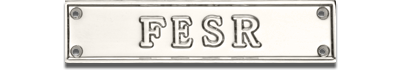
FESR
For prescribed non-warlike service with the Far East Strategic Reserve between 1955 and 1971, a Commonwealth force based in Malaya and Singapore.
West New Guinea
For prescribed service in West New Guinea between 1962 and 1963, including service with the United Nations Temporary Executive Authority during the transition of the territory to Indonesian administration.
Eligibility
The medal is awarded by the Governor-General on the recommendation of the Chief of the Defence Force. It recognises prescribed peacekeeping and non-warlike service in the 1945 to 1975 period.
- Service is in specified peacekeeping and non-warlike operations from 3 September 1945 to 16 September 1975;
- The medal is issued with a clasp naming the theatre or operation;
- The exact qualifying dates, areas and service for each clasp are set out in that clasp's Determination.
Order of wear
The precise neighbours in the order of wear should be confirmed against the current Australian Order of Wear.
Frequently asked questions
What does the Australian Service Medal 1945-1975 recognise?
Peacekeeping and non-warlike service by Australian Defence Force members and certain others in specified operations between 1945 and 1975.
When was it established?
On 22 February 1995. Like its warlike counterpart, it was issued retrospectively.
How is it different from the Active Service Medal 1945-1975?
This medal is for non-warlike and peacekeeping service, while the Active Service Medal 1945-1975 is for warlike service in the same period.
What clasps does it carry?
A clasp naming the theatre or operation is issued with the medal. Clasps issued include Japan, Berlin, Germany, Kashmir, Indonesia, Middle East, South East Asia, South West Pacific, Papua New Guinea, Special Ops and Thailand.
How are further awards shown?
By additional clasps, worn above those previously awarded, in order of date of receipt.
Does it have a post-nominal?
No.