
History
Instituted by Queen Victoria in 1886, the Distinguished Service Order was created to reward the distinguished service of officers in the field, and it quickly became the senior award for leadership under fire below the Victoria Cross. Originally granted to officers of the British Army and Commonwealth forces, usually around the rank of major, it was extended to equivalent ranks of the Royal Navy and, from 1 April 1918, the Royal Air Force. In its early years it was sometimes given to staff officers not under fire, which was resented in the field, and from 1 January 1917 recommendations were restricted to those in the presence of the enemy.
The DSO is an operational gallantry award for highly successful command and leadership during active operations, and a further act meriting a second award is recognised by a bar. It is not available posthumously. As an Imperial award it retains its place in the Australian Order of Wearing, worn among the honours that Australians earned before the national system, high in the order of precedence.
Design & ribbon
The medal
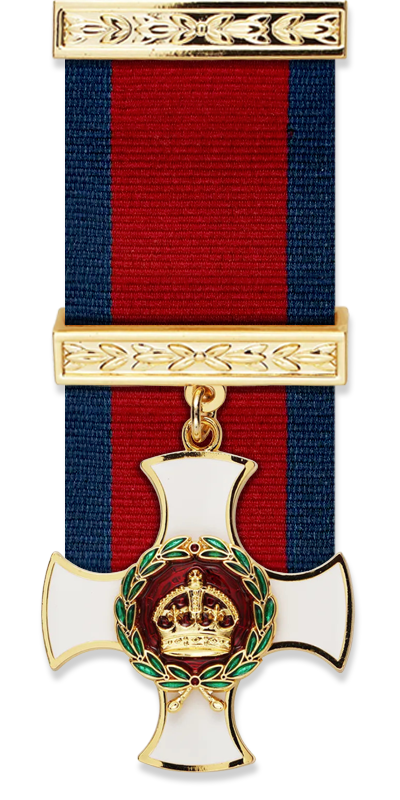
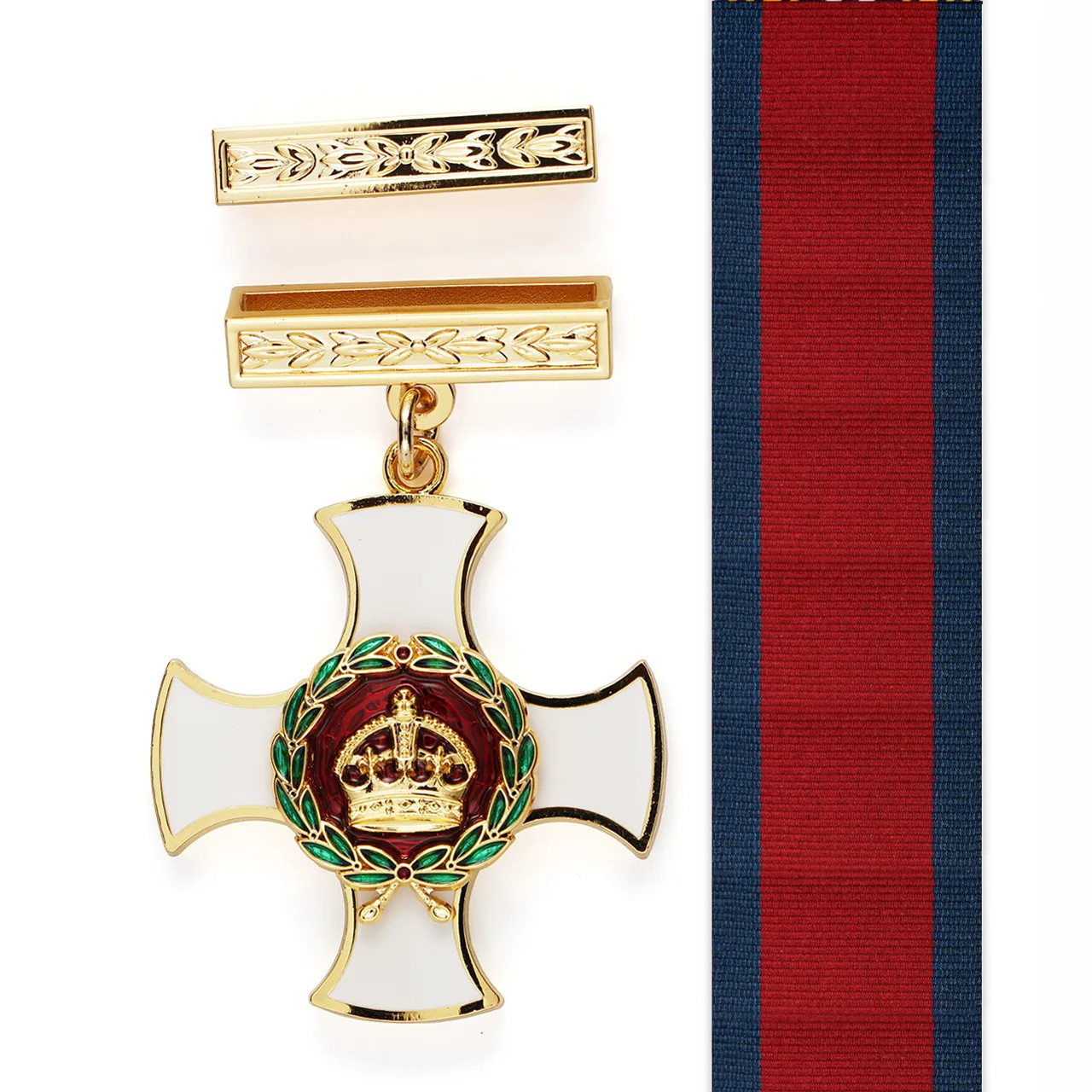
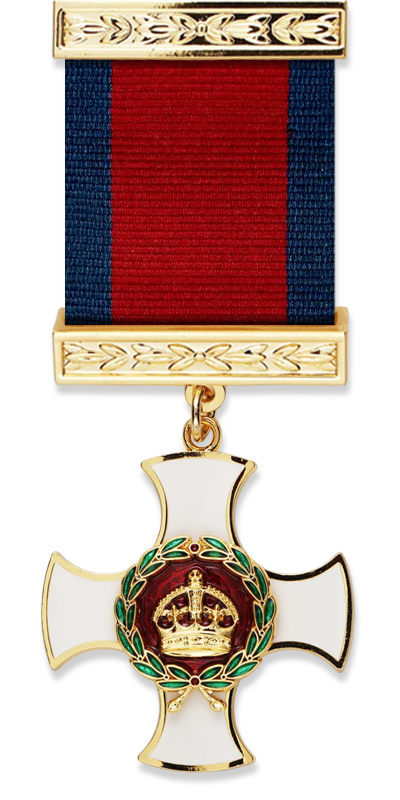
The Order takes the form of a gold cross with curved ends enamelled white, edged in gold, bearing in its centre the imperial crown in gold upon a red enamel ground within a green enamel laurel wreath. The reverse bears the royal cypher within a similar wreath. It is suspended by a ring from a gold bar with laurel, with a further ornamented bar on the ribbon.
The ribbon
Red edged with dark blue.
The ribbon is red, edged with narrow stripes of dark blue.
Clasps
A further act meriting the Order is recognised by a bar rather than a second cross.
Bar (further award)
An officer who performs a further act of leadership meriting a second award of the Order is issued with a bar worn on the ribbon; a gold bar in later practice, ornamented and dated in earlier issues.
Eligibility
The Order is an operational gallantry award for highly successful command and leadership during active operations.
- It may be awarded to all ranks of the services, though historically it was an officers' decoration generally not given below the rank of captain, and from 1917 it was restricted to those in the presence of the enemy;
- A further act of such leadership meriting a second award is recognised by a bar; the Order is not available posthumously;
- Recipients are entitled to the post-nominal letters DSO. As an Imperial award it retains its place in the Australian Order of Wearing.
Order of wear
Imperial awards were the honours of Australia before the Australian honours system was established in 1975, and they retain their place in the Order of Wearing. They are worn after the Australian honours of their kind and among the Imperial awards in the order set by the Australian Order of Wearing, which follows the British order of precedence.
Frequently asked questions
What is the Distinguished Service Order awarded for?
Highly successful command and leadership during active operations: an operational gallantry award almost always made for leadership in action.
Who is eligible?
All ranks of the services in principle, though it was historically an officers' decoration generally not awarded below the rank of captain.
Why did the 1917 change matter?
Early awards sometimes went to staff officers not under fire, which was resented by those in the field; from 1 January 1917 recommendations were restricted to officers in the presence of the enemy.
How is a second award shown?
By a bar worn on the ribbon. The DSO is not available posthumously.
Where does it rank?
Below the Victoria Cross and above the Military Cross in the order of precedence.
Does it carry a post-nominal?
Yes, the letters DSO.