
History
Instituted on 4 December 1854, during the Crimean War, the Distinguished Conduct Medal was the first official award to recognise an act of gallantry in the field by a member of the armed forces below the rank of officer, replacing an earlier meritorious service distinction for gallantry in action. It became the other ranks' equivalent of the Distinguished Service Order, ranking immediately below the Victoria Cross for non-commissioned soldiers, and was awarded for distinguished conduct in the field in the face of the enemy.
Other ranks of the British Army and non-commissioned ranks of Commonwealth forces were eligible, and from January 1943 airmen of non-commissioned rank could receive it for distinguished conduct on the ground. A bar carrying the date of a subsequent deed could be added until 1916, when the dated bar gave way to a laurelled bar. The medal was discontinued in 1993 in the reform that rationalised British gallantry awards. As an Imperial award it retains its place in the Australian Order of Wearing.
Design & ribbon
The medal
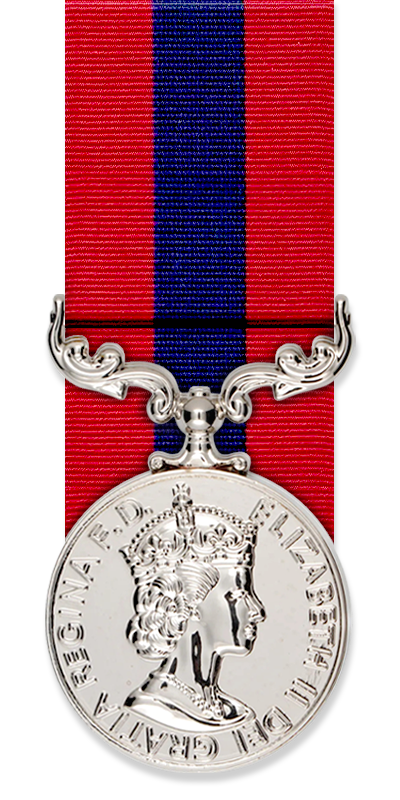
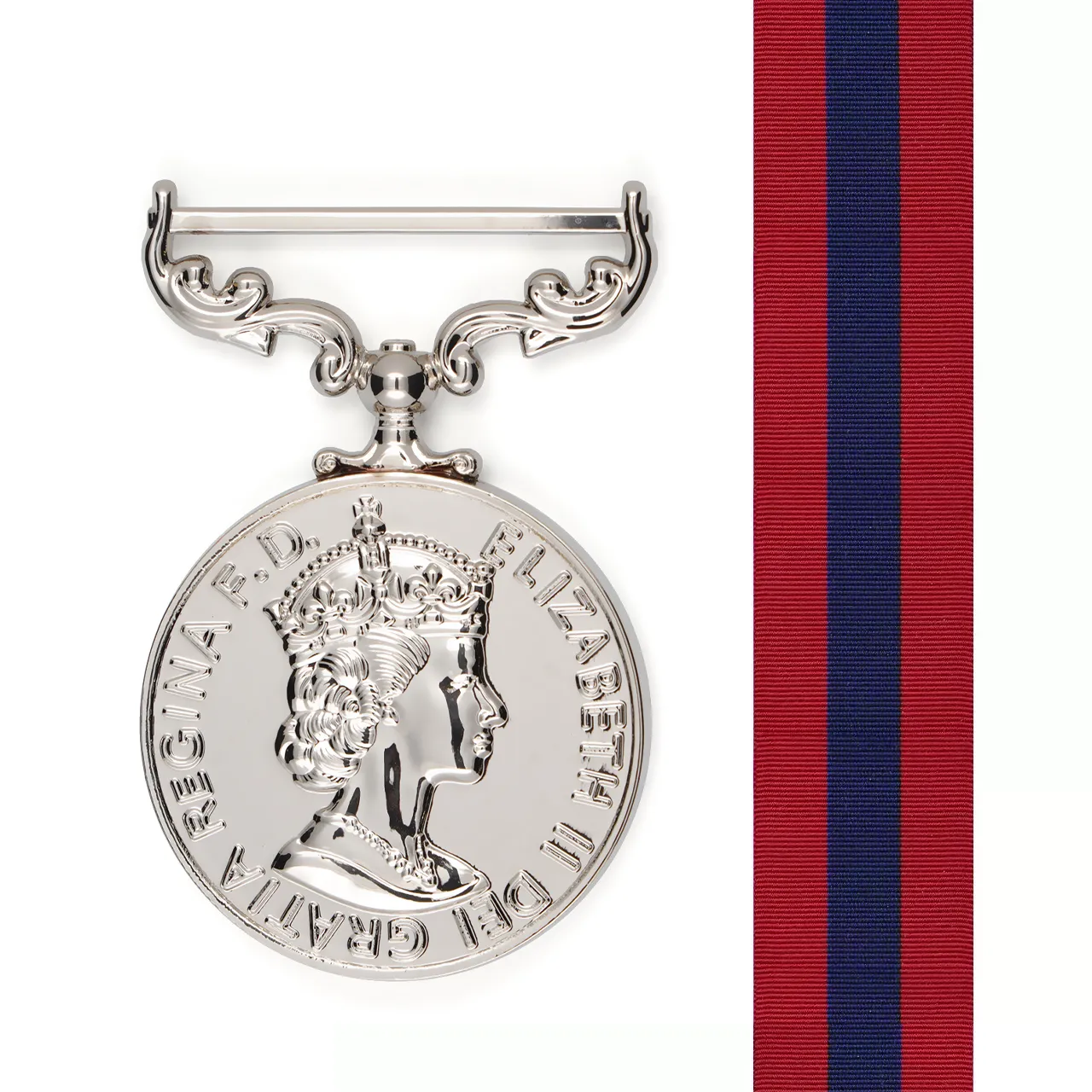
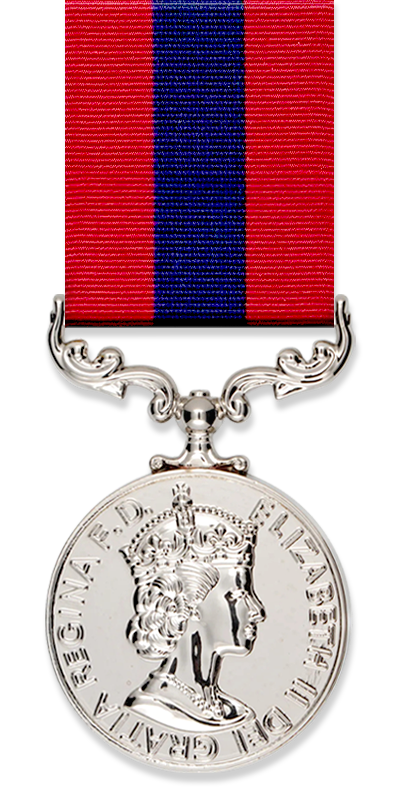
The medal is silver, circular, bearing the crowned effigy of the reigning sovereign on the obverse. The reverse carries the inscription FOR DISTINGUISHED CONDUCT IN THE FIELD in four lines within a raised rim. The recipient's details are impressed on the rim.
The ribbon
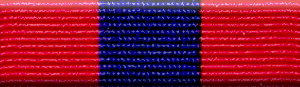
Crimson with a central dark blue stripe.
The ribbon is crimson with a central stripe of dark blue.
Clasps
A subsequent act of distinguished conduct is recognised by a bar rather than a second medal.
Bar (further award)
A subsequent act of distinguished conduct was recognised by a bar on the ribbon, carrying the date of the deed until 1916 and thereafter taking the form of a laurelled bar.
Eligibility
The medal was awarded for distinguished conduct in the field in the face of the enemy.
- Other ranks of the British Army and non-commissioned ranks of Commonwealth forces were eligible, with airmen of non-commissioned rank eligible from January 1943 for distinguished conduct on the ground;
- A subsequent deed was recognised by a bar, dated until 1916 and laurelled thereafter; the medal was discontinued in 1993;
- Recipients are entitled to the post-nominal letters DCM. As an Imperial award it retains its place in the Australian Order of Wearing.
Order of wear
Imperial awards were the honours of Australia before the Australian honours system was established in 1975, and they retain their place in the Order of Wearing. They are worn after the Australian honours of their kind and among the Imperial awards in the order set by the Australian Order of Wearing, which follows the British order of precedence.
Frequently asked questions
What is the Distinguished Conduct Medal awarded for?
Distinguished conduct in the field in the face of the enemy by soldiers below officer rank: the senior gallantry award for other ranks below the Victoria Cross.
How does it relate to the Distinguished Service Order?
It was the other ranks' equivalent of the DSO, which was an officers' decoration. Both recognised distinguished service in action, at their respective levels.
Who was eligible?
Other ranks of the British Army and non-commissioned ranks of Commonwealth forces, with non-commissioned airmen eligible from 1943 for distinguished conduct on the ground.
Why did the bar change in 1916?
Until 1916 a subsequent deed was marked by a bar carrying its date; from 1916 a laurelled bar was used instead.
When was it discontinued?
In 1993, when a review rationalised British gallantry awards across the services.
Does it carry a post-nominal?
Yes, the letters DCM.