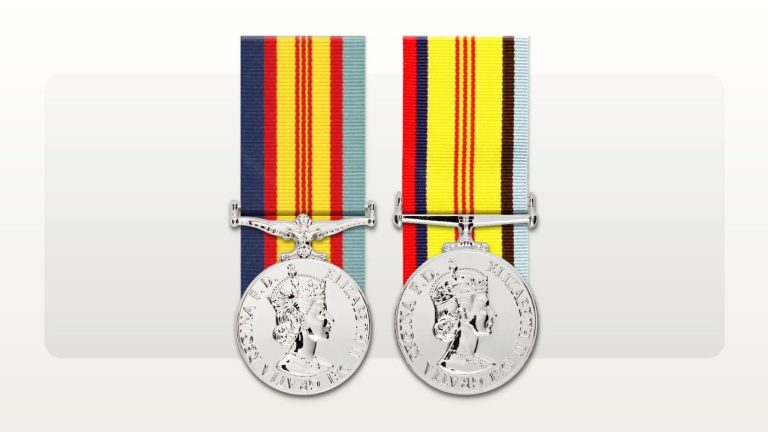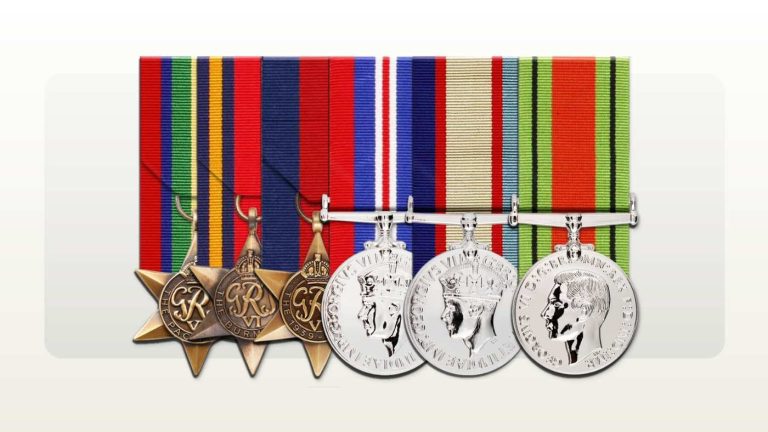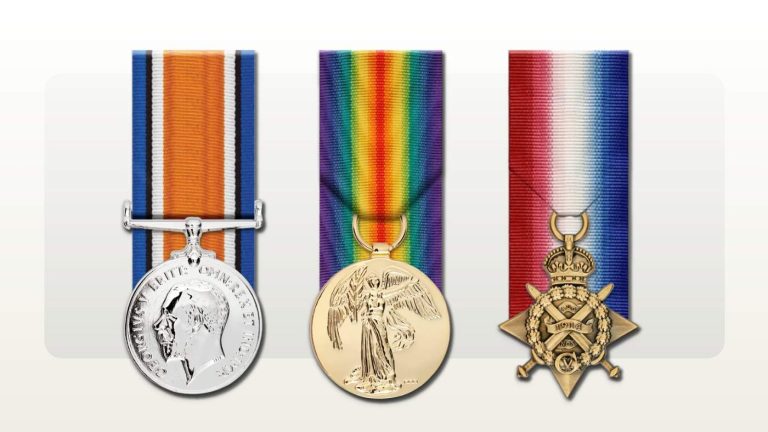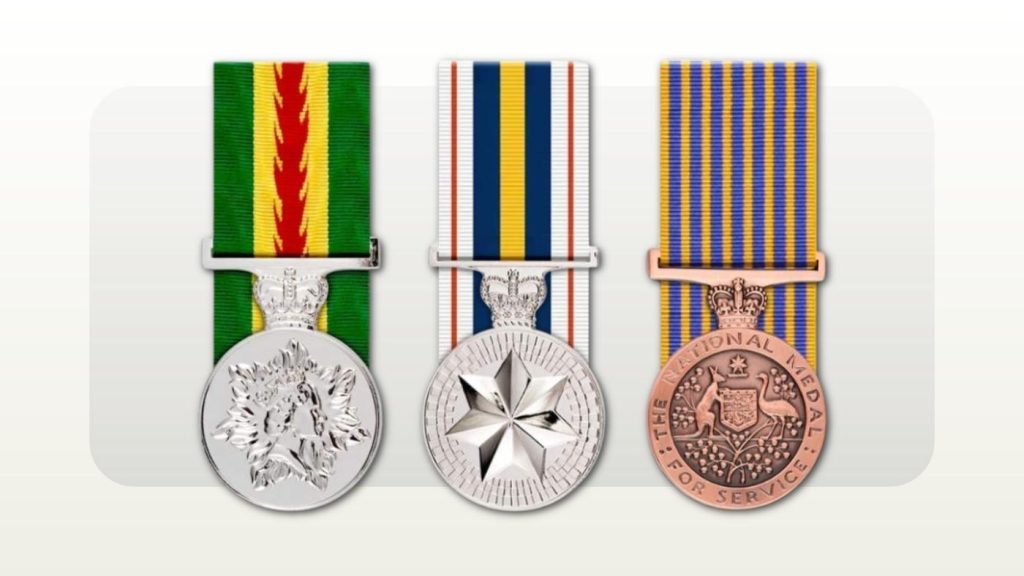
Choosing a service or jurisdiction in an online medal builder tells the software which award list and order of wear rules to use. It does not confirm that the recipient earned any medal on that list. In Rack Builder, the first step is to choose the service or jurisdiction, and the How it works page says this "sets the relevant award and order of wear rules used by the builder".[1]
Entitlement is a separate question, answered by the recipient's records and the awarding authority. For Australian Defence medals, applications go to the Directorate of Honours and Awards (DH&A) for assessment.[5]
This article clears up five common myths about the gap between configuring a rack and proving entitlement, so you can build with confidence and know where to go when a question is really about eligibility.
What does choosing a jurisdiction actually do?
On the Rack Builder home page, the first step is described as choosing your service, with examples of "ADF, police, fire, ambulance or corrective services", and the page says this "sets the order of wear rules that apply to you". The medal library is grouped the same way, with sections for national and military, police, emergency, corrective services, imperial and foreign awards.[4]
In practical terms, the jurisdiction choice does two things:
- It sets the relevant award rules the builder uses for that service.[1]
- It tells the builder which order of wear guidance to apply when it arranges the medals you add.[1][2]
Rack Builder's FAQ explains that it "arranges awards using the selected jurisdiction, current published guidance and award-specific rules", and that "unusual or conflicting groups are flagged for manual review before production".[2]
That is a configuration and arrangement function. Nothing on the published Rack Builder pages describes the jurisdiction setting as a check of anyone's service history.[1][2][3]
Myth 1: Selecting a jurisdiction confirms the recipient served there and earned its awards
The jurisdiction selector is a filter, not a verification step. Anyone can choose a service in the builder, and the choice only controls which rules the builder uses.[1]
It does not look up a service record, and Rack Builder does not claim that it does.
Official eligibility works differently. Defence explains that award conditions, once approved, "are published as a determination which becomes the authority for establishing eligibility".[6]
When someone applies for Defence medals, the application is "forwarded to DH&A ready for assessment", and "documentary evidence of the award/s may be required".[5]
Choosing a jurisdiction online is not part of that process.
Myth 2: If the builder lets you add a medal, the recipient must be eligible for it
A medal appearing in the library means Rack Builder can make and arrange it. It does not mean the recipient qualifies. The library is a reference and product catalogue covering hundreds of awards across many services.[4]
Adding an award to a rack records what you have asked for, not what the recipient was granted.
The same applies to printed or online ribbon charts. Defence notes that medal ribbon posters "should not be used as an authority for wearing awards".[8]
A builder screen, a poster and a catalogue page are all useful for identifying medals, but none of them is an entitlement record.
Myth 3: Common groups show what someone in that service received
Rack Builder offers checked common groups as a quick way to start a rack.[1]
The FAQ is direct about their limits. Asked "Do common groups confirm medal entitlement?", it answers: "No. Common groups provide a starting point only. Check the recipient's service record, award documents or relevant authority before ordering".[2]
Two people who served in the same service, even at the same time, can hold different awards. A common group is a template to edit, not a statement about an individual.
Myth 4: Rack Builder's review after checkout is an entitlement assessment
Rack Builder does review orders. After checkout, "the team reviews the saved rack against the selected jurisdiction and published order of wear guidance, and contacts you when an award, clasp, layout or personal detail needs clarification".[1]
That review is about whether the rack is configured and arranged correctly for production.
It is not the same as an official decision. The order of wearing honours and awards "is determined by the Governor-General of the Commonwealth of Australia", and the Governor-General's published Australian Order of Wearing Honours and Awards "details the position in which honours and awards should be worn".[8][10]
Entitlement to Defence medals is assessed by DH&A.[5]
A retailer can check placement against published guidance. Only the awarding authority can decide whether a person is entitled to an award.
Myth 5: A replica rack can fill the gap when a medal was never issued
Replicas are made for wearing and display, and Defence confirms that "there are no implications resulting from wearing replicas of awards to which a person is entitled".[6]
The key words are "to which a person is entitled". A replica does not create or confirm an entitlement.
If you believe a medal was earned but never issued, the official route is through Defence. Defence states that "medals for deceased veterans which have never been issued, may be issued to the appropriate next of kin".[6]
Its guidance on unissued awards lists immediate family members "in descending priority of entitlement", starting with a spouse or de facto spouse, then a child, grandchild, parent and sibling.[9]
For lost, stolen or damaged originals, Defence has a separate replacement process, subject to eligibility.[7]
Defence also notes it "is not able to provide replica medals", and that replicas "can be purchased from medals dealers or commercial military memorabilia outlets".[6][7]
Once an award is confirmed, a replica rack is a practical way to wear or display it while the originals stay safe. Rack Builder's FAQ notes that replicas were introduced in part "to preserve original medals and avoid family disputes over the original set".[2]
Jurisdiction selection versus entitlement: who decides what?
| Question | Where the answer comes from |
|---|---|
| Which award list and order of wear rules should the builder use? | The service or jurisdiction you choose in Rack Builder[1][4] |
| Is this rack arranged and configured correctly for production? | Rack Builder's review against the selected jurisdiction and published order of wear guidance[1][2] |
| In what position should each honour or award be worn? | The Australian Order of Wearing Honours and Awards, determined by the Governor-General[8][10] |
| Was the recipient entitled to a Defence medal? | Assessment by DH&A, using the published eligibility determination[5][6] |
| Where are Defence service records held? | Defence Archives manages service records for discharged members in its custody; DH&A cannot provide them[5][6] |
| Can a never-issued medal of a deceased veteran be granted? | Defence, to the appropriate next of kin in priority order[6][9] |
| Can lost or damaged original medals be replaced? | Defence's replacement medals process, subject to eligibility[7] |
A worked example: building a rack from family memory
This is a hypothetical example, not a real customer, order or entitlement decision.
Sarah wants a replica rack for her late father, who served in the Army. She opens the builder, selects the National and Military Awards option, and adds four medals: three she can see in an old family photograph and a fourth her uncle remembers him talking about. The builder accepts all four and arranges them.
Sarah has configured a rack. She has not proved that her father held the fourth medal.
Before ordering, she checks his service records and award documents, as Rack Builder's FAQ recommends. Rack Builder's FAQ also points families wanting to confirm a relative's entitlement to the Honours and Awards division of the Department of Defence, and to the National Archives of Australia for service history research.[2]
If Defence confirms the fourth medal was earned but never issued, the official award would come through the next of kin process.[6][9]
Sarah can then finalise her rack with confidence, and Rack Builder's team will review the arrangement after checkout.[1]
What should you check before choosing a jurisdiction?
A few minutes of preparation keeps the builder doing what it does best, which is arranging confirmed awards correctly.
- Confirm which service or services the recipient's awards relate to, using their records or award documents.
- Treat the jurisdiction setting as a filter for award lists and order of wear rules, not a statement of eligibility.[1]
- Use common groups only as a starting point, then edit them to match the recipient's records.[2]
- Separate "confirmed" awards from "remembered" or "possible" awards before you add anything.
- For any unconfirmed Defence award, go to Defence before ordering, not after.[2][5]
- Share only the minimum personal information Rack Builder needs. You do not need to send a full service record to place an order; Rack Builder's preparation list asks for the award list or service record, clasp details, product choice, engraving text and required date.[1]
If you are unsure how an award should be arranged under the jurisdiction you selected, a short enquiry is enough. For example:
"Hello, I have saved a rack under reference [saved rack reference] using the [service or jurisdiction] setting. The recipient's documents confirm [list of awards]. Could you confirm the arrangement looks right for production? I am not asking for an entitlement decision."
How can Rack Builder help?
Rack Builder can help you choose the right jurisdiction setting, find awards in the medal library, compare formats and check that your saved rack is arranged correctly. Save your rack at any stage and come back when you have the remaining details; an account is needed to save a rack, and saved racks expire after 90 days. If an award is missing from the library, report it through the missing medal form with the full award name, issuing authority and a reliable source.[1]
For questions about your rack or order, use the Rack Builder Support page and include your saved rack reference or order number if you have one.[3]
For questions about whether a recipient was entitled to a medal, contact Defence through its honours and awards application process.[5]
Keeping those two questions separate is the fastest way to a rack that is both well made and accurate.
If the recipient's paperwork uses terms such as awarded, issued or approved to wear, our guide to awarded, issued and approved-to-wear medals explains the difference.
Frequently asked questions
Does choosing a medal jurisdiction in Rack Builder prove medal entitlement?
No. Choosing a service or jurisdiction in Rack Builder only sets the award and order of wear rules the builder uses.[1]
It does not look up a service record or confirm that the recipient earned any medal on the list. Entitlement is a separate question, answered by the recipient's records and the awarding authority. For Australian Defence medals, the Directorate of Honours and Awards (DH&A) assesses applications.[5]
What is the difference between a medal jurisdiction and medal entitlement?
A medal jurisdiction is a builder setting, while entitlement is an official decision. In Rack Builder, the jurisdiction you choose tells the builder which award list and order of wear rules to apply.[1][4]
Entitlement means the recipient was actually granted the award. For Defence medals, eligibility is set by a published determination, and applications are assessed by DH&A, which may require documentary evidence.[5][6]
Do common medal groups show which medals someone received?
No. Rack Builder's FAQ says common groups provide a starting point only and do not confirm medal entitlement.[2]
Two people who served in the same service, even at the same time, can hold different awards. Treat a common group as a template to edit, and check the recipient's service record, award documents or relevant authority before ordering.[2]
Is Rack Builder's review after checkout an entitlement check?
No. After checkout, the Rack Builder team reviews the saved rack against the selected jurisdiction and published order of wear guidance, and contacts you if an award, clasp, layout or personal detail needs clarification.[1]
That review checks that the rack is configured and arranged correctly for production. Only the awarding authority can decide whether a person is entitled to an award.
Can I get a replica medal rack for a medal that was never issued?
A replica does not create or confirm an entitlement, so confirm the award first. If you believe a deceased veteran earned a medal that was never issued, the official route is through Defence, which may issue it to the appropriate next of kin in priority order.[6][9]
Once the award is confirmed, a replica rack is a practical way to wear or display it while the originals stay safe.
Who decides the order of wear for Australian medals?
The order of wearing honours and awards in Australia is determined by the Governor-General.[8]
The Governor-General's published Australian Order of Wearing Honours and Awards details the position in which honours and awards should be worn.[10]
A retailer can check placement against published guidance, and Defence notes that medal ribbon posters should not be used as an authority for wearing awards.[8]
How do I check a relative's medal entitlement in Australia?
Start with the recipient's service records and award documents, as Rack Builder's FAQ recommends. The FAQ also points families to the Honours and Awards division of the Department of Defence, and to the National Archives of Australia for service history research.[2]
Defence medal applications are forwarded to DH&A for assessment, and documentary evidence may be required. Only the awarding authority decides entitlement.[5]
Sources
Source pages reviewed 13 October 2026. Numbered citations in the article open the sources below.
- Rack Builder: How it works Build your medal rack in four clear steps: service or jurisdiction, common groups, post-checkout review, saved racks and missing medal form.
- Rack Builder: FAQ Rack Builder questions and answers: arrangement rules, common groups, relatives' entitlement and replicas.
- Rack Builder: Support Help with your rack, order or product, using a saved rack reference or order number.
- Rack Builder: Australia's Service Rack Specialists (home page) Choose your service step and medal library categories.
- Department of Defence: Defence Medals Application Form Applications forwarded to DH&A for assessment; documentary evidence may be required; DH&A cannot provide service records.
- Department of Defence: Frequently asked questions (Honours and Awards) Eligibility determinations, service records, replicas and unissued medals of deceased veterans.
- Department of Defence: Replacement medals Replacement subject to eligibility; replicas from medals dealers or commercial military memorabilia outlets.
- Department of Defence: Wearing honours and awards Order of wearing determined by the Governor-General; ribbon posters are not an authority for wearing awards.
- Department of Defence: Granting of Unissued Service Awards of Deceased Members Immediate family in descending priority of entitlement.
- Governor-General: Australian Order of Wearing Honours and Awards Schedule dated 15 October 2025; Gazette C2025G00607, 7 November 2025.