
History
The Bravery Medal was instituted on 14 February 1975 with the Australian honours system, the third of the bravery decorations that recognise acts of bravery in other than warlike situations. It is awarded for acts of bravery in hazardous circumstances, sitting below the Cross of Valour and the Star of Courage and above the Commendation for Brave Conduct, with the first awards following in 1976.
It is the most frequently awarded of the three bravery medals. Most recipients are civilians: the neighbours, passers-by and off duty professionals who pull strangers from wrecks, fires and floodwaters. A number of awards have gone to service personnel for incidents that occurred both on and off duty, and awards are usually gazetted twice each year.
Design & ribbon
The medal
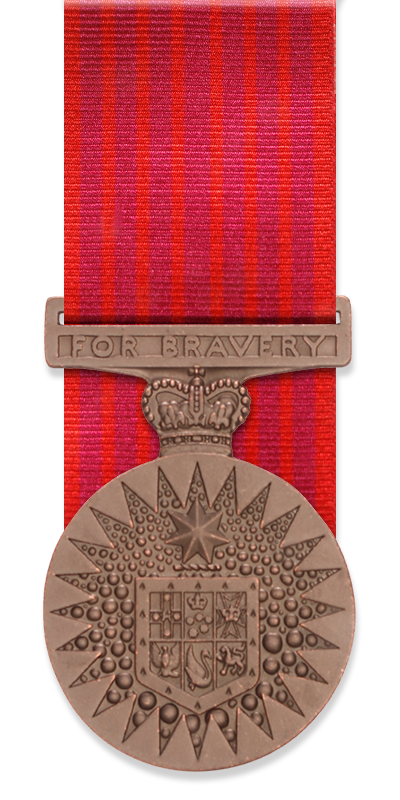
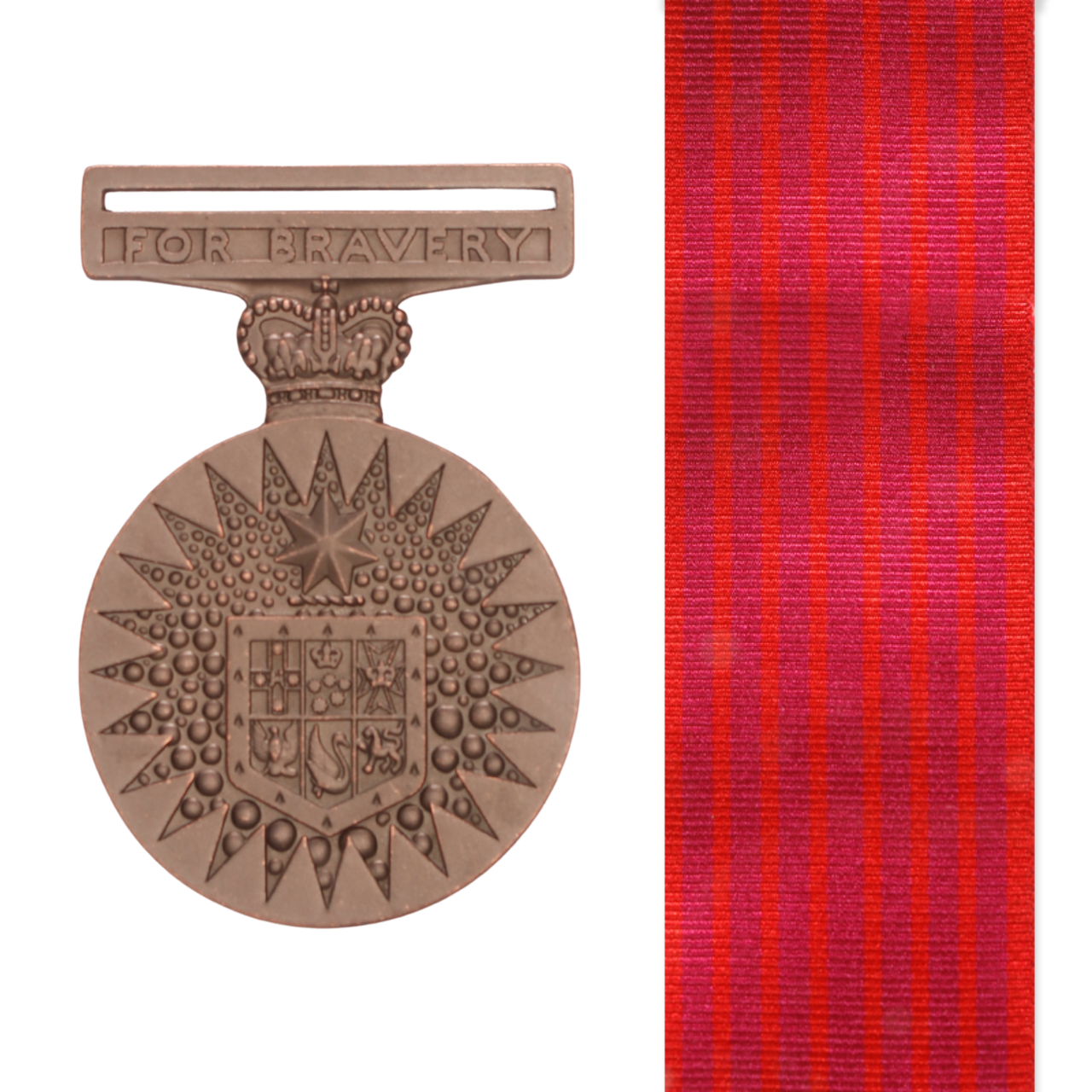
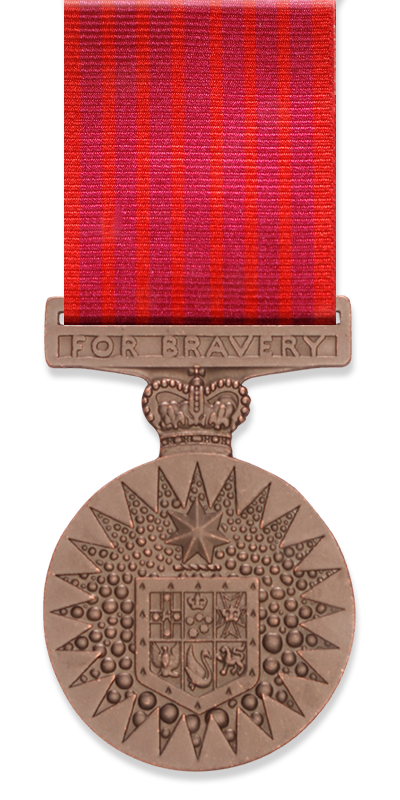
The Bravery Medal is a circular bronze medal ensigned with the Crown of Saint Edward in bronze, surmounted by the shield and crest of the Commonwealth Coat of Arms, the Federation Star above the shield within a circular zig-zag border. The medal hangs from a suspender bar inscribed FOR BRAVERY.
The ribbon
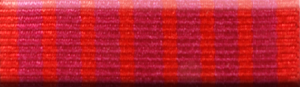
Fifteen alternating stripes of blood-red and magenta.
The ribbon is 32 millimetres wide with fifteen alternating stripes of blood-red and magenta, representing the colours of venous and arterial blood.
Clasps
A further act of bravery at the same level is recognised by a bar worn on the ribbon.
Eligibility
The medal is awarded by the Governor-General on the recommendation of the Australian Bravery Decorations Council, for acts of bravery in hazardous circumstances.
- Anyone may nominate any other person; the Council considers the nominations and recommends both the awards and their level;
- Australian citizens are eligible for acts in Australia or overseas, and non-citizens for acts in Australia or acts overseas in the interest of Australia; awards may be made posthumously and presented to the next of kin;
- Recipients are entitled to the post-nominal BM. Members of the Defence Force are eligible for acts in circumstances other than action against an enemy.
Order of wear
The decoration is worn among the gallantry and bravery decorations, interleaved with the Imperial awards of equivalent standing. The precise neighbours in the order of wear should be confirmed against the current Australian Order of Wear.
Frequently asked questions
What is the Bravery Medal awarded for?
Acts of bravery in hazardous circumstances. It is the third of the Australian bravery decorations, below the Star of Courage and above the Commendation for Brave Conduct.
Who receives it?
Mostly civilians, recognised for rescues and interventions in fires, floods, road crashes and other emergencies, along with a number of service personnel for incidents on and off duty.
How do I nominate someone?
Anyone may nominate any other person through the Governor-General's website. Nominations are researched by the Honours Secretariat and considered by the Australian Bravery Decorations Council.
Can it be awarded posthumously?
Yes. Bravery decorations may be made posthumously and are presented to the next of kin.
What do the ribbon colours mean?
The fifteen alternating stripes of blood-red and magenta represent the colours of arterial and venous blood, the shared symbolism of the bravery decorations.
Does it carry a post-nominal?
Yes: BM, with and Bar for a further award.