
History
When Australia created its own honours system on 14 February 1975, the bravery decorations came with it: the Cross of Valour, the Star of Courage, the Bravery Medal and the Commendation for Brave Conduct, recognising acts of bravery in other than warlike situations, with the Group Bravery Citation added in 1990. At their head stands the Cross of Valour, awarded only for acts of the most conspicuous courage in circumstances of extreme peril.
It has been awarded five times in fifty years, every one to a civilian: from Darrell Tree, the volunteer fire brigade captain who pulled a three year old child clear of electrocution in 1989, to Timothy Britten and Richard Joyes, who entered the burning Sari Club after the 2002 Bali bombings to rescue a badly injured woman and kept searching for survivors through their own injuries and the explosions that followed. Members of the Defence Force are eligible where normal military honours do not apply, though none has yet received it.
Design & ribbon
The medal
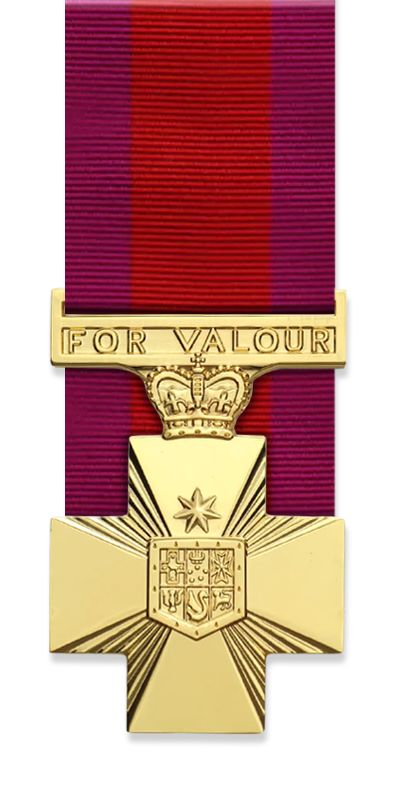
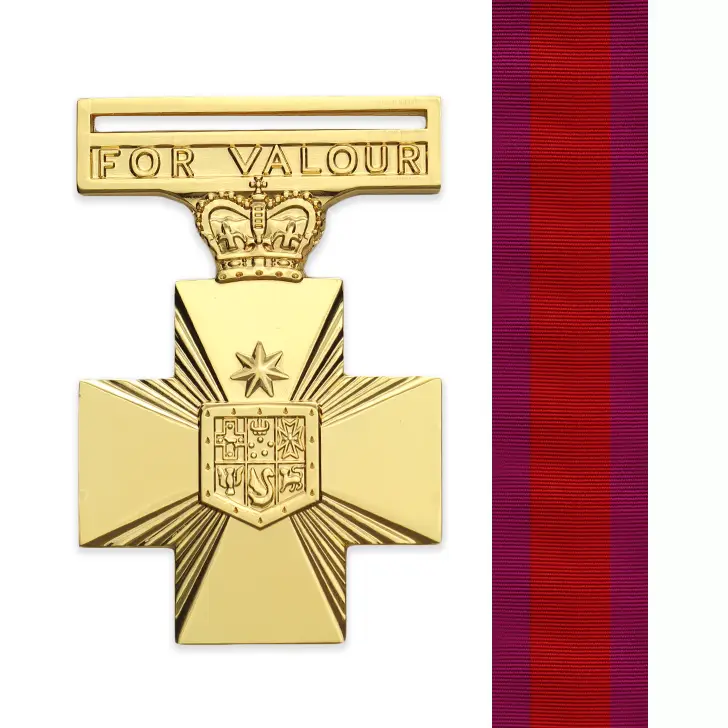
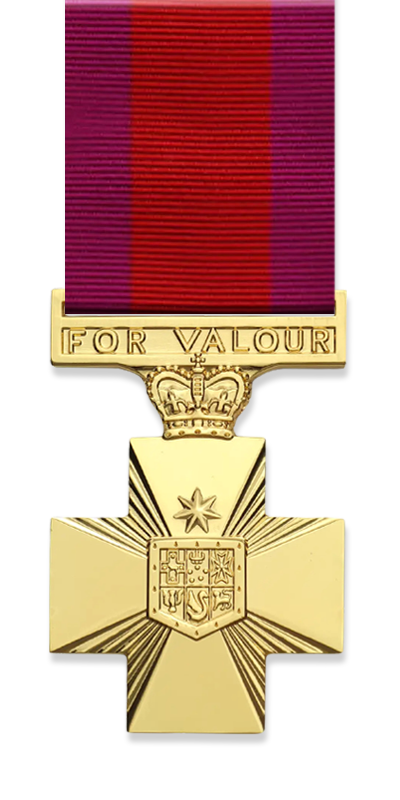
The Cross of Valour is a gold, straight armed cross pattee with fluted rays diminishing between the arms, ensigned with the Crown of Saint Edward. The obverse bears the shield and crest of the Commonwealth Coat of Arms, the Federation Star above the shield. The reverse is plain with the fluted rays, and the suspender bar, inscribed FOR VALOUR on the obverse, is left clear on the reverse for the recipient's name.
The ribbon

Magenta with a central blood-red band: venous and arterial blood.
The ribbon is 38 millimetres wide, magenta with a central blood-red band of 16 millimetres. The two reds represent the colours of venous and arterial blood, the shared symbolism of all the Australian bravery decorations.
Clasps
Provision exists for a bar for a further act of courage at the same level.
Eligibility
The decoration is awarded by the Governor-General on the recommendation of the Australian Bravery Decorations Council, only for acts of the most conspicuous courage in circumstances of extreme peril.
- Anyone may nominate any other person; nominations are researched by the Honours Secretariat at Government House and considered by the fourteen member Council, which recommends both the awards and their level;
- Australian citizens are eligible for acts in Australia or overseas, and non-citizens for acts in Australia or acts overseas in the interest of Australia; awards may be made posthumously;
- Recipients are entitled to the post-nominal CV. Members of the Defence Force may be recognised where normal military honours do not apply.
Order of wear
The Cross of Valour is worn third in the Australian order, after the Victoria Cross and the George Cross and before the orders of chivalry. The precise neighbours should be confirmed against the current Australian Order of Wear.
Frequently asked questions
What is the Cross of Valour awarded for?
Only for acts of the most conspicuous courage in circumstances of extreme peril. It is the highest of the Australian bravery decorations, which recognise bravery in other than warlike situations.
Who are the five recipients?
Darrell Tree, Victor Boscoe, Allan Sparkes, Timothy Britten and Richard Joyes. Britten and Joyes were decorated for entering the destroyed Sari Club during the 2002 Bali bombings to rescue a badly injured woman and search for survivors.
Can soldiers receive it?
Yes, for acts of bravery carried out in circumstances other than action against an enemy, where normal military honours do not apply. No serving member has yet received it.
How is someone nominated?
Anyone may nominate any other person through the Governor-General's website. Nominations are researched by the Honours Secretariat and considered by the Australian Bravery Decorations Council, which recommends awards and their level directly to the Governor-General.
Where does it sit against the Victoria Cross?
The Victoria Cross recognises gallantry in the presence of the enemy; the Cross of Valour recognises the same order of courage away from war. It is worn third in the Australian order, after the Victoria Cross and the George Cross.
Does it carry a post-nominal?
Yes: CV.