
History
The Medal for Gallantry was established on 15 January 1991 by Letters Patent as the third of the Australian gallantry decorations, taking the place of the third level Imperial gallantry awards, among them the Military Cross and the Military Medal and their naval and air equivalents. Like the rest of the family, it applies to all Services and all ranks, with the level of the award set by the quality of the action.
It is awarded for acts of gallantry in action in hazardous circumstances. Awards have been made for operations from Somalia and East Timor through Iraq and Afghanistan, and retrospectively through the end of war lists and reviews that revisited the recognition of earlier conflicts, Vietnam above all.
Design & ribbon
The medal
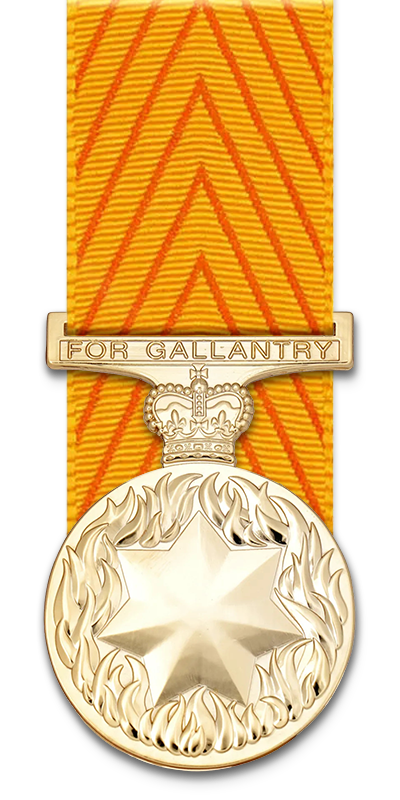
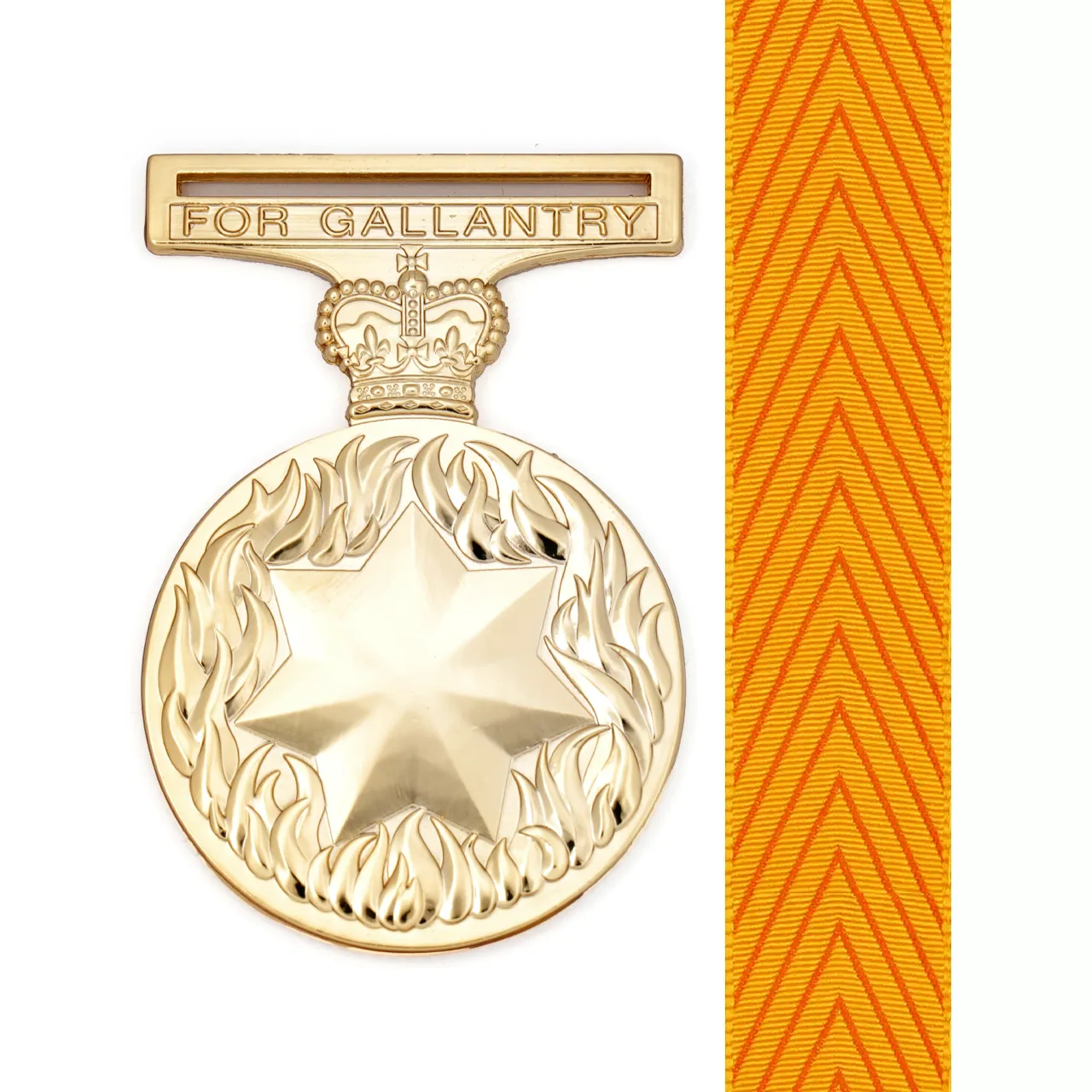
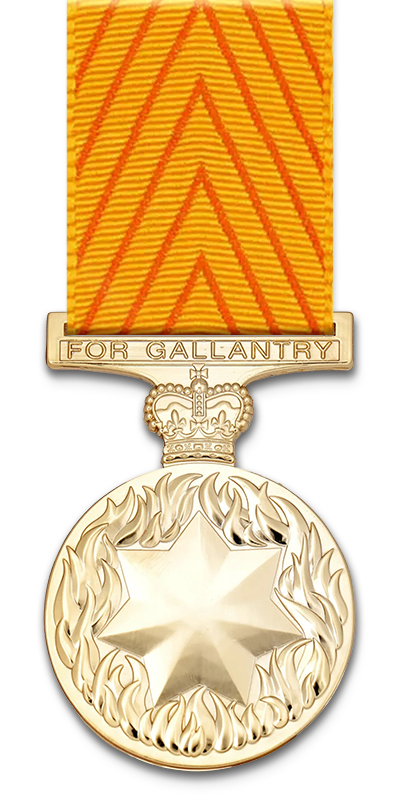
The Medal for Gallantry is circular, in gold plated silver, ensigned with the Crown of Saint Edward. The obverse bears a Federation Star superimposed on a field of stylised flames, representing action under fire. The suspension bar is inscribed FOR GALLANTRY on both the obverse and the reverse.
The ribbon
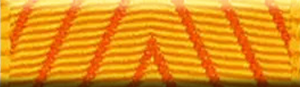
Chevrons of light and deep orange, worn with the points upward.
The 32 millimetre ribbon has a design of chevrons of light orange alternating with chevrons of deep orange, and is worn with the points of the chevrons facing upwards.
Clasps
A further award of the medal is denoted by a bar worn on the ribbon.
Eligibility
The medal is awarded by the Governor-General on the recommendation of the Minister for Defence, for acts of gallantry in action in hazardous circumstances.
- All ranks of the Australian Defence Force are eligible, and the medal may be awarded to other persons determined by the Minister;
- The medal may be awarded posthumously;
- Recipients are entitled to the post-nominal MG, with and Bar added for a further award.
Order of wear
The decoration is worn among the gallantry and distinguished service decorations, interleaved with the Imperial awards of equivalent standing. The precise neighbours in the order of wear should be confirmed against the current Australian Order of Wear.
Frequently asked questions
What is the Medal for Gallantry awarded for?
Acts of gallantry in action in hazardous circumstances. It is the third level of the Australian gallantry decorations, below the Victoria Cross and the Star of Gallantry.
Which Imperial awards did it replace?
The third level Imperial gallantry awards, among them the Military Cross for officers and the Military Medal for other ranks, together with their naval and air force equivalents.
Can any rank receive it?
Yes. The Australian gallantry decorations carry no rank restrictions; the level of the award is determined by the quality of the action.
Has it been awarded retrospectively?
Yes. Alongside awards for operations from East Timor to Afghanistan, the medal has been awarded through end of war lists and reviews that revisited recognition of earlier service, particularly the Vietnam War.
How does its ribbon differ from the Star of Gallantry?
Both carry orange chevrons worn points upward. On the Star of Gallantry the deep orange dominates; on the Medal for Gallantry the lighter orange leads.
Does it carry a post-nominal?
Yes: MG, with and Bar added for a subsequent award.