
History
The United Nations Interim Force in Lebanon, UNIFIL, was established in March 1978 after Israeli forces entered southern Lebanon, to confirm their withdrawal, restore international peace and security, and help the Lebanese government re-establish its authority in the area. The mission has continued, through changing circumstances, for decades, and remains one of the United Nations' major standing commitments.
Australian personnel connected with the United Nations in the Middle East, including the observers of the Truce Supervision Organization who work alongside UNIFIL, have served in the Lebanon sector. The medal is awarded for ninety days' service, with a numeral for a further tour. As a foreign award it takes its place in the Australian Order of Wearing among the United Nations medals.
Design & ribbon
The medal
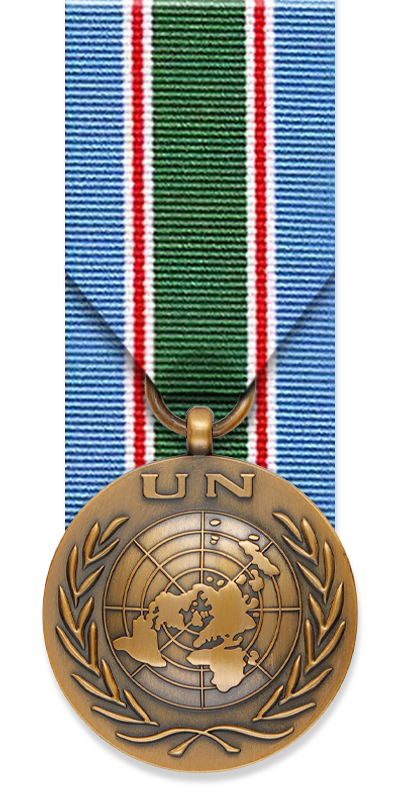
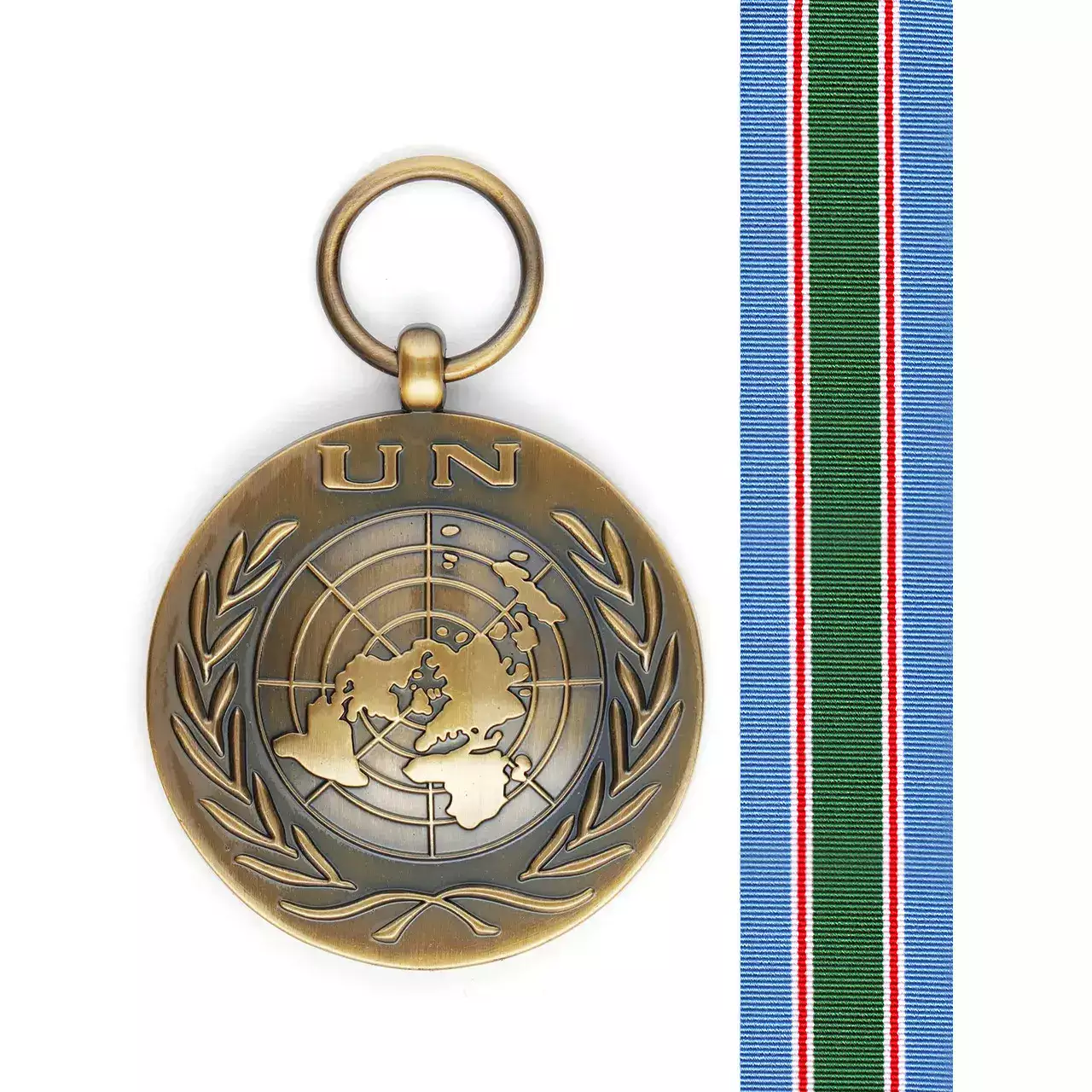
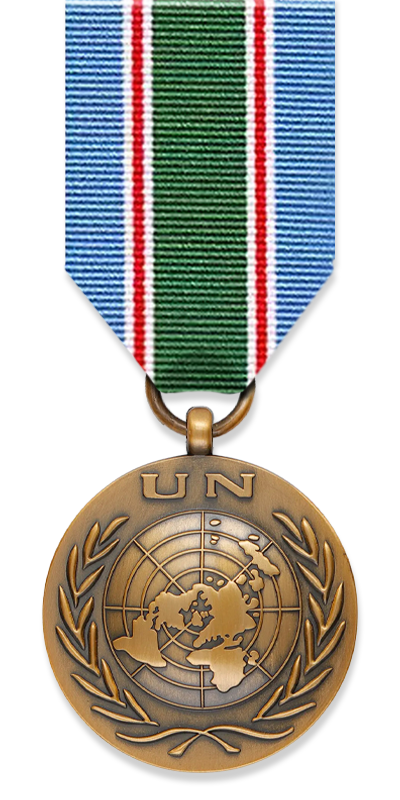
The medal follows the standard United Nations design: a circular bronze medallion 35 millimetres in diameter, the obverse bearing the emblem of the United Nations, a world map seen from the north pole within a wreath of olive branches, surmounted by the letters UN. The reverse carries the words IN THE SERVICE OF PEACE in relief. United Nations medals are issued unnamed, and the mission is identified by the colours of the ribbon.
The ribbon
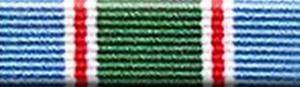
Green centre with white and red stripes and UN blue edges.
The ribbon has a central green stripe flanked by narrow stripes of white, red and white, with a band of United Nations blue at each edge.
Clasps
United Nations Number 1
A silver numeral worn on the ribbon of the medal. United Nations numerals record the number of qualifying periods of service completed with the mission.
United Nations Number 2
A silver numeral recording a second qualifying period of service with the mission.
United Nations Number 3
A silver numeral recording a third qualifying period of service with the mission.
United Nations Number 4
A silver numeral recording a fourth qualifying period of service with the mission.
Eligibility
The medal is awarded for service with the United Nations Interim Force in Lebanon.
- Ninety days' service with the mission qualifies; Australian personnel connected with United Nations service in the Middle East have served in the Lebanon sector;
- A numeral on the ribbon marks a further tour of the same mission;
- As a foreign award it takes its place in the Australian Order of Wearing among the United Nations medals.
Order of wear
United Nations medals are awarded by the United Nations and accepted and worn by Australians who served the mission. In the Australian Order of Wearing they are worn after Australian honours and campaign awards, among the foreign awards, in the sequence set for United Nations service, which generally follows the dates of the missions.
Frequently asked questions
What is the UN Lebanon Medal awarded for?
Service with the United Nations Interim Force in Lebanon, UNIFIL, established in 1978 to confirm the withdrawal of Israeli forces and help restore Lebanese authority in the south.
What do the ribbon colours mean?
A green centre framed by white and red, the colours associated with Lebanon, with United Nations blue at the edges.
What is the qualifying period?
Ninety days' service with the mission.
How long has the mission lasted?
Since 1978, making it one of the United Nations' longest standing peacekeeping commitments.
How is a further tour shown?
By a numeral attached to the ribbon.
Is it named to the recipient?
No; United Nations medals are issued unnamed.