
History
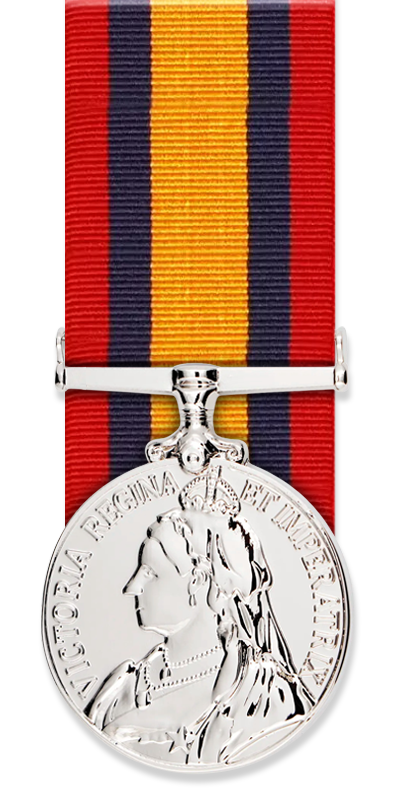
The Queen's South Africa Medal was the principal campaign medal of the Second Boer War, the South African War fought between the British Empire and the Boer republics from 1899 to 1902. It was awarded in vast numbers across the forces of the Empire, and among its recipients were many thousands of Australians: the colonies sent contingents from 1899, and after Federation in 1901 the new Commonwealth continued to send forces, so the medal spans Australia's transition to nationhood.
The medal bears the crowned effigy of Queen Victoria and a reverse of Britannia holding a flag and pointing the way to advancing troops. A great many clasps were authorised, naming the battles, sieges and colonies of the war, and a recipient wore a clasp for each qualifying action. Those who served long enough and remained after the Queen's death also received the King's South Africa Medal alongside it. As an Imperial-era award it retains its place in the Australian Order of Wearing.
Design & ribbon
The medal
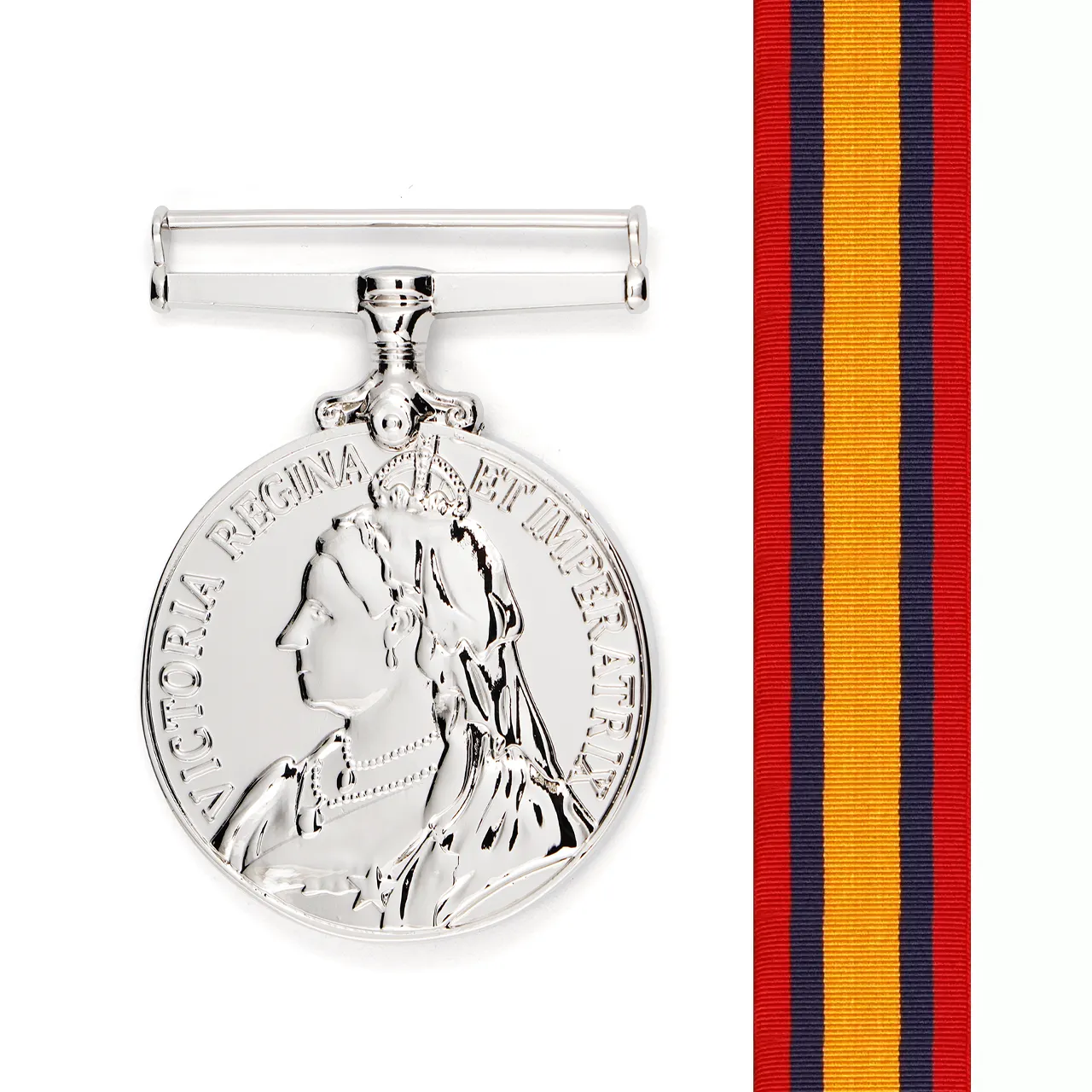
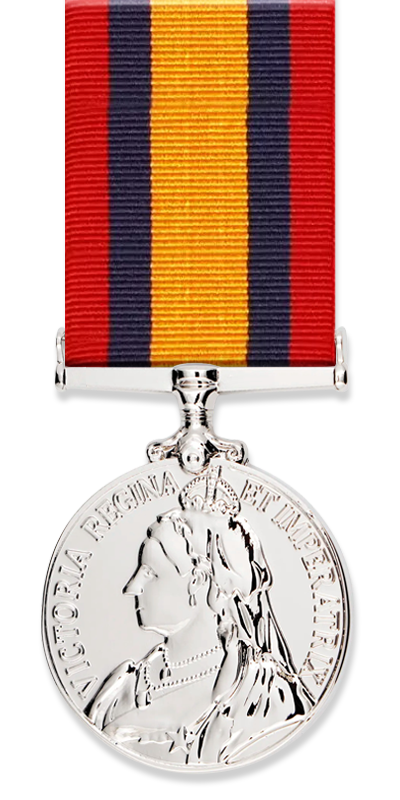
The medal is circular silver, 36 millimetres in diameter. The obverse bears the crowned and veiled effigy of Queen Victoria, designed by George William de Saulles, with the legend VICTORIA REGINA ET IMPERATRIX. The reverse shows Britannia holding the Union Flag in her left hand and a laurel wreath in her outstretched right, pointing the way to columns of troops, with the words SOUTH AFRICA. The recipient's details are impressed on the rim.
The ribbon
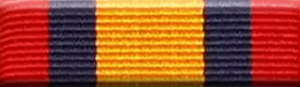
Orange centre flanked by dark blue and red.
The ribbon has a broad central orange band flanked by dark blue and red stripes, sometimes described as red, dark blue and orange.
Clasps
Clasps name the battles, sieges and colonies of the war; a recipient wore a clasp for each qualifying action.
Eligibility
The medal was awarded for service in the South African War between 11 October 1899 and 31 May 1902.
- Members of the British, colonial and Commonwealth forces qualified, including the Australian colonial contingents and, after Federation, the forces of the Commonwealth;
- Twenty-six clasps were authorised, naming actions and colonies such as Relief of Ladysmith, Cape Colony, the Transvaal and South Africa 1901 and 1902; a recipient wore a clasp for each qualifying action;
- It was often accompanied by the King's South Africa Medal for extended service. As an Imperial-era award it retains its place in the Australian Order of Wearing.
Order of wear
Imperial awards were the honours of Australia before the Australian honours system was established in 1975, and they retain their place in the Order of Wearing. They are worn after the Australian honours of their kind and among the Imperial awards in the order set by the Australian Order of Wearing, which follows the British order of precedence.
Frequently asked questions
What is the Queen's South Africa Medal awarded for?
Service in the South African War, the Second Boer War, between 11 October 1899 and 31 May 1902, the principal campaign medal of that war.
How many Australians received it?
Many thousands, from the colonial contingents sent from 1899 and, after Federation in 1901, the forces of the new Commonwealth; it spans Australia's move to nationhood.
What does the reverse show?
Britannia holding the Union Flag and pointing the way to advancing troops, with the words SOUTH AFRICA, a design by George William de Saulles.
How do the clasps work?
Twenty-six clasps name the battles, sieges and colonies of the war; a recipient wore one for each qualifying action, so medals may carry several.
How does it relate to the King's South Africa Medal?
Those who served long enough and remained in South Africa after Queen Victoria's death also received the King's South Africa Medal, worn immediately after this one.
Is it named to the recipient?
Yes, impressed on the rim.