
History
The Queen Elizabeth II Silver Jubilee Medal was created in 1977 by Royal Warrant to mark the twenty fifth anniversary of The Queen's accession on 6 February 1952. For the first time the award of a royal commemorative medal was placed at the discretion of each national government rather than allocated from London, and Australia awarded 6,870 of them, with around 300 allocated to the Defence Force and, by tradition, an issue to every living recipient of the Victoria Cross.
Coming two years after the creation of the Australian honours system, it stands as the last royal commemorative medal worn within the Australian order: under the current Schedule, the Golden, Diamond and Platinum Jubilee medals and the King Charles III Coronation Medal that followed are all worn as foreign awards. The medal was issued unnamed, accompanied by a certificate.
Design & ribbon
The medal
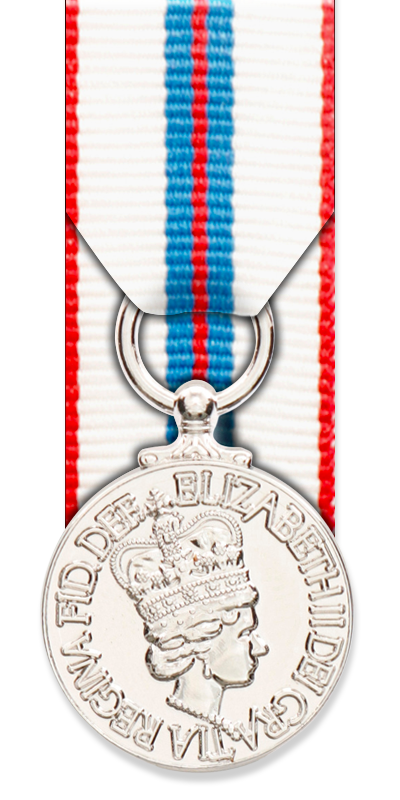
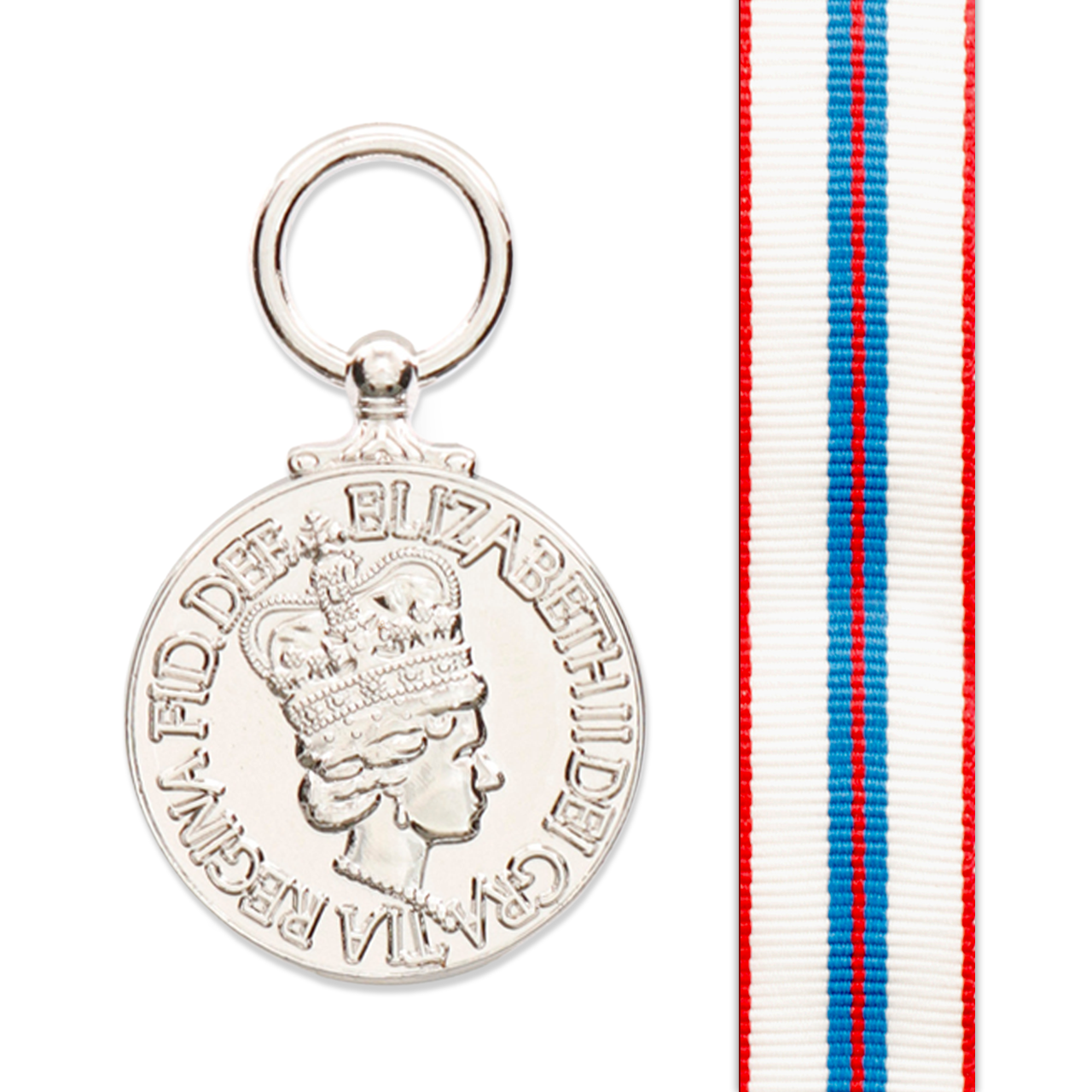
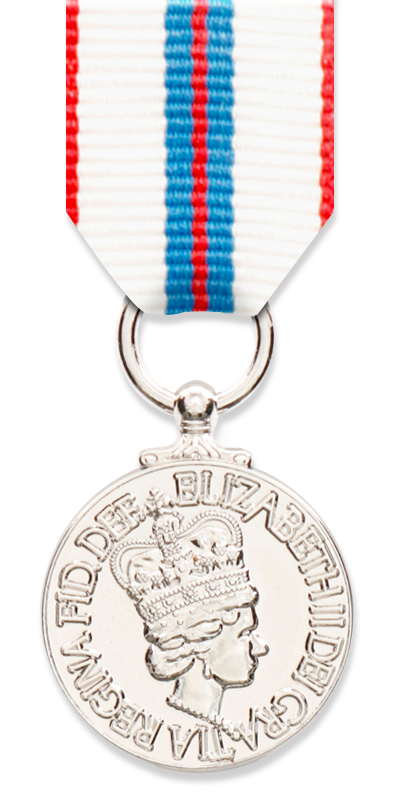
The medal is a 32 millimetre silver disc designed by the sculptor David Wynne. The obverse bears the crowned effigy of Queen Elizabeth II within the words ELIZABETH II DEI GRA. REGINA FID. DEF. The reverse carries a crown atop a wreath enclosing the words THE 25th YEAR OF THE REIGN OF QUEEN ELIZABETH II 6 FEBRUARY 1977 in six lines.
The ribbon
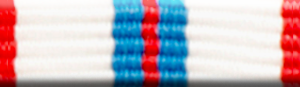
White with garter blue and cardinal red, the traditional colours of the jubilee medals.
The ribbon is white with a central stripe of garter blue bisected by a fine line of cardinal red, and narrow cardinal red bands at the edges, carrying on the traditional colours of the jubilee medals.
Eligibility
From 1977 the award of royal commemorative medals passed to the discretion of each national government, and the Australian Government selected the Australian recipients.
- Australia awarded 6,870 medals across public life, with a sub-allocation of around 300 to the Defence Force;
- By tradition an issue was made to every living recipient of the Victoria Cross;
- The medal was issued unnamed, with an accompanying certificate, and carries no post-nominal.
Order of wear
The medal is worn among the Coronation, Jubilee, Remembrance and Commemorative medals, after the service awards and before the Australian long service awards. The precise neighbours in the order of wear should be confirmed against the current Australian Order of Wear.
Frequently asked questions
Who received the Silver Jubilee Medal in Australia?
6,870 Australians selected at the Australian Government's discretion across public life, including a sub-allocation of around 300 to the Defence Force and, by tradition, every living recipient of the Victoria Cross.
How was it different from earlier royal medals?
Until 1977 the United Kingdom decided the total number of coronation and jubilee medals and allocated a share to each country. From the Silver Jubilee onwards, the award was at the discretion of each national government.
Where does it sit in the Australian order of wear?
Among the Coronation, Jubilee, Remembrance and Commemorative medals, after the Queen Elizabeth II Coronation Medal and before the 80th Anniversary Armistice Remembrance Medal.
Is my medal engraved?
No. The medal was issued unnamed, accompanied by a certificate.
What about the later jubilee medals?
The Golden, Diamond and Platinum Jubilee medals and the King Charles III Coronation Medal were awarded after the introduction of the Australian honours system, and the current Order of Wearing directs that they are worn as foreign awards.
Does it carry a post-nominal?
No.