
History
The Centenary Medal was established in 2001, the third commemorative award of the Australian honours system, to mark one hundred years of federation and to acknowledge the challenges of the new century. It recognised people who made a contribution to Australian society or government: community volunteers, those whose achievements in science, research and the arts made a national or international impact, and holders of government and judicial office. Nominations came through the Commonwealth, state and territory governments and were assessed by an independent council chaired by the historian Geoffrey Blainey.
More than 15,850 medals were issued, close to 1,400 of them to centenarians: Australians born on or before 31 December 1901 who lived to celebrate the centenary of federation on 1 January 2001, spanning the whole first century of the nation within a single life. Each recipient received a personalised warrant with the medal. The award is now effectively closed, remaining open only to centenarians born before the end of 1901.
Design & ribbon
The medal
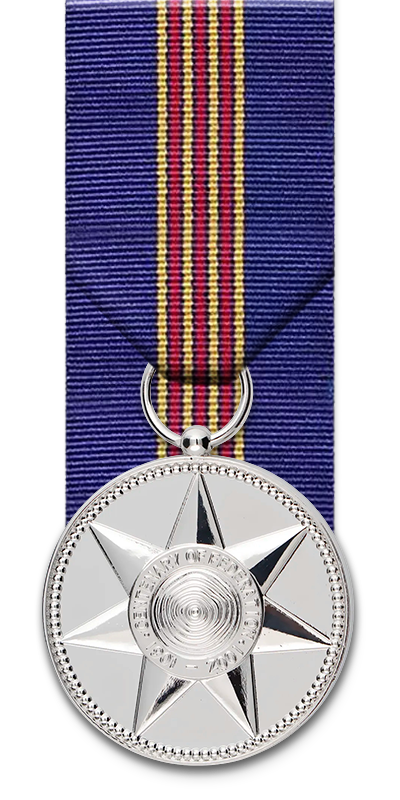
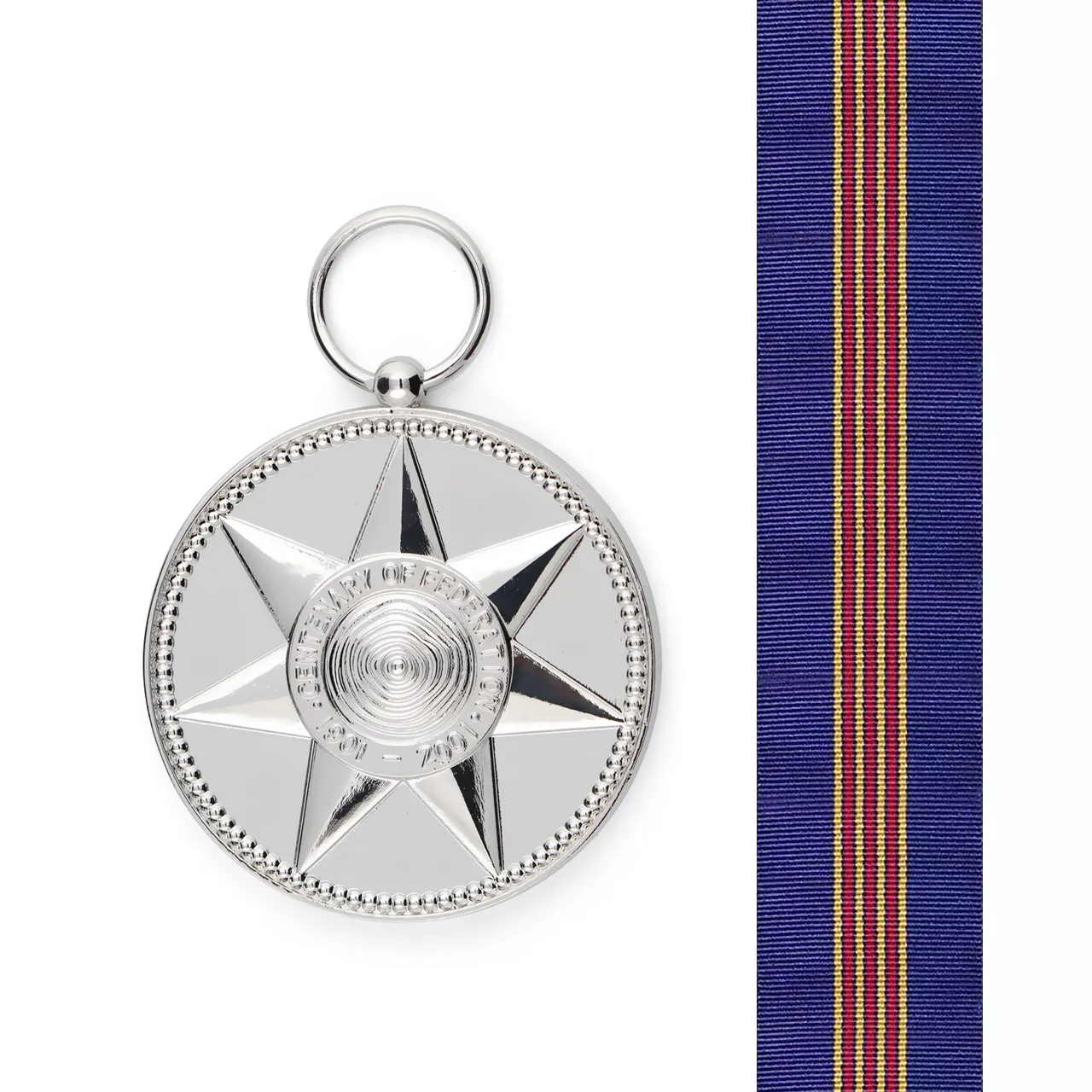
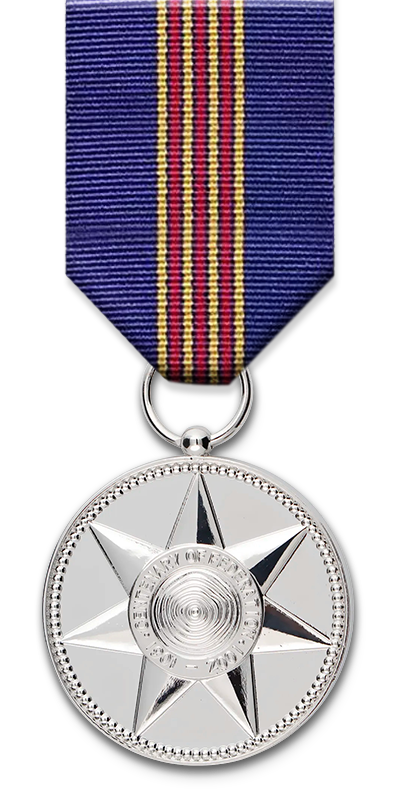
The medal features a seven-pointed Commonwealth Star, six points for the Australian states and the seventh for the territories, with an Indigenous styling at its centre representing Aboriginal traditions at the heart of the continent. Around the rim run one hundred dots, one for each year of federation, within the inscription Centenary of Federation 1901-2001. The reverse repeats the seven-pointed star with the words For Contribution Made to Australian Society around the rim. The design is by Balarinji of Sydney.
The ribbon
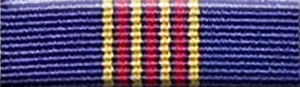
Crimson for federation, blue and gold for the new century, seven lines for the paths to nationhood.
The ribbon carries a central panel of seven narrow alternating stripes of crimson and gold on a ground of dark blue and gold. The crimson represents federation, the blue and gold the beginning of the 21st century, and the seven lines the pathways of the states and territories to nationhood.
Eligibility
The medal was awarded by the Governor-General to people, including non-citizens, who made a contribution to Australian society or government during the nation's first hundred years.
- The general list recognised community volunteers and those whose achievements in science, research or the arts made a notable national or international impact;
- Government and judicial office holders were recognised to celebrate the Australian system of government, and close to 1,400 medals went to centenarians who lived through the first century of federation;
- Each recipient received a personalised warrant; the medal is now open only to centenarians born before 31 December 1901, and carries no post-nominal.
Order of wear
The medal is worn among the Coronation, Jubilee, Remembrance and Commemorative medals, after the service awards and before the Australian long service awards. The precise neighbours in the order of wear should be confirmed against the current Australian Order of Wear.
Frequently asked questions
Who received the Centenary Medal?
People who made a contribution to Australian society or government: community volunteers, those with notable achievements in science, research and the arts, government and judicial office holders, and close to 1,400 centenarians who lived through the first century of federation.
How were recipients chosen?
Nominations came through the Commonwealth, state and territory governments and were assessed by an independent council chaired by the historian Geoffrey Blainey. Each recipient received a personalised warrant with the medal.
Can the medal still be awarded?
Only to centenarians: Australian citizens born on or before 31 December 1901 who were alive to celebrate the centenary of federation on 1 January 2001. The other lists are closed.
What do the hundred dots on the medal mean?
One dot for each year of the century from federation in 1901 to the commemorative year of 2001.
Who designed it?
Balarinji of Sydney, the studio that also designed the Humanitarian Overseas Service Medal, incorporating an Indigenous styling at the heart of the seven-pointed Commonwealth Star.
Does it carry a post-nominal?
No.