
History
Australian police have served overseas since 1964, when forty officers were sent to Cyprus to help keep the peace after independence, beginning a tradition of police peacekeeping that has never stopped. The Police Overseas Service Medal was established on 25 April 1991 by Letters Patent to formally acknowledge that role, recognising service by members of Australian police forces with international peacekeeping organisations or following requests for assistance from foreign governments.
The medal is awarded by the Governor-General on the recommendation of the Commissioner of the Australian Federal Police, and is always issued with a clasp naming the area of prescribed service; further service in another area brings a further clasp rather than a second medal. In 2013 the criteria were amended to include service by regular and patrol officers of the Royal Papua New Guinea Constabulary. There is no post-nominal.
Design & ribbon
The medal
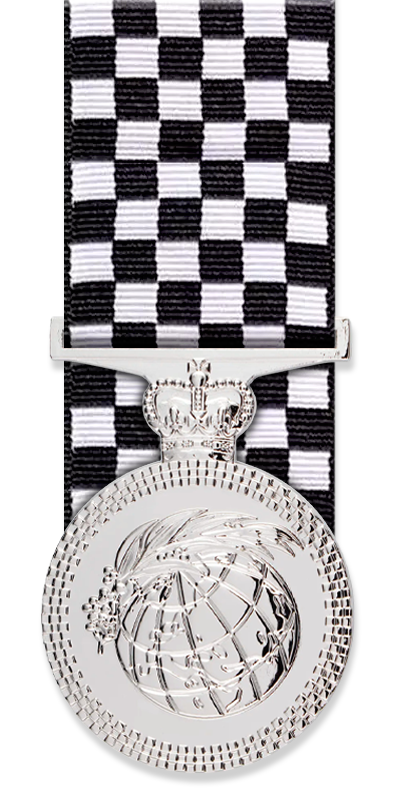
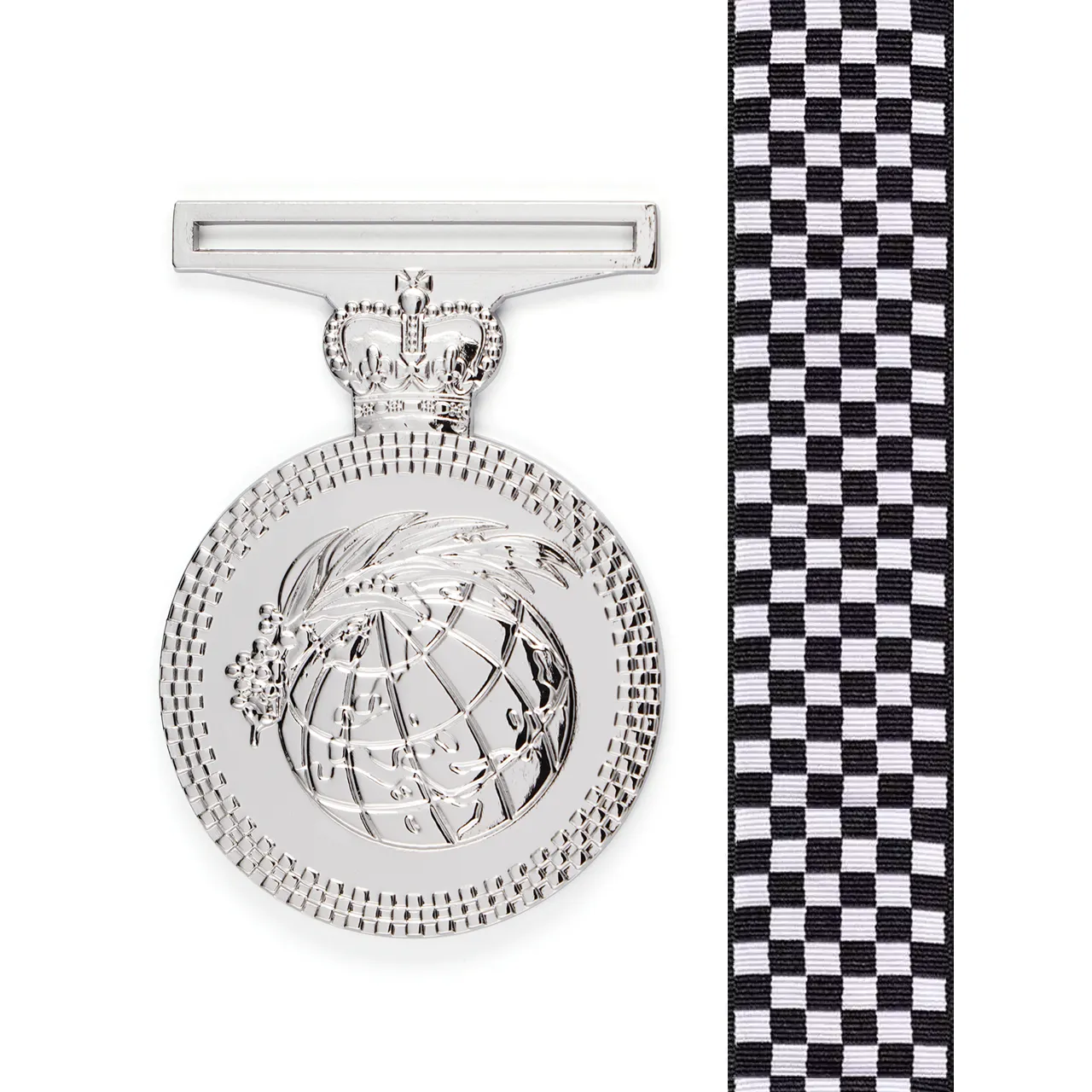
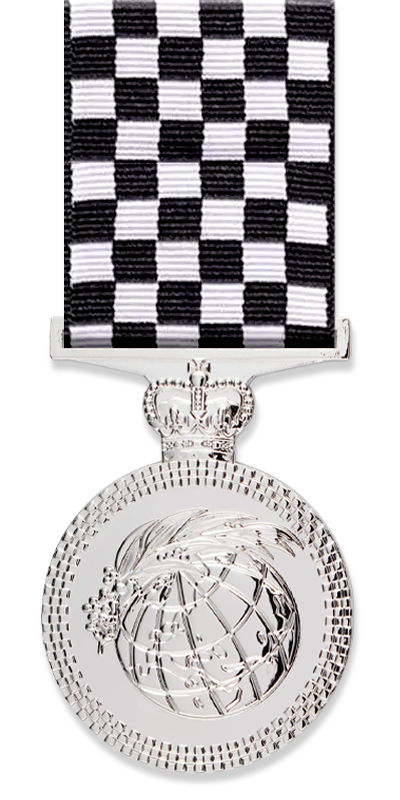
The Police Overseas Service Medal is a circular nickel-silver medal ensigned with the Crown of Saint Edward. The obverse features a globe of the world, centred on Cyprus, the first international deployment of Australian police, surmounted by a branch of wattle, within a chequerboard rim symbolising police forces across the world. The reverse displays a Federation Star, with the words Police Overseas Service Medal inscribed around the rim.
The ribbon
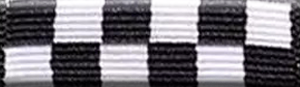
The police chequerboard, black and white.
The 32 millimetre ribbon consists of alternating squares of black and white in the chequerboard pattern commonly representative of police services.
Clasps
The medal is always awarded with a clasp naming the area of prescribed service, and eligible service in a further area is recognised by an additional clasp. The clasps declared include the following.

Afghanistan
For prescribed service with the Australian police missions in Afghanistan.

Bougainville
For prescribed service with the peace process on Bougainville from the late 1990s.

Cambodia
For prescribed service with the United Nations operations in Cambodia in the early 1990s.

Cyprus
For prescribed service with the United Nations peacekeeping force in Cyprus, the mission that began Australian police peacekeeping in 1964 and the deployment on which the medal's globe is centred.

East Timor
For prescribed service with the international missions in East Timor from 1999.

Haiti
For prescribed service with the international policing missions in Haiti in the mid 1990s.

Mozambique
For prescribed service with the United Nations operation in Mozambique in the mid 1990s.

PNGAPP
For police service with the Papua New Guinea Australia Policing Partnership, declared in 2016.

PNGECP
For police service with the Papua New Guinea Enhanced Cooperation Program, declared in 2017.
RAMSI
For police service with the Regional Assistance Mission to Solomon Islands.

Solomon Islands
For police service in the Solomon Islands.

Somalia
For police service in Somalia.

South Sudan
For police service in South Sudan with the United Nations Mission in South Sudan.

Sudan
For police service in Sudan with the United Nations Mission in Sudan.

Timor-Leste
For police service in Timor-Leste.

TLPDP
For police service with the Timor-Leste Police Development Program, declared in 2016.

TPNG
A declared clasp to the Police Overseas Service Medal for eligible policing service.

NPFPCP
For police service with the Nauru Police Force Police Capacity Program, declared in 2021.

SIPDP
For police service with the Solomon Islands Police Development Program, declared in 2021.
Eligibility
The medal is awarded by the Governor-General on the recommendation of the Commissioner of the Australian Federal Police, for service by members of Australian police forces with international peacekeeping organisations or following a request for assistance from a foreign government.
- The eligible missions, areas and qualifying periods are set by the declaration for each clasp;
- Only one medal is awarded to a person, with service in a further area recognised by an additional clasp;
- Since 2013, regular and patrol officers of the Royal Papua New Guinea Constabulary may also be recognised. There is no post-nominal.
Order of wear
The medal is worn among the Australian service awards, after the campaign medals and before the Humanitarian Overseas Service Medal. The precise neighbours should be confirmed against the current Australian Order of Wear.
Frequently asked questions
What is the Police Overseas Service Medal awarded for?
Service by members of Australian police forces with international peacekeeping organisations, or following a request for assistance from a foreign government, in areas prescribed by declaration.
How do the clasps work?
The medal is always issued with a clasp naming the area of service. Eligible service in a further area is recognised by an additional clasp on the same medal, never by a second medal.
How many clasps exist?
Nineteen have been declared to date, from Cyprus onwards. The full roster of declared areas and qualifying periods is maintained with the declarations on the Governor-General's website.
Why is the globe centred on Cyprus?
Cyprus was the first international deployment of Australian police, in 1964, when forty officers joined the United Nations force after independence.
Who recommends the award?
The Commissioner of the Australian Federal Police, with the medal awarded by the Governor-General. Since 2013, regular and patrol officers of the Royal Papua New Guinea Constabulary may also be recognised.
Does it carry a post-nominal?
No.