
History
Australian military nurses were long recognised through the Imperial Royal Red Cross, instituted by Queen Victoria: about 250 Australians received one of its two classes between the Boer War and the Vietnam War, with the last Australian awards made at the end of 1981. When the Conspicuous Service Decorations were instituted on 18 October 1989, the Nursing Service Cross was created beside them as Australia's own award for outstanding devotion and competence in the performance of nursing duties, or for an act of exceptional dedication in those duties, in warlike and non-warlike situations alike.
Twenty nine awards were made to twenty eight recipients, nurses and medics of all three Services, with a single bar awarded for a second act of exceptional dedication. No new awards have been made since 2007, and nominations were formally closed by determination of the Chief of the Defence Force in 2010; outstanding nursing performance is now recognised through the other operational and non-operational awards. The Cross remains a living part of the honours system for those who hold it.
Design & ribbon
The medal
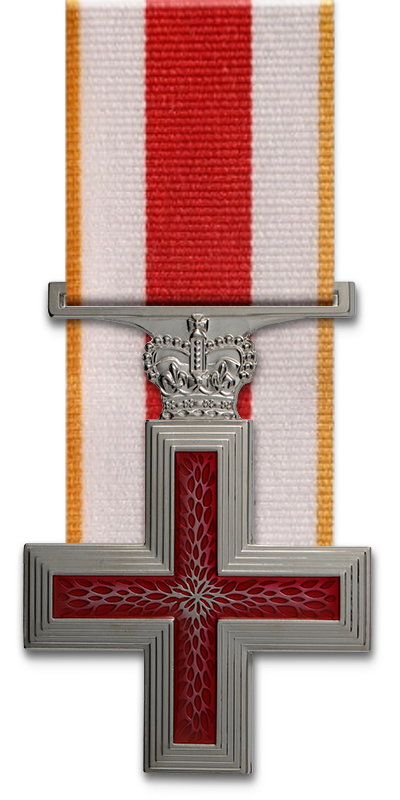
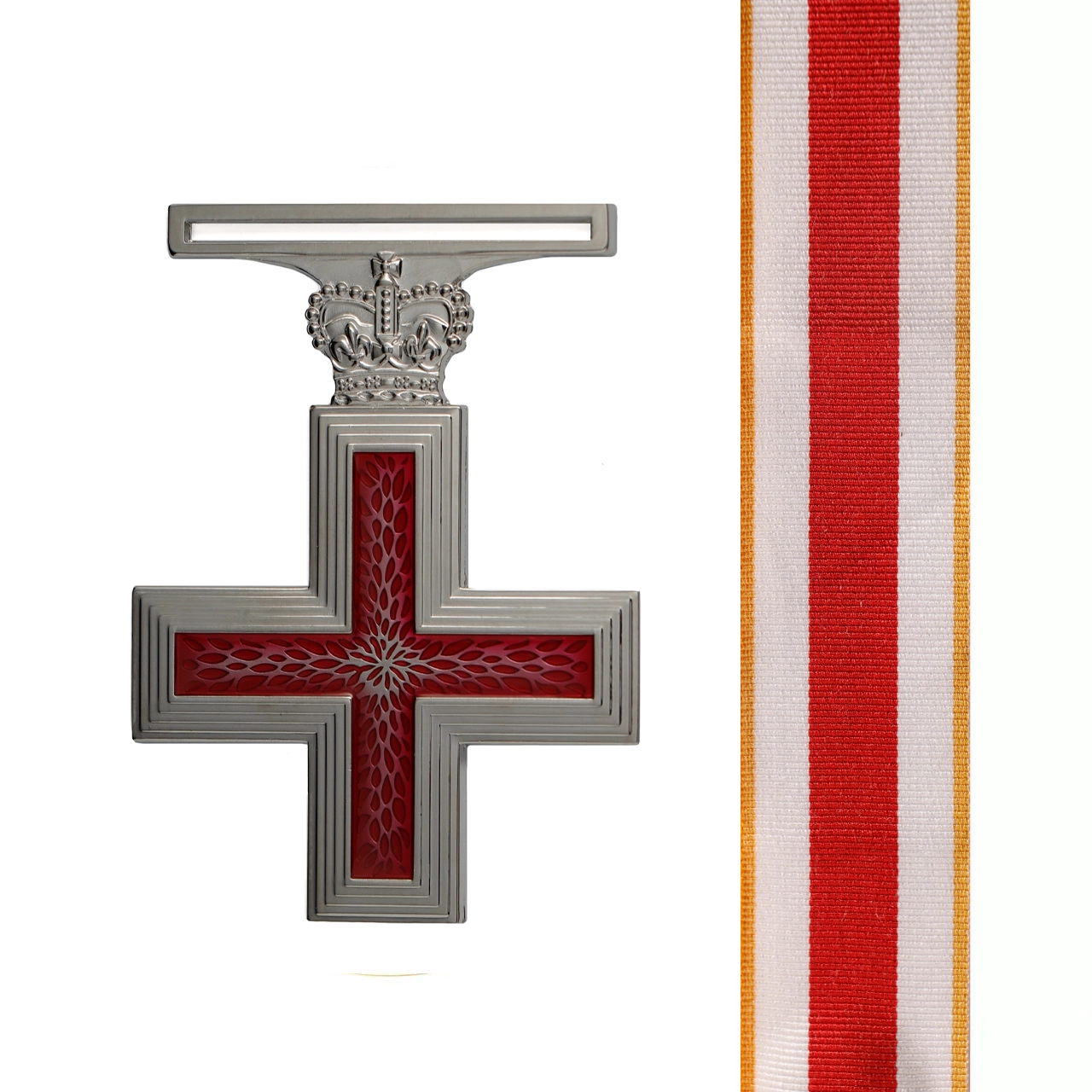
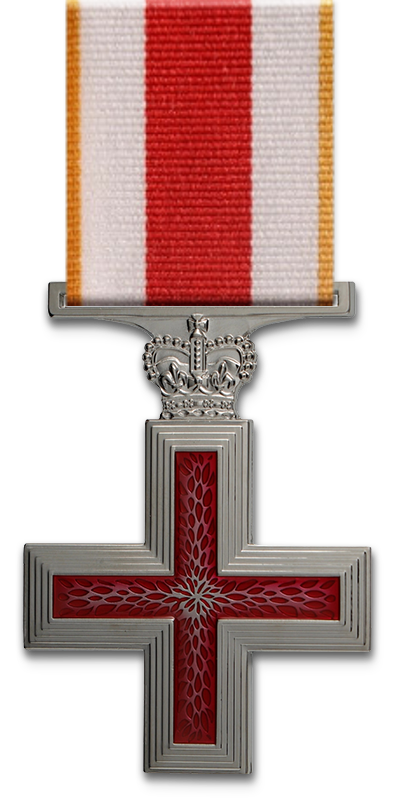
The Nursing Service Cross is a four stepped, sterling silver, straight armed cross ensigned with the Crown of Saint Edward. The obverse carries a transparent red enamel cross inserted on each axis, overlaid on a flecked pattern radiating from the centre. The reverse has a horizontal panel for the recipient's details superimposed on fluted rays of varying lengths, and the cross hangs from a sterling silver suspender bar.
The ribbon
Red at the centre for the nursing cross, white for purity, gold at the edges.
The 32 millimetre ribbon has a central red vertical stripe flanked by two white stripes and edged with gold: the red of the nursing cross, white for purity, and gold for the sand.
Clasps
A further award of the Cross was denoted by a bar worn on the ribbon.
Eligibility
The Cross was awarded by the Governor-General on the recommendation of the Minister for Defence, for outstanding devotion and competence in the performance of nursing duties, or for an act of exceptional dedication in the performance of such duties.
- It could be awarded in both warlike and non-warlike situations, to the nurses and medics of the Australian Defence Force;
- Twenty nine awards were made to twenty eight recipients between 1989 and 2007; nominations were formally closed by determination of the Chief of the Defence Force in 2010;
- Recipients are entitled to the post-nominal NSC, with and Bar for the single further award ever made.
Order of wear
The decoration is worn among the Australian decorations for service, interleaved with the Imperial awards of equivalent standing. The precise neighbours in the order of wear should be confirmed against the current Australian Order of Wear.
Frequently asked questions
What is the Nursing Service Cross awarded for?
Outstanding devotion and competence in the performance of nursing duties, or an act of exceptional dedication in those duties, in both warlike and non-warlike situations.
Who received it?
The nurses and medics of the Australian Defence Force: 29 awards to 28 recipients between 1989 and 2007, with a single bar for a second award.
Is it still awarded?
No new awards have been made since 2007, and nominations were formally closed by determination of the Chief of the Defence Force in 2010. Outstanding nursing is now recognised through the other honours, but the Cross remains active for its holders.
What came before it?
The Imperial Royal Red Cross, which about 250 Australian nurses received in its two classes between the Boer War and the Vietnam War. The last Australian awards were made at the end of 1981.
What do the ribbon colours mean?
The central red stands for the nursing cross, the white for purity, and the gold edges for the sand.
Does it carry a post-nominal?
Yes: NSC, with and Bar for the one further award ever made.