
History
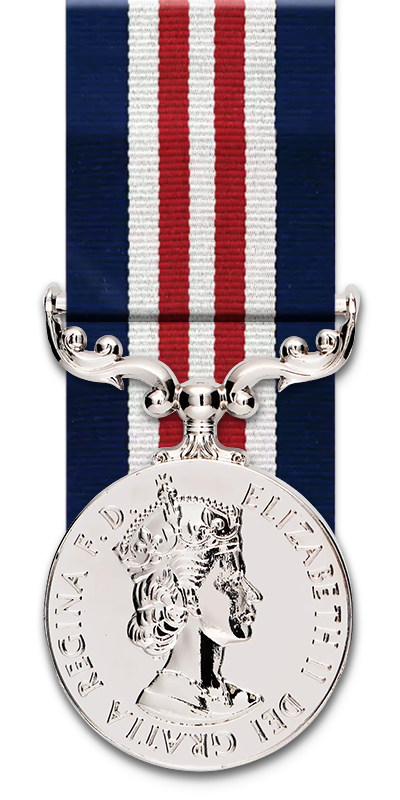
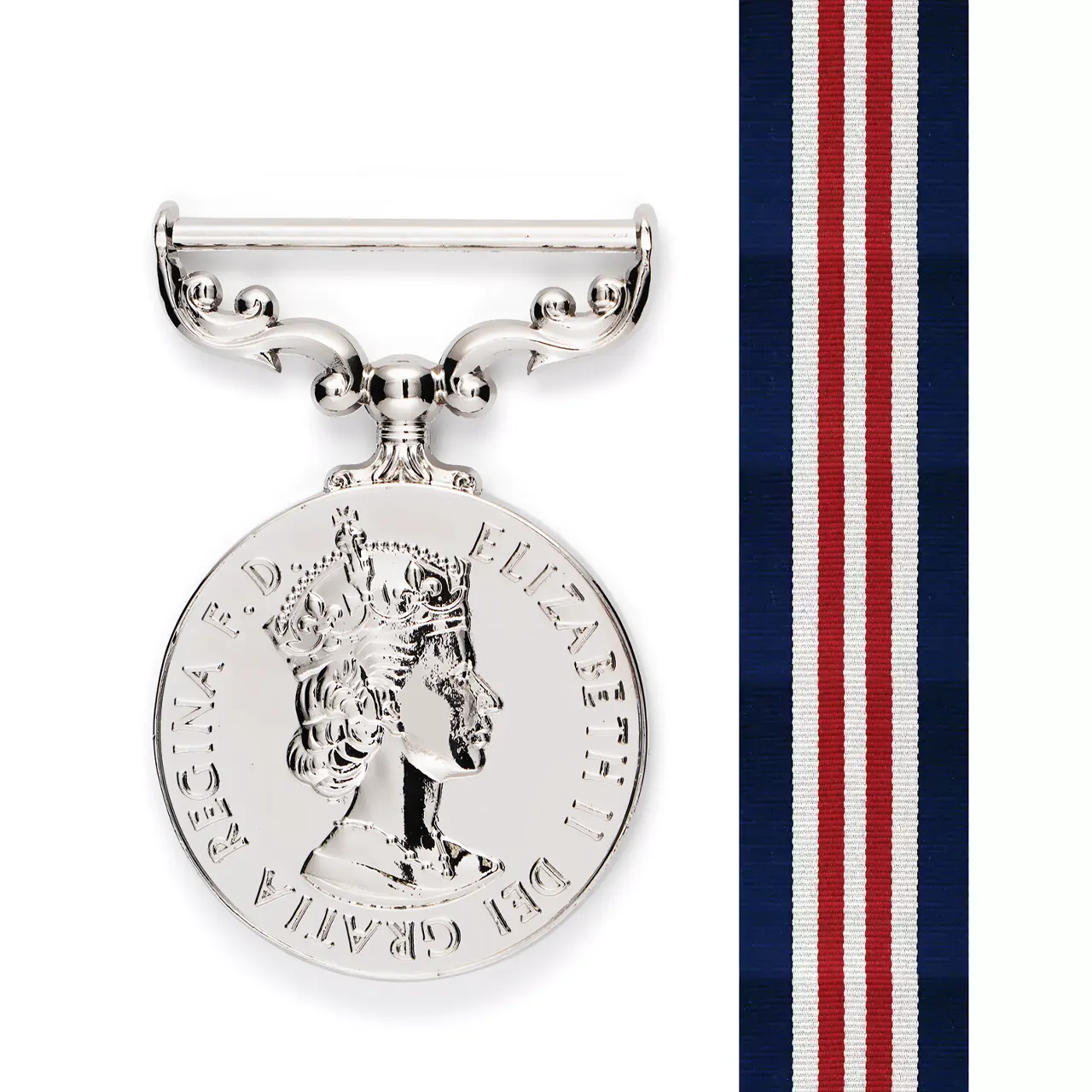
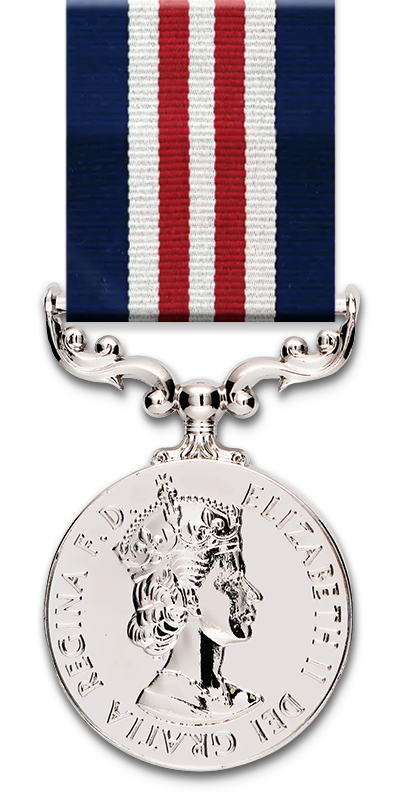
This is the Military Medal of the reign of Queen Elizabeth II, bearing her effigy. The award itself is described more fully on the main page; this issue belongs to the years from 1952, and was awarded to the other ranks of the Australian services for gallantry in the field through the campaigns of the second half of the century, including Korea, Malaya, Borneo and Vietnam.
In 1993 the United Kingdom discontinued the Military Medal, its role taken up by the Military Cross, which was opened to all ranks. This issue is therefore the last of the line. Its reverse, ribbon and criteria are those of the Military Medal, and as an Imperial award it retains its place in the Australian Order of Wearing.
Design & ribbon
The medal
The medal is the standard circular silver Military Medal bearing the crowned effigy of Queen Elizabeth II on the obverse. The reverse carries the inscription FOR BRAVERY IN THE FIELD within a laurel wreath, unchanged since the medal's institution.
The ribbon
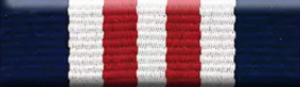
Dark blue with a central group of white and crimson stripes.
The ribbon is dark blue with a central band of three white and two crimson stripes, giving five narrow central stripes on a blue field.
Clasps
Further acts of gallantry meriting the medal are recognised by a bar rather than a second medal.
Military Medal Clasp
A silver laurelled bar is awarded for a further act of gallantry meriting the medal, worn on the ribbon; when the ribbon alone is worn, a silver rosette denotes each bar.
Eligibility
The Elizabeth II issue was awarded on the criteria of the Military Medal: acts of gallantry and devotion to duty under fire by other ranks.
- It was awarded from 1952 until the medal was discontinued in 1993;
- A silver laurelled bar denotes a further award, with a silver rosette worn on the ribbon when the ribbon alone is worn;
- Recipients are entitled to the post-nominal letters MM. As an Imperial award it retains its place in the Australian Order of Wearing.
Order of wear
Imperial awards were the honours of Australia before the Australian honours system was established in 1975, and they retain their place in the Order of Wearing. They are worn after the Australian honours of their kind and among the Imperial awards in the order set by the Australian Order of Wearing, which follows the British order of precedence.
Frequently asked questions
What makes this the Elizabeth II issue?
The crowned effigy of Queen Elizabeth II on the obverse, current from 1952.
Why is it the last issue?
The United Kingdom discontinued the Military Medal in 1993, its role taken up by the Military Cross, which was opened to all ranks.
What is it awarded for?
Acts of gallantry and devotion to duty under fire by the other ranks, the counterpart of the Military Cross.
How is a further award shown?
By a silver laurelled bar on the ribbon, with a silver rosette worn when the ribbon alone is displayed.
Does it carry a post-nominal?
Yes, the letters MM.
How is it different from the George V and George VI issues?
Only in the sovereign's effigy; the reverse, ribbon and criteria are common to all Military Medals.