
History
The Mercantile Marine War Medal was established in 1919 and awarded by the Board of Trade to the officers and men of the British Mercantile Marine, later the Merchant Navy, for service at sea in the First World War. It honoured a particular kind of courage: peacetime mariners who kept sailing through waters where enemy submarines hunted, at a cost of nearly 2,500 merchant vessels and more than 14,000 lives to enemy action.
A mariner qualified by making one or more voyages through a danger zone, or by serving at sea for at least six months between 4 August 1914 and 11 November 1918. About 133,135 were awarded, over 17,000 to seamen born outside the United Kingdom. Merchant service could be combined with the British War Medal and, where the mariner also served in the fighting forces, with the Victory Medal and a star, though service solely in the Mercantile Marine did not qualify for those. As an Imperial award it retains its place in the Australian Order of Wearing.
Design & ribbon
The medal
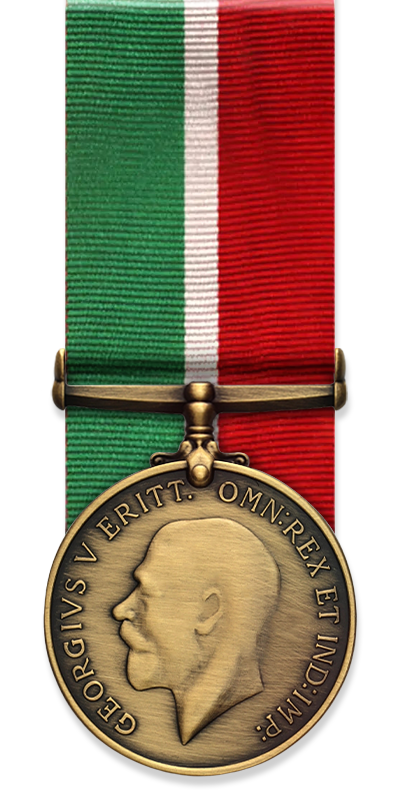
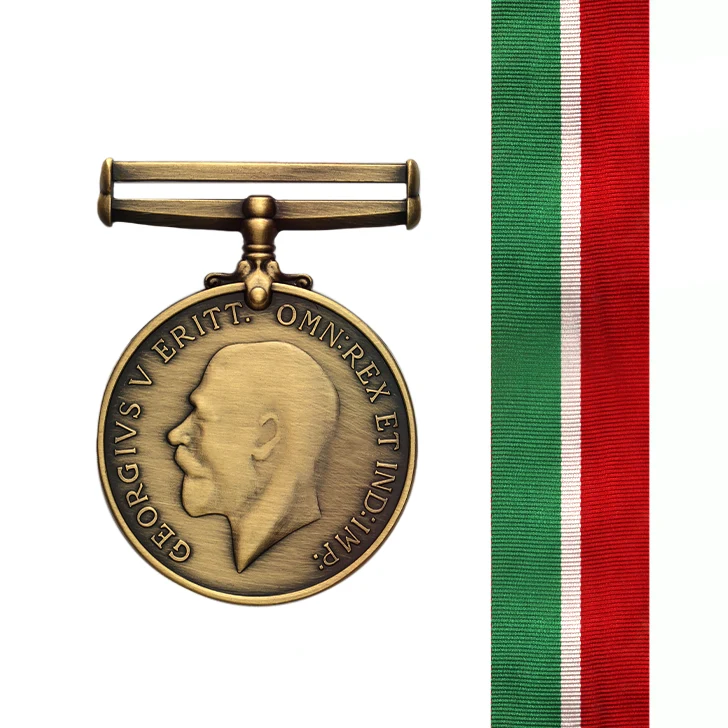
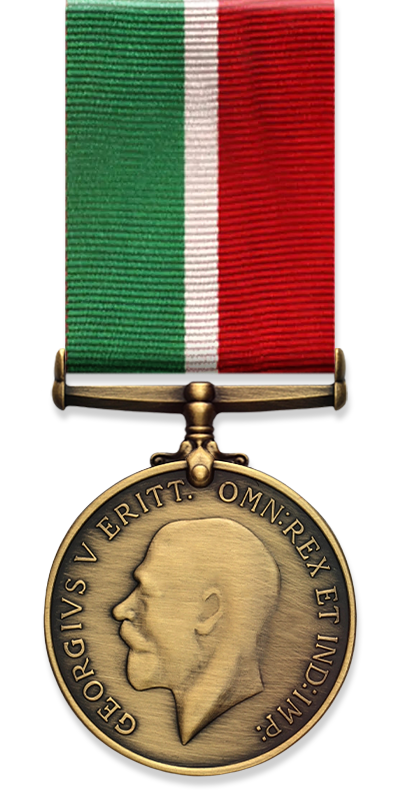
The medal is a bronze disk, 36 millimetres in diameter, with a straight non-swivelling suspender. The obverse bears Bertram Mackennal's effigy of King George V. The reverse, designed by Harold Stabler, shows a merchant steamship ploughing through heavy seas with a submarine sinking to port and a sailing ship beyond, inscribed FOR WAR SERVICE, MERCANTILE MARINE, 1914-1918 within a laurel wreath.
The ribbon
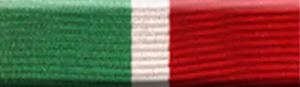
Green and red divided by white, a ship's running lights.
The ribbon has a green band and a red band separated by a thin white stripe, representing a ship's port and starboard running lights with the white masthead steaming light between them.
Eligibility
The medal was awarded to mariners of the British Mercantile Marine for war-zone service at sea.
- One or more voyages through a danger zone qualified a mariner, as did at least six months of service at sea between 4 August 1914 and 11 November 1918;
- It could be held alongside the British War Medal, and, for those who also served in the fighting forces, the Victory Medal and a star; service solely in the Mercantile Marine did not qualify for the Victory Medal or the stars;
- No clasps were awarded. As an Imperial award it retains its place in the Australian Order of Wearing.
Order of wear
Imperial awards were the honours of Australia before the Australian honours system was established in 1975, and they retain their place in the Order of Wearing. They are worn after the Australian honours of their kind and among the Imperial awards in the order set by the Australian Order of Wearing, which follows the British order of precedence.
Frequently asked questions
What is the Mercantile Marine War Medal awarded for?
Service at sea by merchant mariners in the First World War: one or more voyages through a danger zone, or at least six months at sea between 1914 and 1918.
Who awarded it?
The Board of Trade, not the armed services, making it unusual among the Great War medals; it honoured the civilian mariners of the Mercantile Marine.
What do the ribbon colours mean?
Green and red for a ship's starboard and port running lights, divided by a white stripe for the masthead steaming light.
Could a mariner also receive the war and victory medals?
Yes, the British War Medal, and where they also served in the fighting forces, the Victory Medal and a star. Service solely in the Mercantile Marine did not qualify for the Victory Medal or the stars.
How many were awarded?
About 133,135, over 17,000 of them to seamen born outside the United Kingdom.
Does it carry a post-nominal?
No; it is a campaign medal and carries no post-nominal.