
History
The King George VI Coronation Medal was issued in 1937 to commemorate the coronation of King George VI and Queen Elizabeth, held on 12 May 1937 at Westminster Abbey. The date had been set for the coronation of his brother Edward VIII, whose abdication in December 1936 brought George VI unexpectedly to the throne; the medal marks the crowning of the King who would lead the Empire through the Second World War.
Like the coronation medals before it, it was a personal gift of the sovereign, awarded to the royal family, officers of state, officials and servants of the Royal Household, ministers, public servants, mayors and members of the navy, army, air force and police across Britain, her colonies and the Dominions. Following the practice of the day the United Kingdom set the total to be struck and allocated a share to each Commonwealth country, the local authorities deciding who received them. As an Imperial award it retains its place in the Australian Order of Wearing.
Design & ribbon
The medal
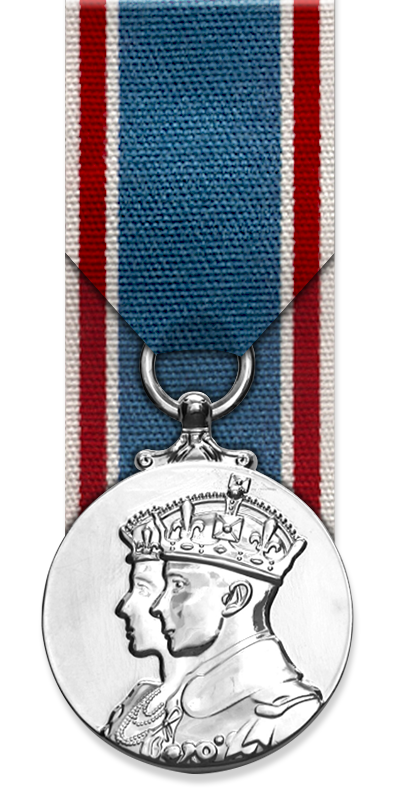
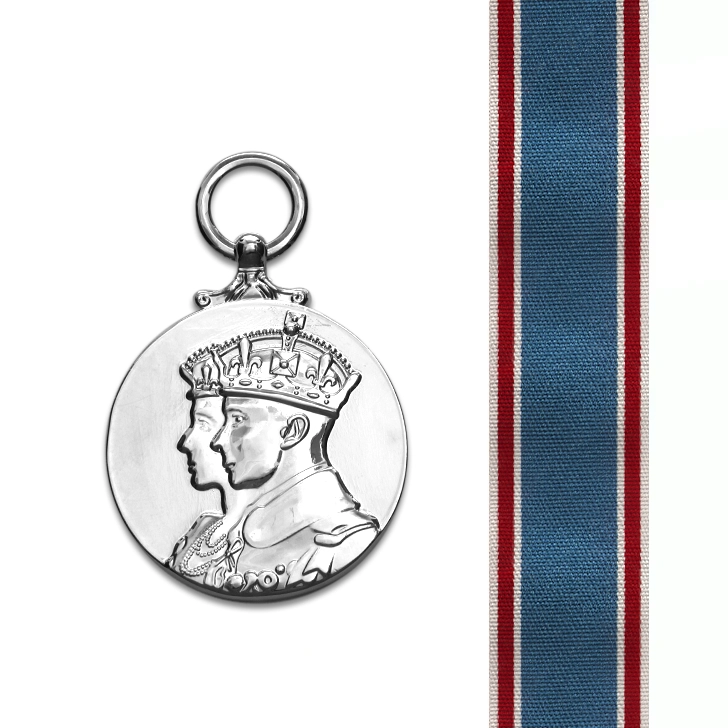
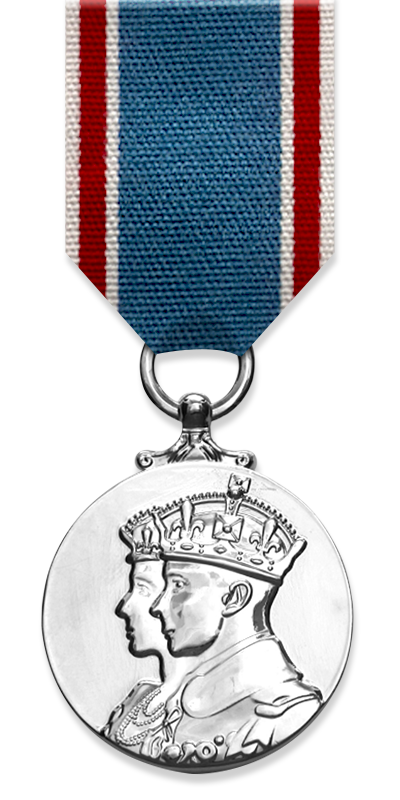
The medal, designed by Percy Metcalfe, is circular silver, 32 millimetres in diameter, its obverse bearing the crowned and robed conjoined effigies of King George VI and Queen Elizabeth facing left. The reverse carries the royal cypher GRI beneath a crown, with the inscription CROWNED 12 MAY 1937. It was awarded unnamed.
The ribbon

Garter blue with white and red side stripes.
The ribbon is garter blue with a central group of white, red and white stripes at each side, framing a broad blue centre.
Eligibility
The medal was awarded as a personal souvenir of the coronation of King George VI.
- It went to the royal family, officials, public servants and members of the armed forces and police across Britain, the colonies and the Dominions;
- It was awarded unnamed and carries no clasps; numbers were allocated across the Empire for local authorities to award;
- As an Imperial award it retains its place in the Australian Order of Wearing.
Order of wear
Coronation and jubilee medals commemorate a royal occasion rather than service or gallantry. In the Australian Order of Wearing they are worn after campaign medals and before long service awards, and among themselves in the date order of the occasions they mark.
Frequently asked questions
What is the King George VI Coronation Medal?
A commemorative medal issued in 1937 to mark the coronation of King George VI and Queen Elizabeth, given to those present at or connected with the ceremony.
Why was the date first set for another king?
The 12 May 1937 date had been fixed for the coronation of Edward VIII; his abdication in December 1936 brought George VI to the throne, and he was crowned on the appointed day.
Who received it?
The royal family, officials, public servants and members of the armed forces and police across Britain and the Dominions, allocated for local authorities to bestow.
Is it a service or gallantry award?
Neither; it is a commemorative medal marking a royal occasion, worn among the coronation and jubilee medals.
Is it named to the recipient?
No; it was awarded unnamed.
Does it carry a post-nominal?
No; commemorative medals carry no post-nominal.