
History
The Efficiency Decoration was instituted by Royal Warrant in 1930 alongside the Efficiency Medal, as the officers' award of the unified scheme for the part-time forces of the Empire. It superseded the Volunteer Officers' Decoration, the Colonial Auxiliary Forces Officers' Decoration and the Territorial Decoration, and was awarded to part-time officers assessed as efficient and thoroughly capable. Australian awards are identified by AUSTRALIA on the mount, and recipients are entitled to the post-nominal ED.
The Elizabeth II issue, awarded from 1953, belongs to the officers of the post-war Citizen Military Forces: the men who commanded the national service intakes of the 1950s and led the CMF through its long transition toward the Army Reserve. By this reign the reformed conditions applied throughout, twelve years of commissioned service with clasps each further six, and the decoration remained the officers' long service award until the Reserve Force Decoration replaced it in Australia in 1982.
Design & ribbon
The medal
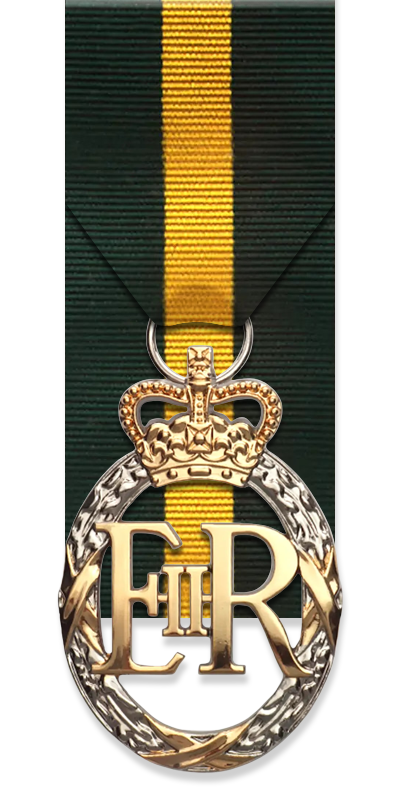
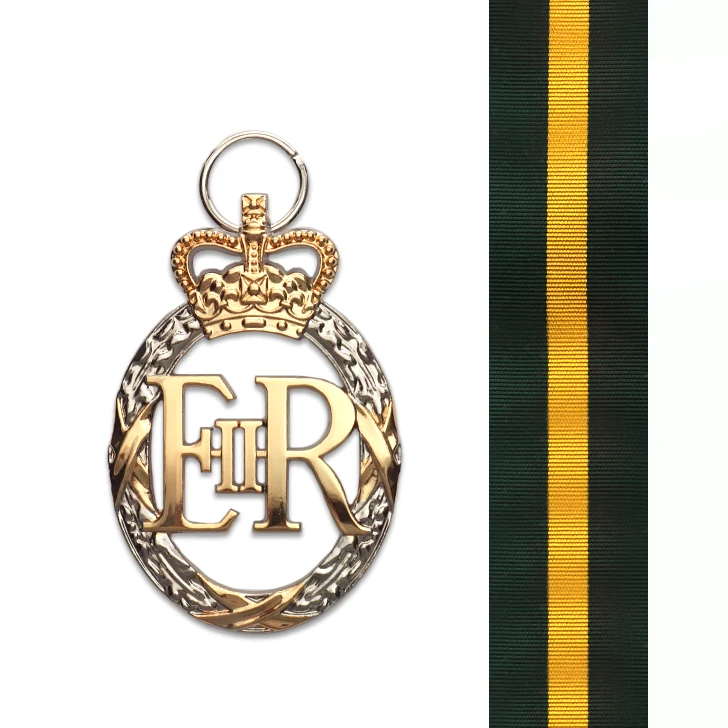
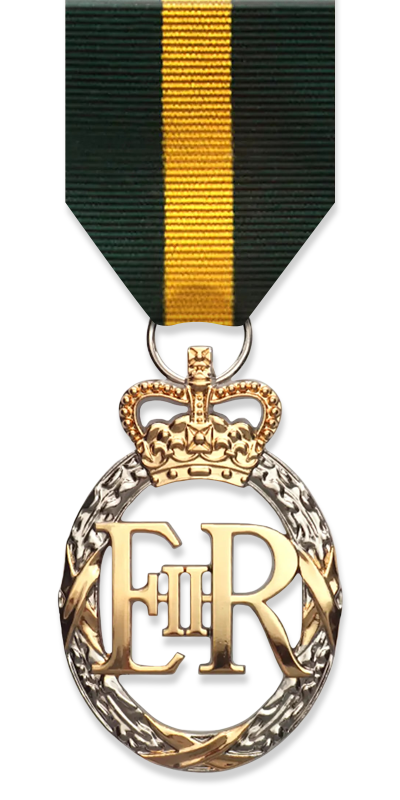
The Efficiency Decoration is an oval skeletal badge: a wreath of oak leaves struck in silver and tied at the base, enclosing the Royal Cypher of the reigning monarch beneath the Royal Crown in gilt. The reverse is plain within the wreath, with the year of the award at its base, and the decoration hangs by a silver ring from the crown, with AUSTRALIA identifying the Australian issue.
On this issue the centre carries the EIIR cypher of Queen Elizabeth II.
The ribbon
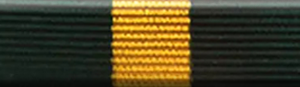
Dark green with a central yellow stripe, the officers' arrangement of the family colours.
The ribbon is dark green with a central stripe of yellow: the reverse arrangement of the Efficiency Medal's ribbon, marking the officers' award of the same family.
Clasps
A clasp was instituted in 1949, awarded for each further period of six years of qualifying service.
Six Year Clasp
From 1949 a clasp could be awarded on completion of each further period of six years of qualifying service: a bar carrying the Royal Cypher surmounted by the crown, with the year of the award on its reverse. When ribbons alone are worn, each clasp is denoted by a rosette.
Eligibility
The decoration was awarded to commissioned officers of the part-time and auxiliary military forces who were efficient and thoroughly capable.
- The qualifying period was originally twenty years of commissioned service; from 1949 it was reduced to a minimum of twelve years, with twenty retained for officers whose service ended before 3 September 1939. War service counted double and previous service in the ranks counted half;
- An officer who already held a long service medal or the Efficiency Medal for service in the ranks could not wear both awards until the full periods for each had been separately completed;
- In Australia the decoration was replaced by the Reserve Force Decoration in 1982. Fine detail should be confirmed against the recipient's documentation.
Order of wear
The Imperial long service awards are worn together in the long service group, after the Australian long service medals and the Champion Shots Medal, in order of the date of the award, with the Service Medal of the Order of St John worn after all of them. The precise arrangement should be confirmed against the current Australian Order of Wear.
Frequently asked questions
What years does the Elizabeth II Efficiency Decoration cover?
Awards made from 1953 until the decoration's replacement in Australia by the Reserve Force Decoration in 1982.
Who was eligible?
Commissioned officers of the part-time forces assessed as efficient and thoroughly capable, for a minimum of twelve years of commissioned service, with war service counting double and prior service in the ranks counting half.
Does it carry a post-nominal?
Yes: ED, one of the few long service awards to do so, a distinction carried on by its successor the RFD.
How were further years recognised?
By a clasp for each additional six years of qualifying service, a bar carrying the EIIR cypher beneath the crown, with a rosette on the ribbon bar when ribbons alone are worn.
Can it be worn with the RFD?
Yes. Officers whose service spanned 1982 may hold both, worn in the long service group in order of the date of award.
How does it differ from the Efficiency Medal?
The decoration was the officers' award and the medal the other ranks' award of the same family, distinguished by the skeletal oak wreath design, the post-nominal and the central rather than edge yellow on the ribbon.