
History
The Defense Meritorious Service Medal was created on 3 November 1977 by President Carter under Executive Order 12019, to recognise non-combat meritorious achievement or service in joint assignments: the staffs serving the Secretary of Defense, the Joint Chiefs and the combatant commands, where the single service decorations do not reach. The recognised service typically spans a recipient's whole joint posting, and sits below the Defense Superior Service Medal in degree.
In 2014 President Obama's Executive Order 13666 extended eligibility to members of the armed forces of friendly foreign nations, formally recognising the NATO, allied and coalition officers and senior enlisted personnel embedded in the Joint Staff, the combatant commands and their joint task forces. That change made the DMSM the American award most often earned by Australians in the coalition era, marking staff tours at headquarters from Tampa to Kabul, and it is worn in United States precedence between the Purple Heart and the Meritorious Service Medal.
Design & ribbon
The medal
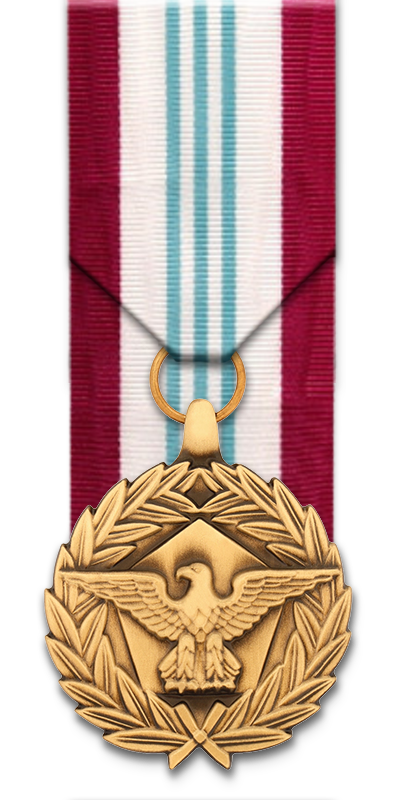
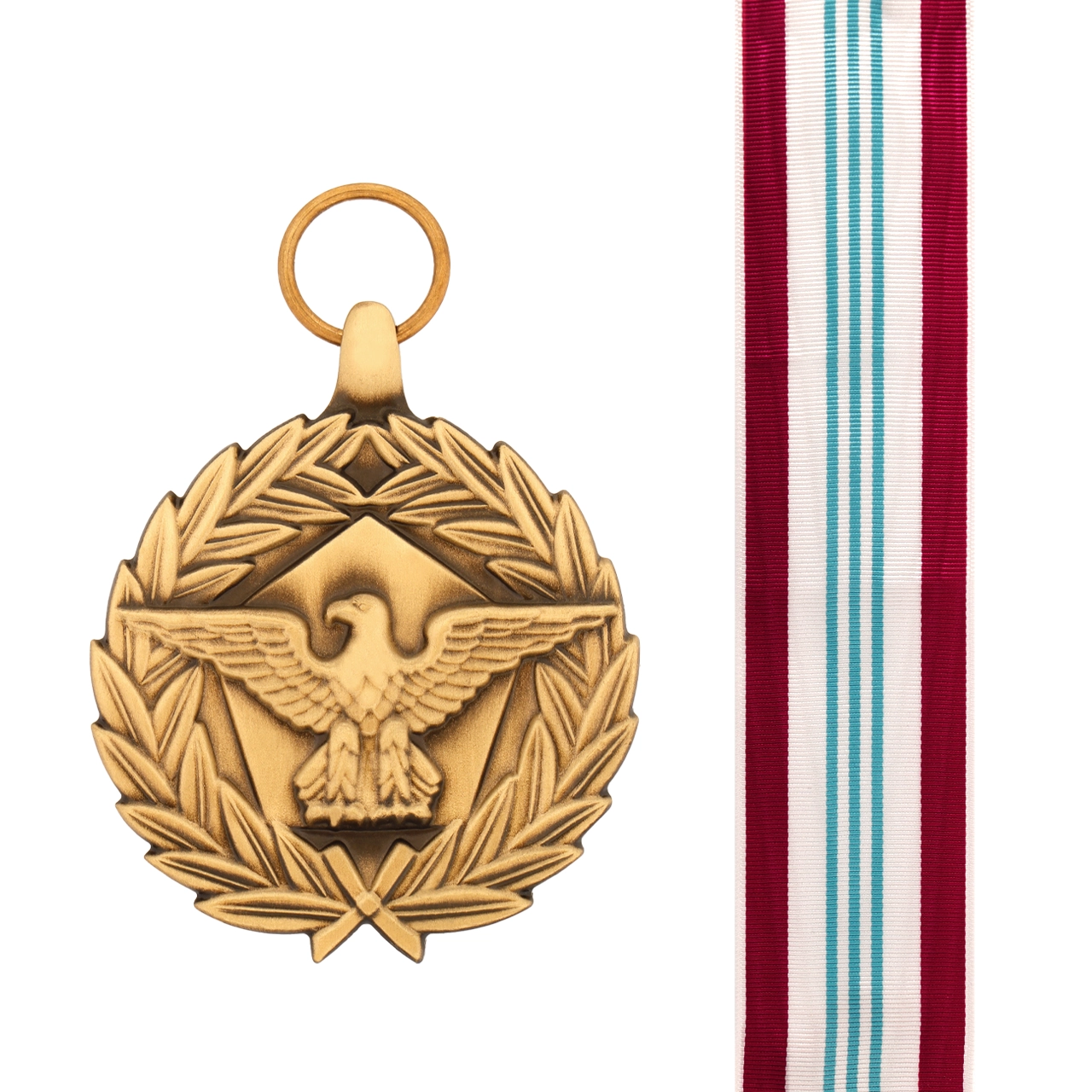
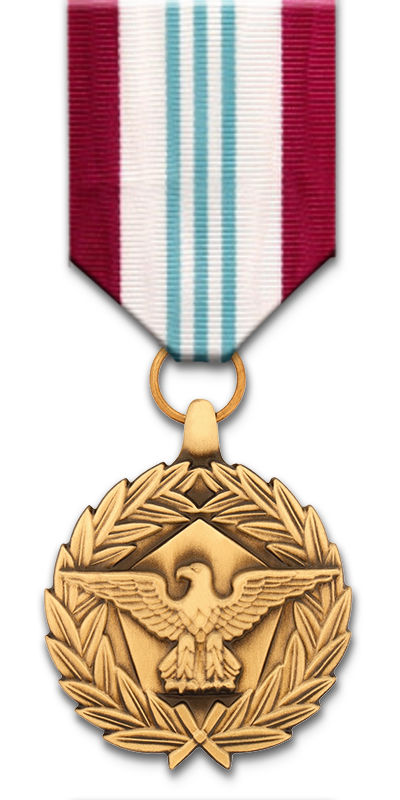
The medal is bronze, 38 millimetres in diameter. Within a circular wreath of laurel tied with a ribbon at its base sits the five sided form of the Pentagon, slightly overlapping the wreath, with an eagle with upraised wings standing at its base: the eagle for the United States, the pentagon for the Department of Defense, the laurel for achievement. The reverse carries DEFENSE MERITORIOUS SERVICE in three lines with UNITED STATES OF AMERICA around the base and space for the recipient's name.
The ribbon
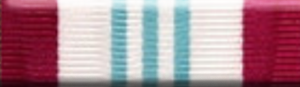
Legion of Merit crimson and white, Department of Defense blue at the centre.
The ribbon carries broad bands of crimson between white stripes, with three narrow stripes of light blue divided by white at the centre: the crimson and white of the Legion of Merit, the blue for the Department of Defense.
Clasps
Further awards are marked on the ribbon in the American fashion rather than by additional medals.
Eligibility
The medal is awarded in the name of the United States Secretary of Defense for meritorious service in a joint activity, of a degree below that required for the Defense Superior Service Medal.
- Eligibility covers members serving in joint assignments under the Office of the Secretary of Defense, the Chairman of the Joint Chiefs of Staff or a combatant command, and, since Executive Order 13666 of 2014, members of the armed forces of friendly foreign nations embedded in those organisations;
- Additional awards are denoted by bronze oak leaf clusters across all services, with a silver cluster representing six awards;
- For Australians, acceptance and wear require approval through the foreign awards process, with the medal worn after all Australian honours in order of the date of award. There is no post-nominal in Australian usage.
Order of wear
Foreign and international awards approved for acceptance and wearing are worn after all Australian honours and awards, in order of the date of award. The precise arrangement should be confirmed against the current Australian Order of Wear.
Frequently asked questions
What is the Defense Meritorious Service Medal awarded for?
Meritorious service in a United States joint activity, typically across a whole joint assignment, of a degree below the Defense Superior Service Medal. It is awarded in the name of the Secretary of Defense.
How do Australians earn it?
Through embedded postings in American joint organisations: the Joint Staff, combatant commands and joint task forces. Executive Order 13666 of 2014 formally extended eligibility to allied and coalition personnel in those roles.
How does it differ from the Meritorious Service Medal?
The criteria are virtually identical, but the DMSM belongs to joint, multi service organisations while the MSM is awarded within a single service. In American precedence the DMSM is worn immediately above the MSM.
How are multiple awards shown?
By bronze oak leaf clusters across all services, with a silver cluster representing six awards.
Can an Australian wear it on a rack?
With government approval through the foreign awards process: after all Australian honours and awards, in order of the date of award.
Why is Defense spelt that way?
The medal keeps the American spelling of its issuing department, the United States Department of Defense.