
History
The Defence Medal was instituted in 1945 for non-operational service during the Second World War: the service that defended the country and its territories without meeting the operational conditions of the campaign stars. It covered members of the armed forces in non-operational areas, and the civilian services of the home front, the Home Guard, the Civil Defence Service and other approved bodies, for service between 3 September 1939 and 8 May 1945, or 2 September 1945 in the Far East and Pacific.
Broadly, three years of service at home was required, or shorter periods for service in territories subject to air attack or closely threatened, or overseas in non-operational areas. Its reverse depicts the royal crown over a symbolic defence of the realm. For Australia it recognises garrison and home-defence service, and a mention in despatches on it is marked by an oak leaf. As an Imperial award it retains its place in the Australian Order of Wearing.
Design & ribbon
The medal
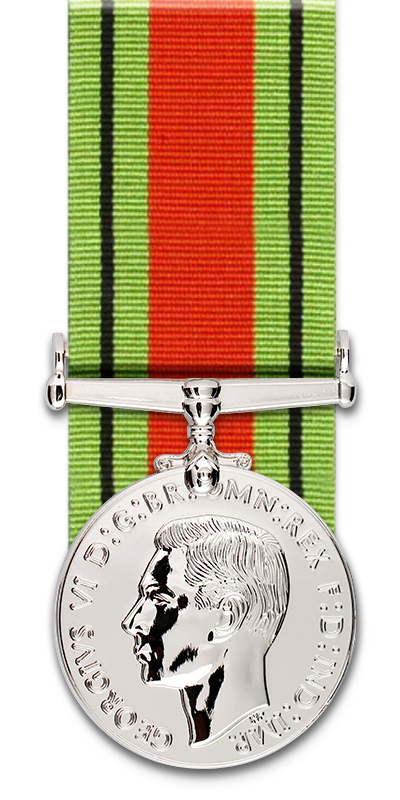
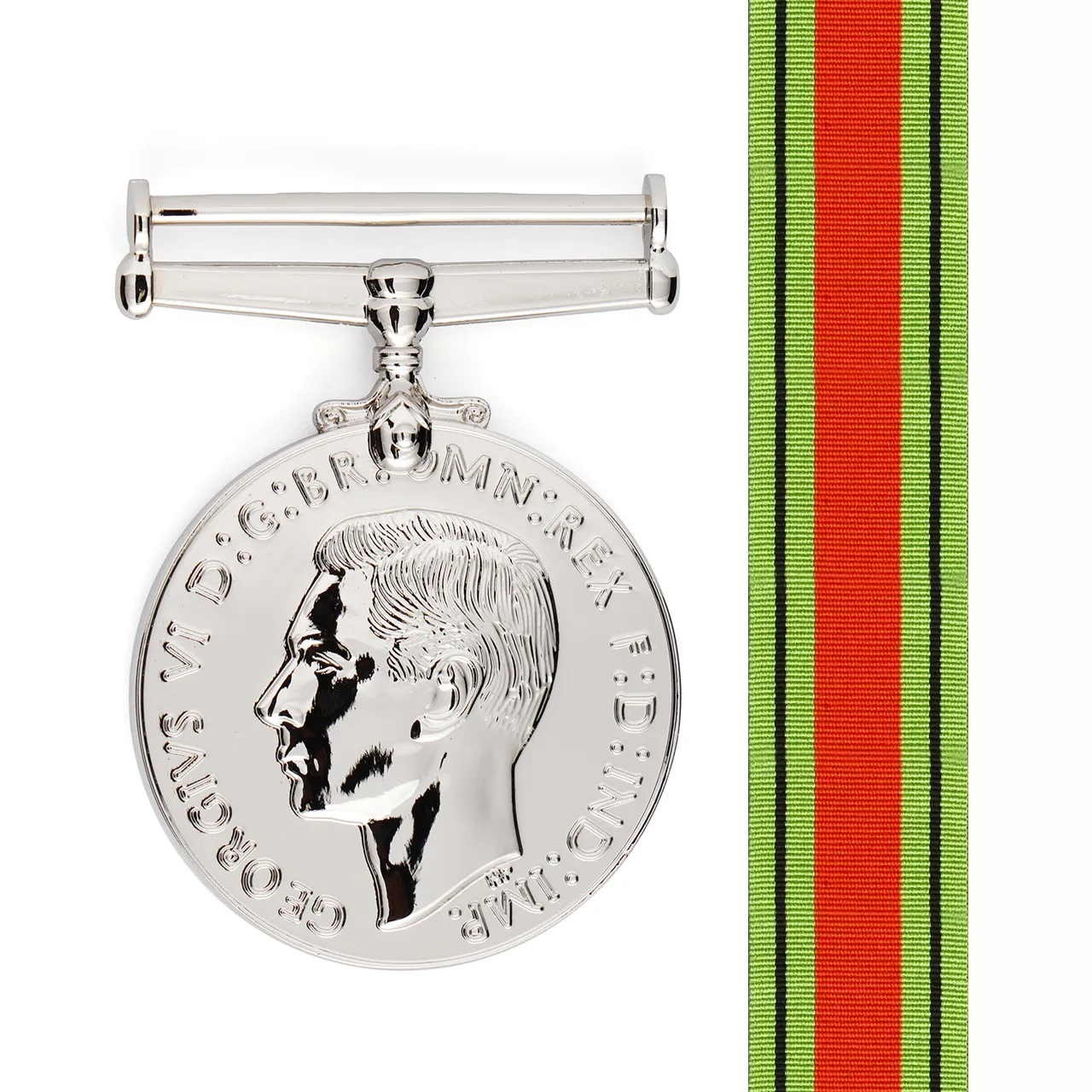
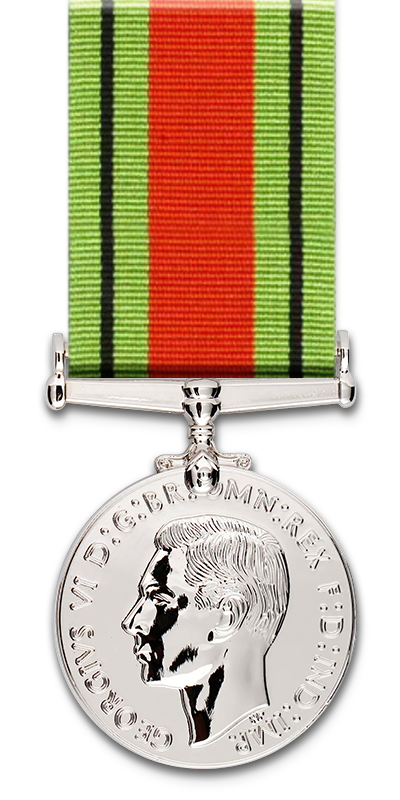
The medal is a cupro-nickel disk, 36 millimetres in diameter, its obverse bearing the crowned effigy of King George VI. The reverse shows the royal crown resting on the stump of an oak tree flanked by two lions, with the dates 1939 and 1945 and the word DEFENCE. Australian issues were officially named, unlike the British issue.
The ribbon
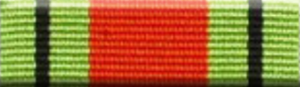
Flame orange with a black-striped olive-green centre.
The ribbon is flame-coloured orange with a central band of olive green bearing a thin black stripe on each side, the orange representing enemy fire, the green the land, and the black the black-out.
Clasps
No clasps were awarded; a mention in despatches is marked by an oak-leaf emblem on the ribbon.
Eligibility
The medal was awarded for non-operational service in defence of the realm and its territories in the Second World War.
- It covered non-operational service by the armed forces and service in the Home Guard, the Civil Defence Service and other approved civilian bodies, generally requiring three years at home, or shorter periods in threatened or overseas non-operational areas;
- No clasps were awarded, but a mention in despatches is marked by a single bronze oak-leaf emblem on the ribbon;
- As an Imperial award it retains its place in the Australian Order of Wearing.
Order of wear
Imperial awards were the honours of Australia before the Australian honours system was established in 1975, and they retain their place in the Order of Wearing. They are worn after the Australian honours of their kind and among the Imperial awards in the order set by the Australian Order of Wearing, which follows the British order of precedence.
Frequently asked questions
What is the Defence Medal awarded for?
Non-operational service in the Second World War in defence of the realm and its territories, including the Home Guard, the Civil Defence Service and the armed forces in non-operational areas.
How much service was required?
Generally three years at home, or shorter periods for service in territories subject to air attack or closely threatened, or overseas in non-operational areas.
What does the oak leaf mean?
A mention in despatches or a King's Commendation. A single bronze oak leaf is worn regardless of how many times the recipient was mentioned; no clasps were awarded.
What does the reverse show?
The royal crown on the stump of an oak tree flanked by two lions, with the dates 1939 and 1945 and the word DEFENCE, a symbolic defence of the realm.
Is it named to the recipient?
Australian issues were officially named, unlike the British issue, which was unnamed.
Does it carry a post-nominal?
No; it is a campaign medal and carries no post-nominal.