
History
The Army Commendation Ribbon was created in 1945, retroactive to the day of Pearl Harbor, for service where the Bronze Star was not appropriate, gained its metal pendant in 1949 and became the Army Commendation Medal in 1960. It is awarded to members serving in any capacity with the Army, in the grades of colonel and below, for heroism, meritorious achievement or meritorious service, and it has become one of the most recognisable mid level decorations in the world's largest army.
Since 1 June 1962 it has also been open to members of friendly foreign forces whose acts or service have been of mutual benefit to their nation and the United States, and Australians have earned it in Vietnam era attachments, exchange postings and the combined headquarters of the modern coalitions. Acts of heroism against an armed enemy are marked by the bronze V device, authorised for the medal in the 1960s.
Design & ribbon
The medal
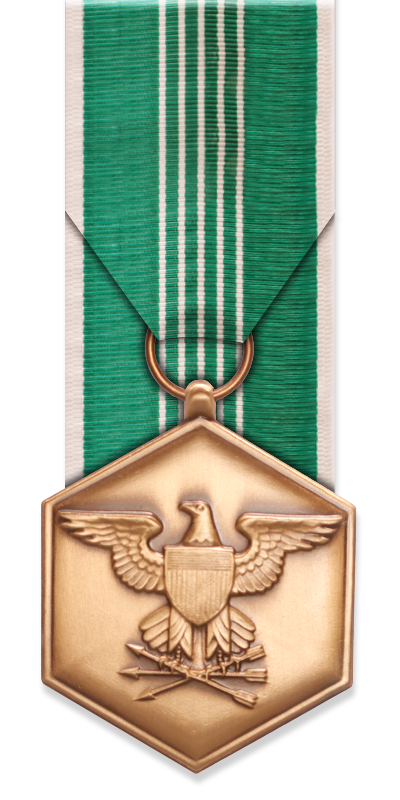
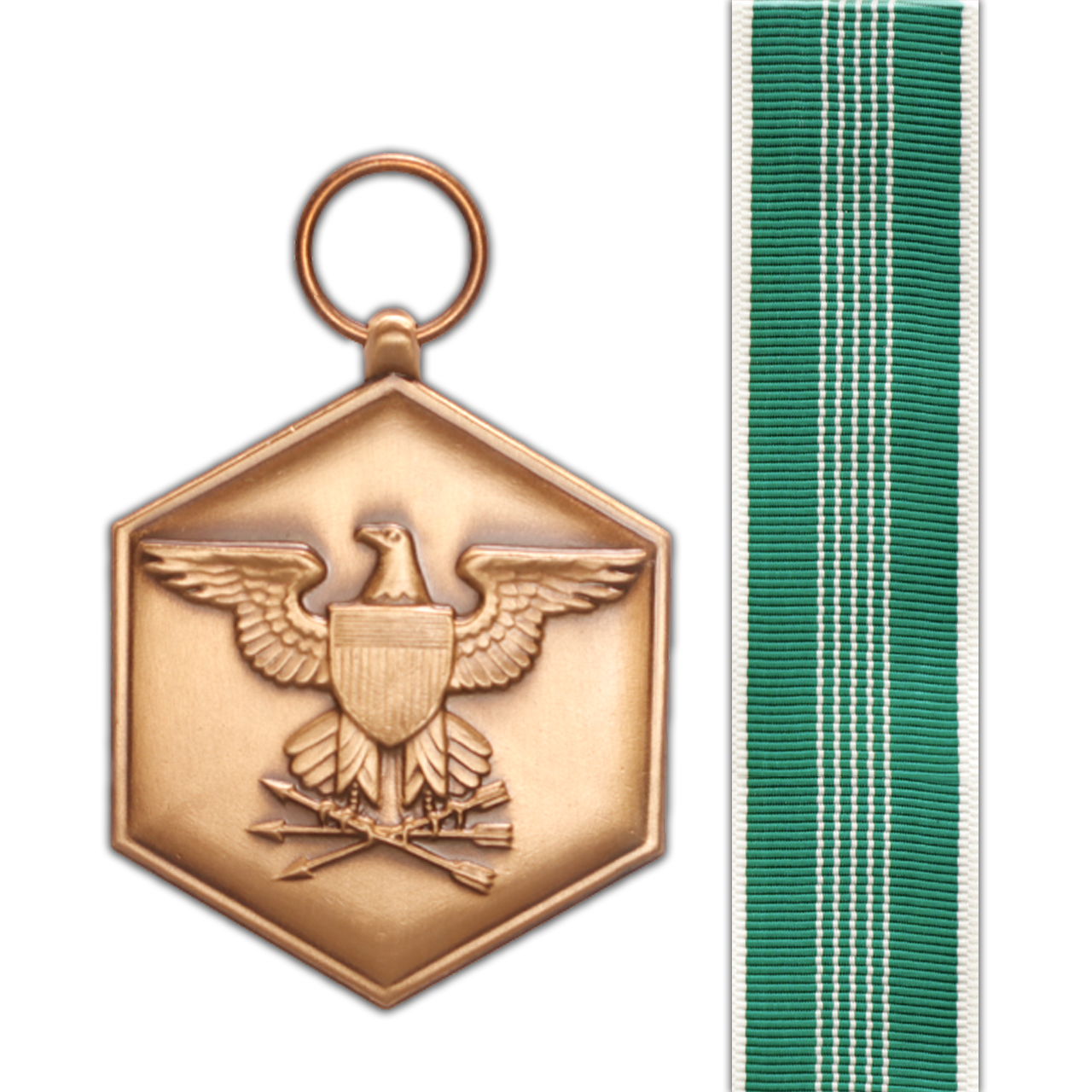
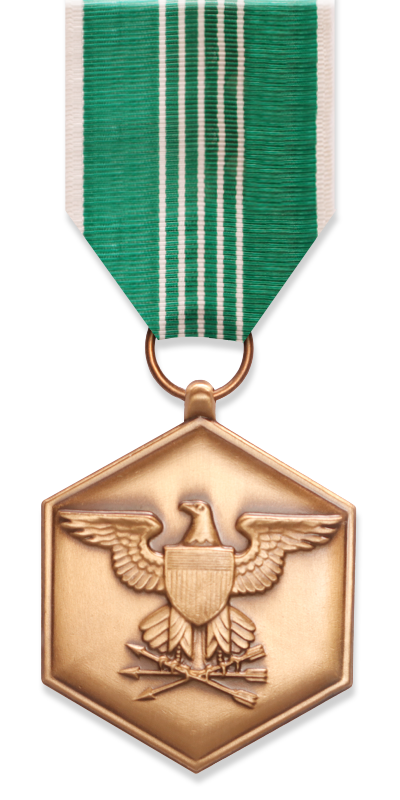
The medal is a bronze hexagon, point up, bearing an American bald eagle with wings spread horizontally, grasping three crossed arrows in its talons and carrying on its breast a shield of thirteen pieces: the eagle from the seal of the Department of Defense, the shield from the Great Seal of the United States. The reverse carries a name panel between FOR MILITARY and MERIT, above a sprig of laurel.
The ribbon

Myrtle green with five white pinstripes and white edges.
The ribbon is a field of myrtle green with five narrow white stripes at its centre and a white stripe at each edge.
Clasps
Further awards and acts of valour are marked on the ribbon in the American fashion rather than by additional medals.
Eligibility
The medal is awarded under United States Army regulations for heroism, meritorious achievement or meritorious service while serving in any capacity with the Army after 6 December 1941.
- Members of the United States armed forces in the grade of colonel and below are eligible, together with members of friendly foreign forces after 1 June 1962 for acts or service of mutual benefit to their nation and the United States;
- Additional awards are denoted by oak leaf clusters, acts of heroism against an armed enemy by the bronze V device, and later combat and remote impact distinctions by the C and R devices introduced in 2016;
- For Australians, acceptance and wear require approval through the foreign awards process, with the medal worn after all Australian honours in order of the date of award. There is no post-nominal in Australian usage.
Order of wear
Foreign and international awards approved for acceptance and wearing are worn after all Australian honours and awards, in order of the date of award. The precise arrangement should be confirmed against the current Australian Order of Wear.
Frequently asked questions
What is the Army Commendation Medal awarded for?
Heroism, meritorious achievement or meritorious service while serving in any capacity with the United States Army, in grades below general officer. It was created for service where the Bronze Star was not appropriate.
How did Australians come to hold it?
Through the friendly foreign forces provision in effect since 1962: Vietnam era attachments to American units, exchange postings and combined headquarters service in the modern coalitions.
What does the V on the ribbon mean?
Valour: the award was made for an act of heroism involving conflict with an armed enemy. The C and R devices, introduced in 2016, distinguish awards earned under combat conditions and for remote impact on combat operations.
How are multiple awards shown?
By bronze oak leaf clusters, with a silver cluster replacing five bronze. Only one medal is issued.
Can an Australian wear it on a rack?
With government approval through the foreign awards process: after all Australian honours and awards, in order of the date of award.
Does it carry a post-nominal?
No, not in Australian usage.