
History
The Army Achievement Medal was created in 1981 to give commanders a decoration for the achievements that build an army but fall below the Army Commendation Medal's threshold: the soldier who rebuilt the motor pool's readiness rate, the specialist whose exercise performance stood out, the junior leader who fixed what nobody else could. It is awarded for meritorious service or achievement in a non-combat area on or after 1 August 1981, and general officers are excluded by design; this is the junior ranks' medal.
From the start its criteria have included members of the armed forces of friendly foreign nations serving in any capacity with the Army, which is how it reaches Australian racks: exchange soldiers, embedded staff and combined unit postings. For an Australian its wear follows the foreign awards rules, with approval and a place after all Australian honours in order of the date of award.
Design & ribbon
The medal
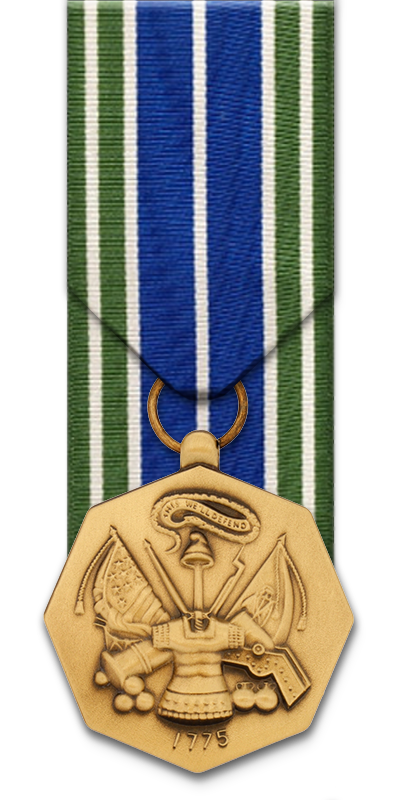
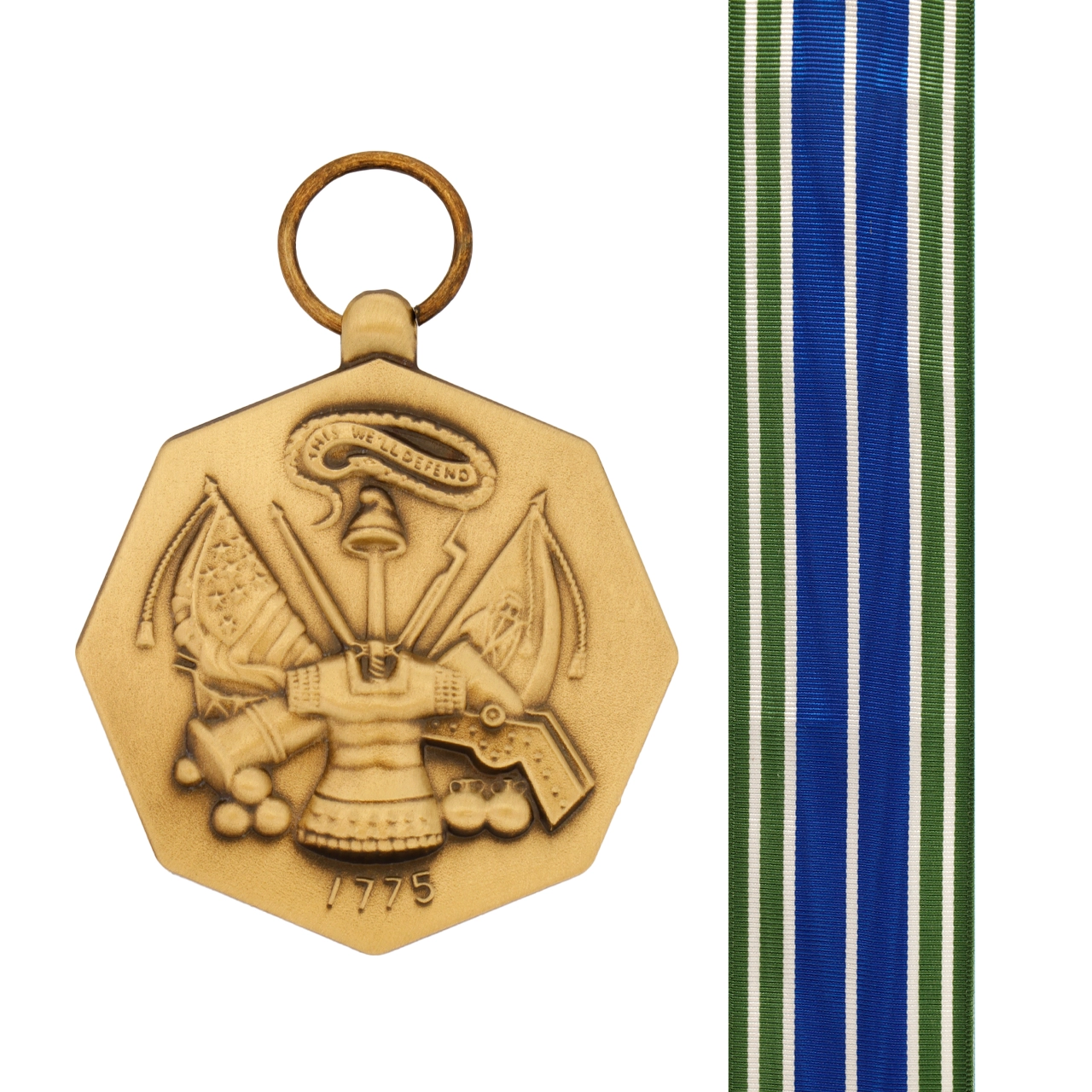
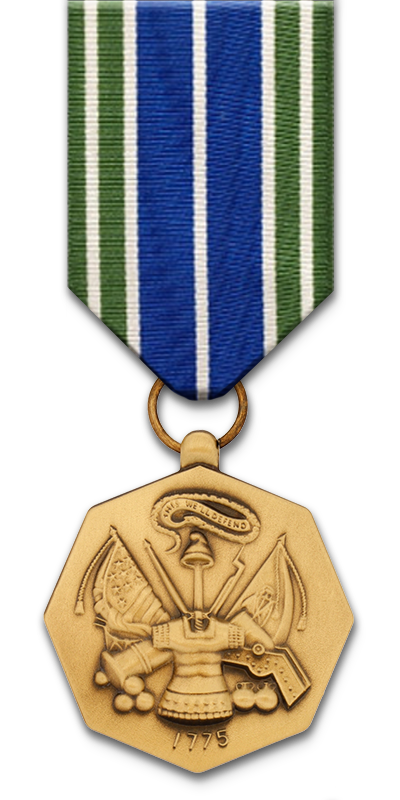
The medal is an eight sided bronze medal bearing the elements of the plaque of the Department of the Army with the date 1775, the Army's founding year, at its base. The reverse carries FOR MILITARY ACHIEVEMENT in three lines above a space for the recipient's name, with two sprigs of laurel below.
The ribbon
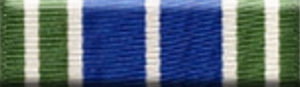
Ultramarine blue split by white, framed in green and white.
The ribbon carries two broad bands of ultramarine blue divided by a central white line, framed at each edge by stripes of green and white.
Clasps
Further awards are marked on the ribbon in the American fashion rather than by additional medals.
Eligibility
The medal is awarded under United States Army regulations for meritorious service or achievement of a lesser degree than required for the Army Commendation Medal.
- Any member of the United States armed forces, or of the armed forces of a friendly foreign nation, serving in any capacity with the Army in a non-combat area on or after 1 August 1981 is eligible; general officers are excluded;
- Additional awards are denoted by bronze oak leaf clusters, with a silver cluster worn in place of five bronze;
- For Australians, acceptance and wear require approval through the foreign awards process, with the medal worn after all Australian honours in order of the date of award. There is no post-nominal in Australian usage.
Order of wear
Foreign and international awards approved for acceptance and wearing are worn after all Australian honours and awards, in order of the date of award. The precise arrangement should be confirmed against the current Australian Order of Wear.
Frequently asked questions
What is the Army Achievement Medal awarded for?
Meritorious service or achievement with the United States Army in a non-combat area, of a lesser degree than required for the Army Commendation Medal. It is typically a junior soldier's decoration, and general officers are excluded.
Can Australians receive it?
Yes. The criteria explicitly include members of the armed forces of friendly foreign nations serving in any capacity with the Army, which covers Australian exchange and embedded personnel.
Can an Australian wear it on a rack?
With government approval through the foreign awards process: after all Australian honours and awards, in order of the date of award.
How are multiple awards shown?
By bronze oak leaf clusters on the ribbon, with a silver cluster replacing five bronze. A second medal is never issued.
How does it differ from the Army Commendation Medal?
The Commendation Medal sets the higher threshold and may recognise heroism; the Achievement Medal recognises the solid accomplishments below it, and cannot be awarded in a combat area.
Does it carry a post-nominal?
No, not in Australian usage.