
History
The 1914-1915 Star was instituted in December 1918 for all who served in the British and Imperial forces in any theatre of the First World War between 5 August 1914 and 31 December 1915, provided they had not already qualified for the 1914 Star. Where the earlier Star was confined to France and Belgium in the opening months, this one reached the whole war of those first two years, and for Australia that means above all Gallipoli: the Star is the campaign award most often found in Anzac groups of the landing and the long months on the peninsula.
About 2.4 million were awarded. Like the 1914 Star it was never issued alone, its recipients also receiving the British War Medal and Victory Medal, and it differs from the earlier Star only in the dates on its central scroll and its wider eligibility, sharing the same design and ribbon. As an Imperial award it retains its place in the Australian Order of Wearing.
Design & ribbon
The medal
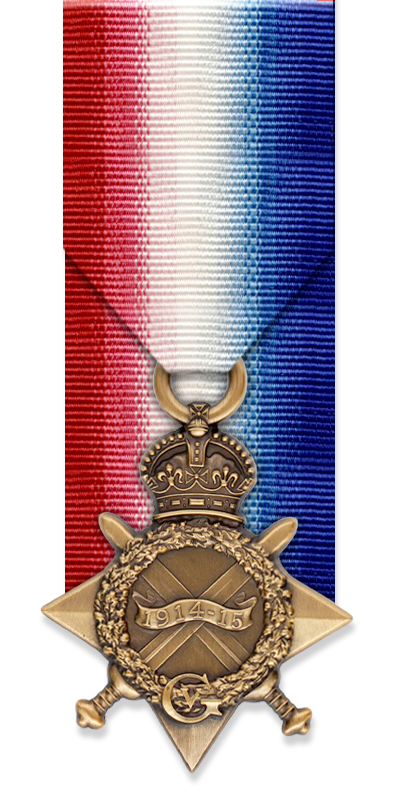
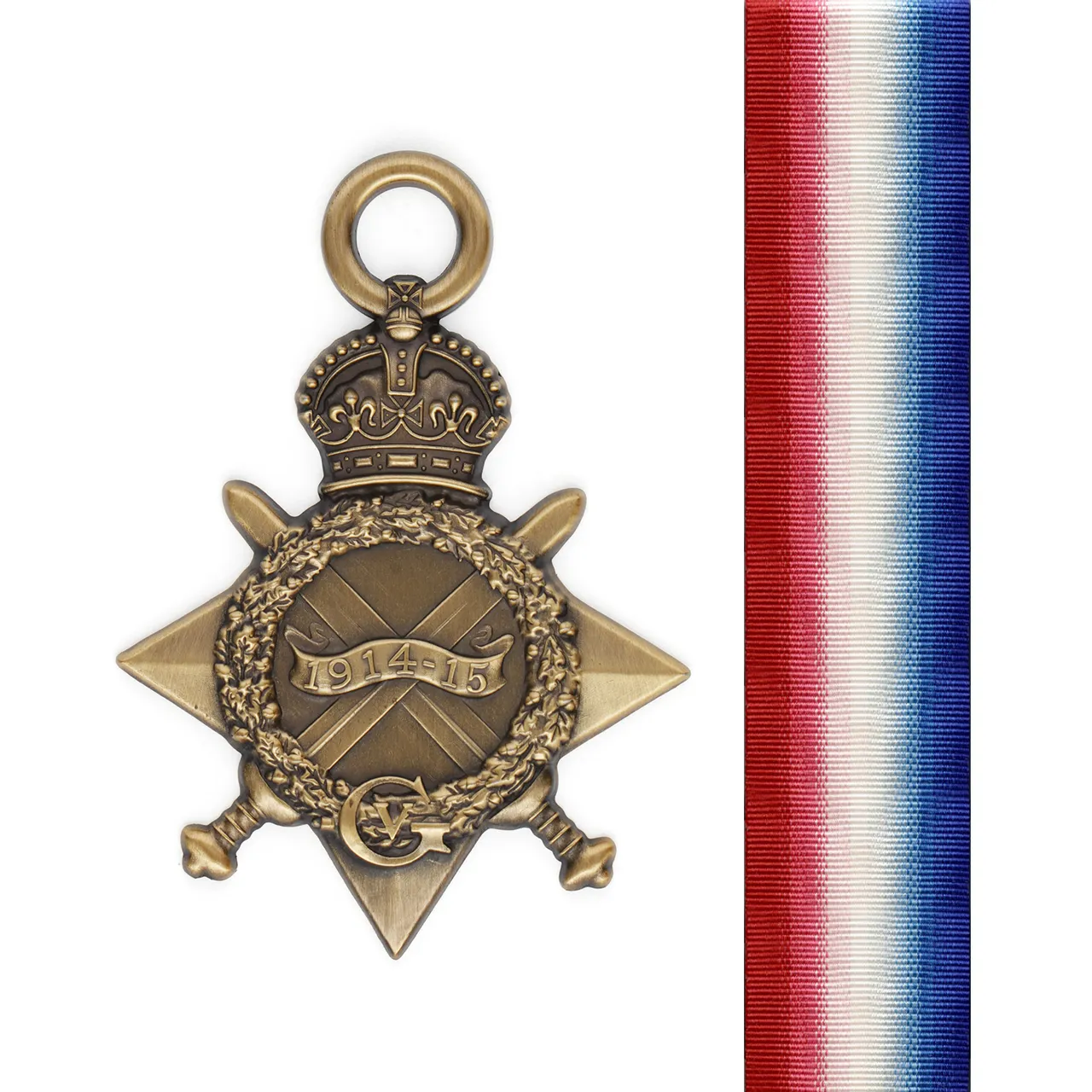
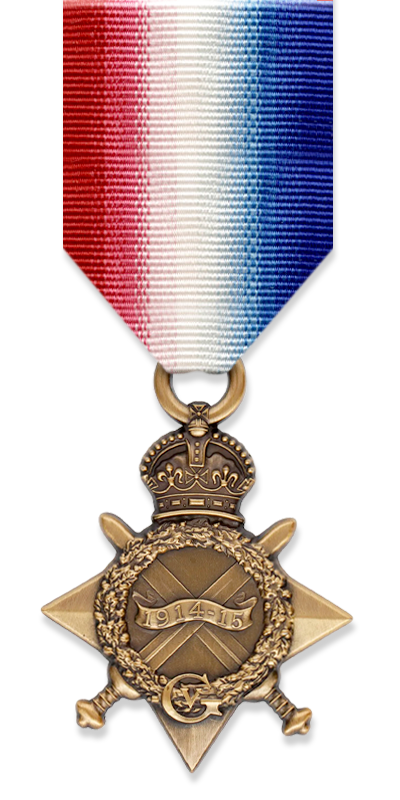
The Star is the same bright bronze four-pointed star as the 1914 Star, ensigned with a crown, its obverse showing crossed swords overlaid by an oak wreath with the royal cypher of King George V, but with a central scroll inscribed 1914-15 and the two smaller date scrolls of the earlier Star omitted. The reverse is plain and impressed with the recipient's number, rank, name and unit.
The ribbon
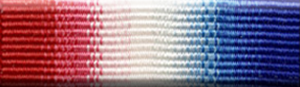
Shaded red, white and blue, the allied colours.
The ribbon is 32 millimetres wide, of red, white and blue in shaded and watered bands, echoing the colours of the flags of the allied nations, with red worn nearest the centre of the chest.
Eligibility
The Star was awarded for service in any theatre of the First World War between 5 August 1914 and 31 December 1915.
- All ranks of the British and Imperial forces qualified, together with attached civilian medical and nursing staff, provided they had not already qualified for the 1914 Star; no one could receive both Stars;
- The Star was never awarded alone, recipients also receiving the British War Medal and Victory Medal;
- As an Imperial award it retains its place in the Australian Order of Wearing.
Order of wear
Imperial awards were the honours of Australia before the Australian honours system was established in 1975, and they retain their place in the Order of Wearing. They are worn after the Australian honours of their kind and among the Imperial awards in the order set by the Australian Order of Wearing, which follows the British order of precedence.
Frequently asked questions
What is the 1914-1915 Star awarded for?
Service in any theatre of the First World War between 5 August 1914 and 31 December 1915, for those not already entitled to the 1914 Star.
How does it differ from the 1914 Star?
The 1914 Star was confined to France and Belgium in the opening months; this Star covers the whole war through 1914 and 1915. The two share a design, differing only in the dates on the central scroll, and no one could receive both.
Why does it matter so much to Australia?
It is the campaign star of Gallipoli: the men of the 1915 landing and the campaign that followed almost all qualified for it.
Was it ever awarded alone?
No. Recipients also received the British War Medal and Victory Medal, forming the classic trio.
Is it named to the recipient?
Yes, impressed on the reverse with number, rank, name and unit.
Does it carry a post-nominal?
No; it is a campaign star, not a decoration, and carries no post-nominal.