
History
The United Nations Service Medal for Korea was established by the United Nations on 12 December 1950, the first international award the United Nations ever created. It recognised the servicemen of the many nations who joined the United Nations force defending South Korea after the invasion from the north in June 1950, the first time the organisation went to war in its own name.
Australia was among the first nations to commit forces, and Australians of the Army, the Royal Australian Navy and the Royal Australian Air Force served throughout the war. Every Australian who qualified for the British Commonwealth Korea Medal also received this United Nations medal, so the two are almost always seen together on a Korean War group. It was awarded to those who served in the Korean theatre between the outbreak of war and, for most nations, the armistice of 27 July 1953.
Design & ribbon
The medal
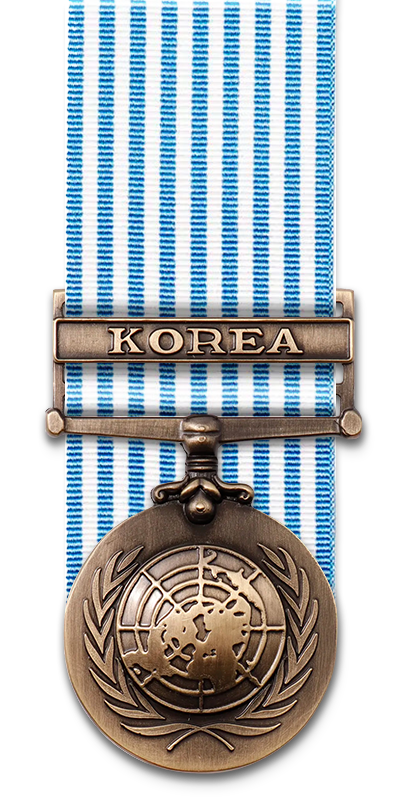
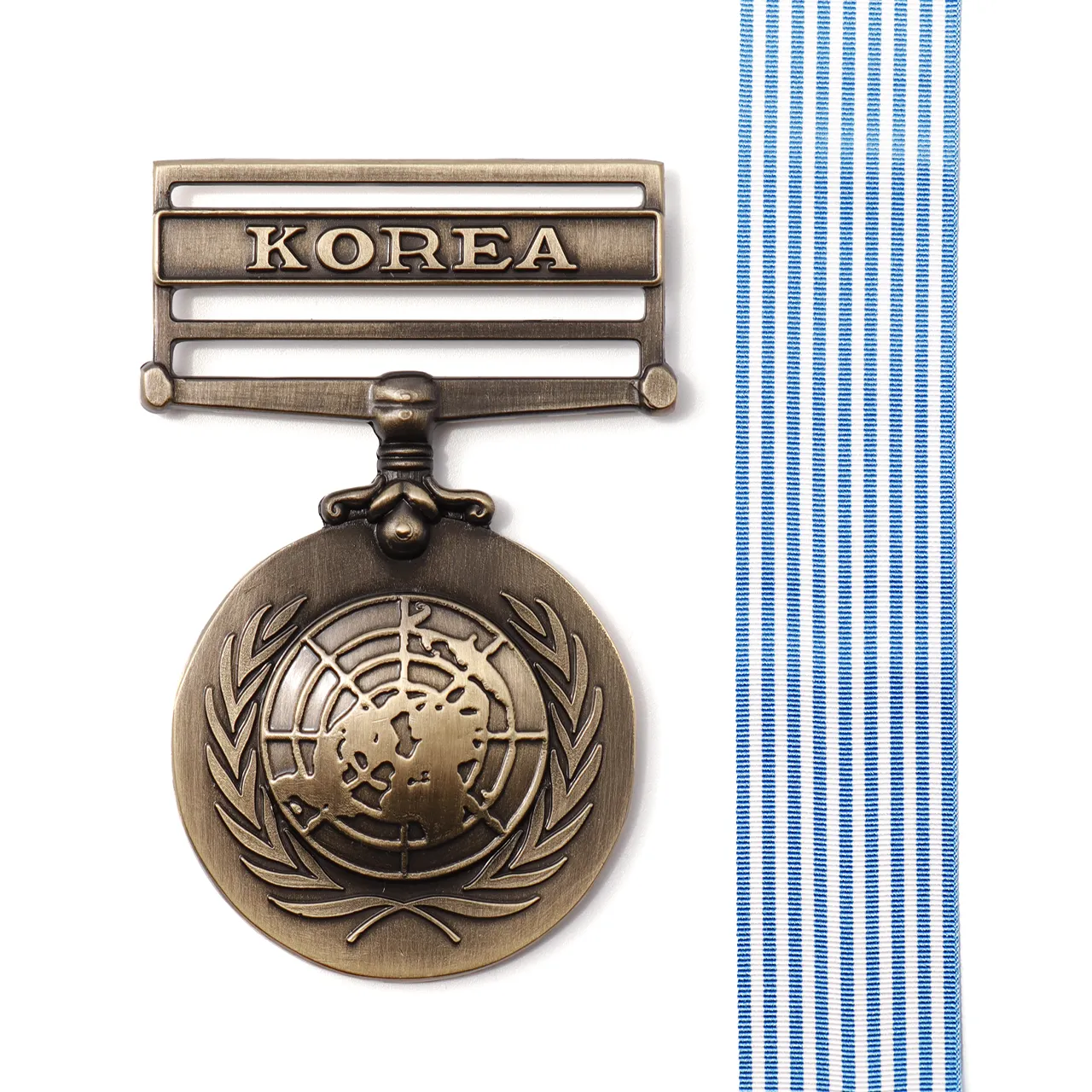
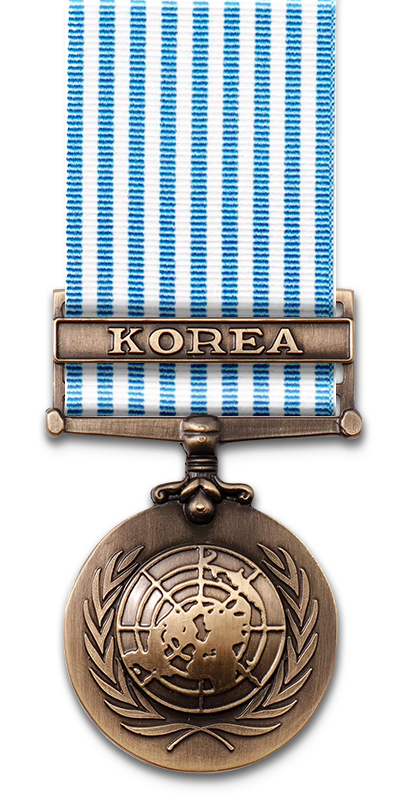
The medal is a circular bronze medallion, unique among United Nations awards in its design. The obverse bears the emblem of the United Nations without the letters UN, and the reverse carries the words FOR SERVICE IN DEFENCE OF THE PRINCIPLES OF THE CHARTER OF THE UNITED NATIONS. It hangs from a straight bar suspender fitted with a metal bar inscribed KOREA, the inscription and the reverse appearing in the language of the recipient nation. It is issued unnamed.
The ribbon
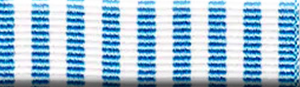
Seventeen blue and white stripes, the UN colours.
The ribbon is made up of seventeen narrow stripes, nine of United Nations blue and eight of white, the colours of the United Nations.
Clasps
The medal is worn with a bar bearing the inscription KOREA.
Eligibility
The medal was awarded for service in the United Nations force in the Korean War.
- Members of the armed forces of nations allied with the Republic of Korea qualified for service in the Korean theatre from 27 June 1950, most nations closing the qualifying period at the armistice of 27 July 1953;
- Australians of the Army, Navy and Air Force who served in Korea received it, together with the British Commonwealth Korea Medal;
- The medal is worn with the KOREA bar. As a foreign award it takes its place in the Australian Order of Wearing after the Australian awards for the war.
Order of wear
United Nations medals are awarded by the United Nations and accepted and worn by Australians who served the mission. In the Australian Order of Wearing they are worn after Australian honours and campaign awards, among the foreign awards, in the sequence set for United Nations service, which generally follows the dates of the missions.
Frequently asked questions
What is the United Nations Korea Medal?
The United Nations Service Medal for Korea, established in 1950 as the first medal the United Nations ever created, for the multinational force that defended South Korea in the Korean War.
Why is its design different from other UN medals?
As the first UN medal it predates the standard design: its obverse omits the letters UN, its reverse reads FOR SERVICE IN DEFENCE OF THE PRINCIPLES OF THE CHARTER OF THE UNITED NATIONS, and it carries a KOREA bar.
Did Australians receive it?
Yes; Australians of the Army, Navy and Air Force who served in Korea received it, alongside the British Commonwealth Korea Medal, so the two are usually seen together.
What does the KOREA bar mean?
A metal bar inscribed KOREA is worn on the ribbon, rendered in the language of the recipient's nation; Australians received the English version.
How does it relate to the Korea Medal?
The Korea Medal is the British Commonwealth award for the war; this is the United Nations award for the same service, and Korean War veterans generally hold both.
Is it named to the recipient?
No; United Nations medals are issued unnamed.