
History
Member of the Order of the British Empire, the MBE, is the fifth and most junior class of the Most Excellent Order of the British Empire, established on 4 June 1917 by King George V. It is the most widely conferred of all appointments to the Order, recognising a great range of achievement and meritorious service, and in wartime it also recognised acts of gallantry below the standard of the George Medal.
The Order was founded to fill the gaps in an honours system that had recognised mainly senior officers, civil servants, diplomats and those who served the royal family, and it was the first order open on equal terms to women and to people of every walk of life. A military division was created in 1918. In 1937 the insignia changed: the figure of Britannia at the centre of the badge gave way to the busts of King George V and Queen Mary, and the ribbon changed from purple to rose-pink with pearl-grey edges. As an Imperial honour it retains its place in the Australian Order of Wearing.
Design & ribbon
The medal
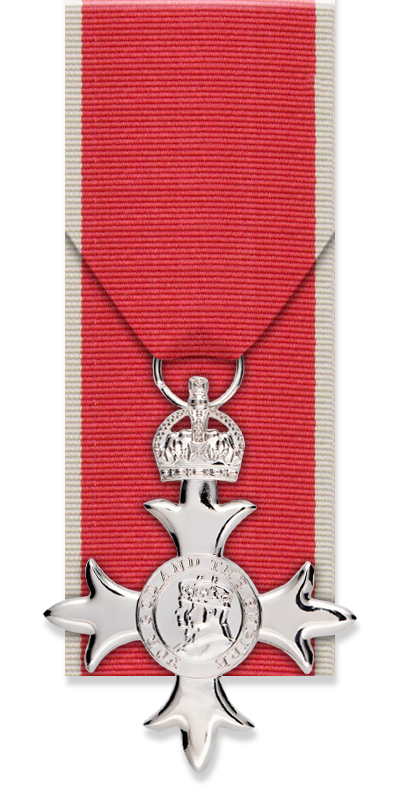
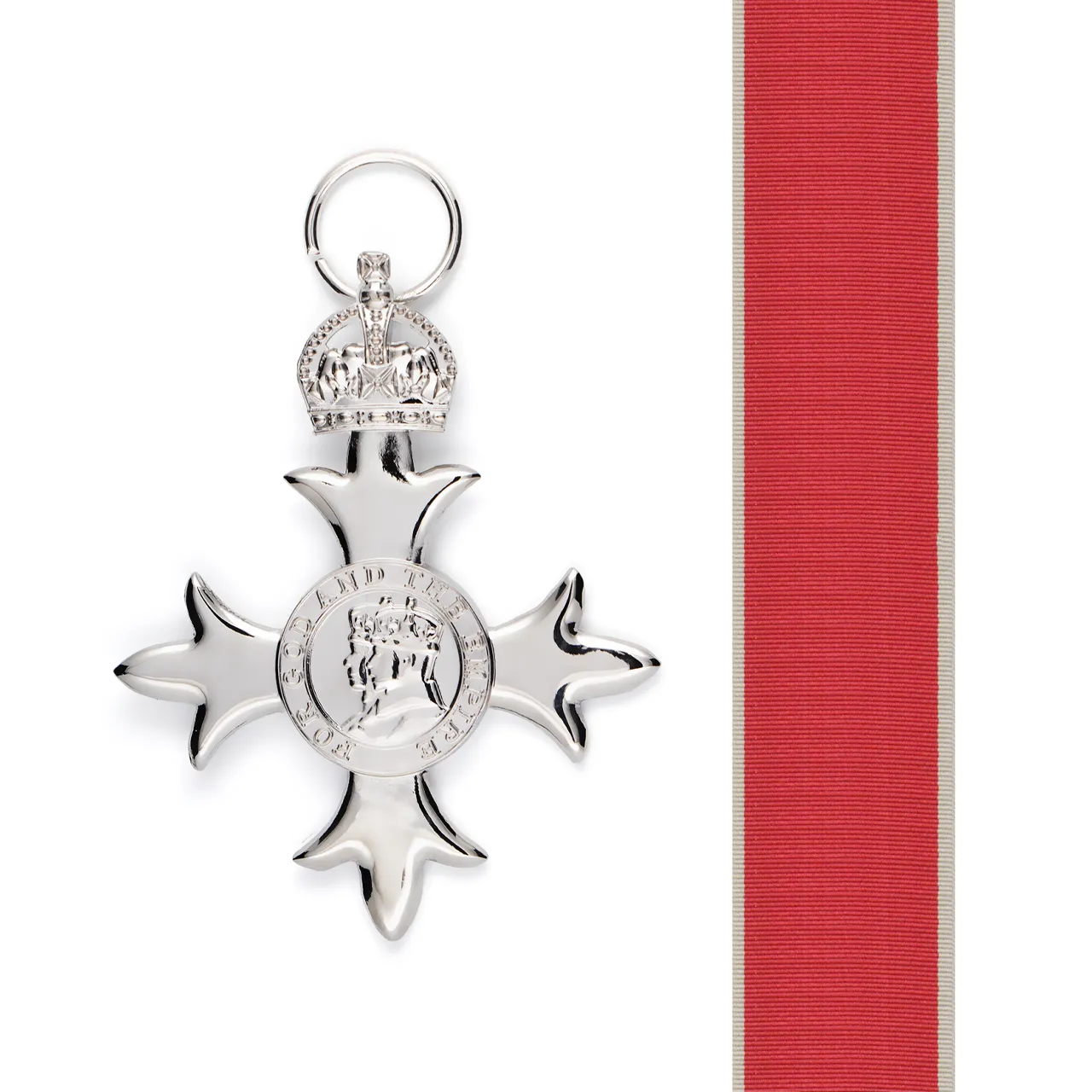
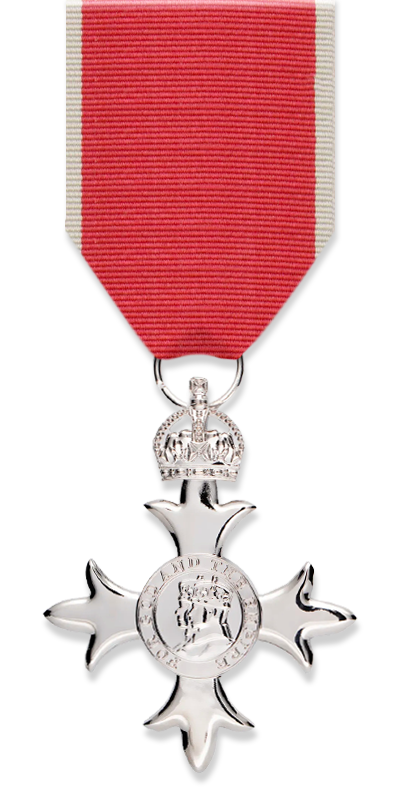
The badge is a cross patonce, its arms broadening and floriated toward the ends, in plain silver for the Member's class. The central medallion bears the crowned busts of King George V and Queen Mary within a crimson circlet inscribed with the motto FOR GOD AND THE EMPIRE, the reverse carrying the royal cypher. Before 1937 the medallion bore a figure of Britannia. The badge is worn by men on the left chest and by women from a bow on the left shoulder.
The ribbon
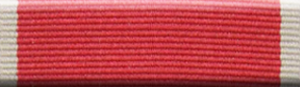
Rose-pink with pearl-grey edges.
The ribbon is rose-pink with pearl-grey edges. Before 1937 it was purple. The civil division wears the ribbon without the central stripe that marks the military division.
Eligibility
The MBE is an appointment to the fifth class of the Order of the British Empire.
- It is conferred for meritorious service and achievement, in a civil or a military division, and in wartime was also awarded for gallantry not reaching the standard of the George Medal;
- Recipients are entitled to the post-nominal letters MBE; the class does not carry the title Sir or Dame, which belong to the senior two classes;
- From 1958 gallantry awards were designated for gallantry and marked by crossed silver oak leaves on the ribbon. As an Imperial honour it retains its place in the Australian Order of Wearing.
Order of wear
Imperial awards were the honours of Australia before the Australian honours system was established in 1975, and they retain their place in the Order of Wearing. Appointments to an order of chivalry are worn before medals of the same era, in the order of precedence of the orders. As an Imperial honour the Order of the British Empire retains its place in the Australian Order of Wearing.
Frequently asked questions
What is an MBE?
Member of the Order of the British Empire, the fifth and most junior class of the Order, conferred for meritorious service and achievement of a wide range.
Where does it rank in the Order?
It is the fifth class, below Commander (CBE) and Officer (OBE); the two senior classes carry the title Sir or Dame, the MBE does not.
What do the civil and military divisions mean?
The Order is divided into a civil and a military division; the military division's ribbon carries an extra central stripe. The award is otherwise the same.
Could it be awarded for gallantry?
Yes, in wartime and until 1974, for gallantry below the standard of the George Medal; from 1958 such awards were designated for gallantry and marked by crossed silver oak leaves on the ribbon.
Does it carry a post-nominal?
Yes, the letters MBE.
What does the badge show?
A silver cross patonce with, since 1937, the busts of King George V and Queen Mary within the motto FOR GOD AND THE EMPIRE; before 1937 it showed Britannia.