
History
The British Empire Medal is the medal associated with the Most Excellent Order of the British Empire, granted in recognition of meritorious civil or military service worthy of recognition by the Crown. It descends from the Medal of the Order of the British Empire instituted in 1917, which in 1922 was replaced by two medals, one for meritorious service and one for gallantry; the meritorious-service medal was renamed the British Empire Medal in 1941. This is the civil issue of the reign of King George VI, from 1936 to 1952.
Since December 1918 the medal has been divided into civil and military divisions, as the Order is, the division shown by the ribbon. Its recipients, who unlike the appointees to the Order are affiliated to it rather than members, are entitled to the post-nominal letters BEM. From March 1941 a clasp could mark a further award. As an Imperial award it retains its place in the Australian Order of Wearing.
Design & ribbon
The medal
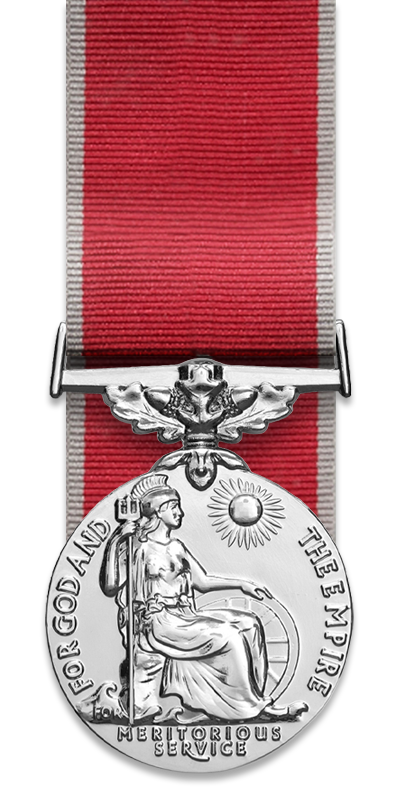
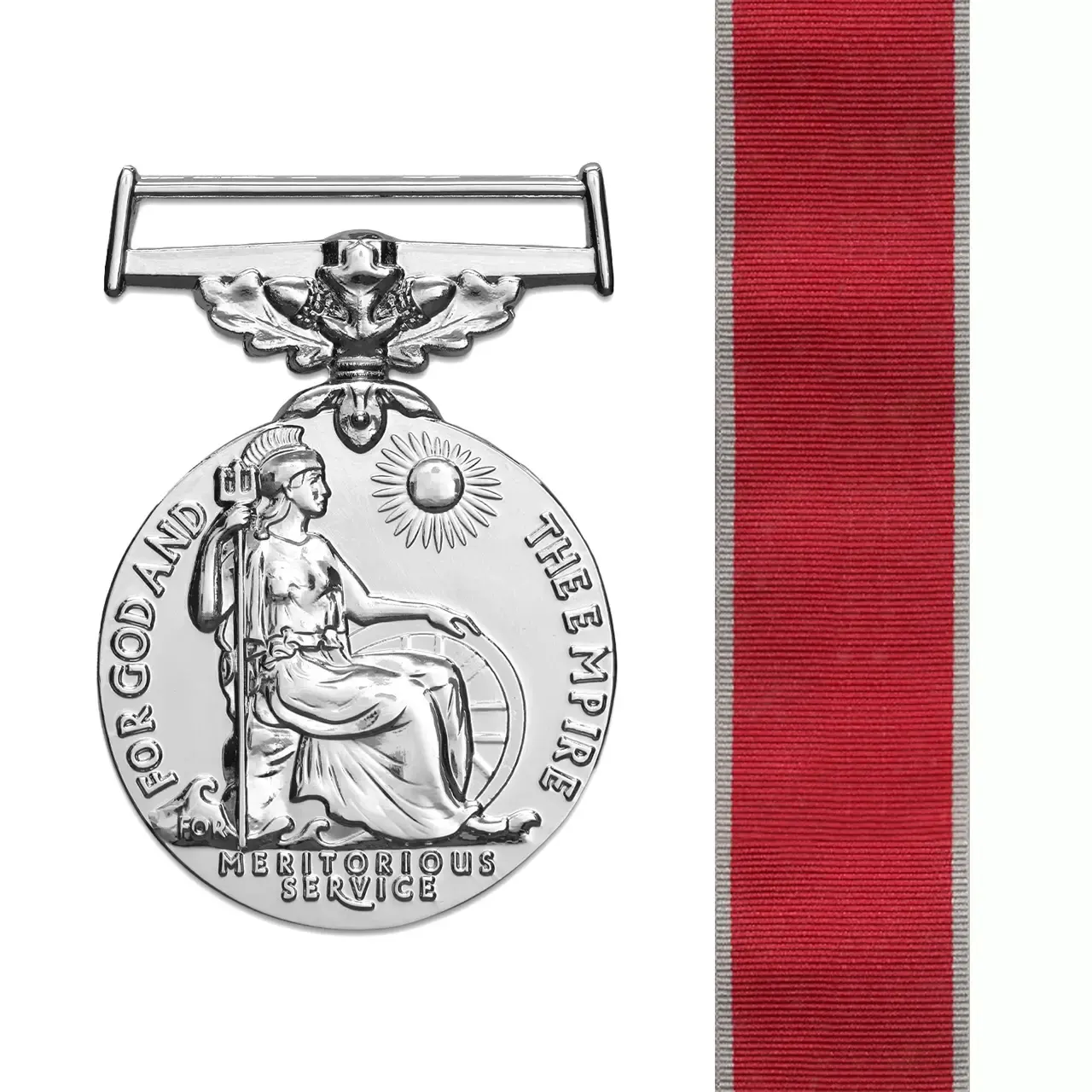
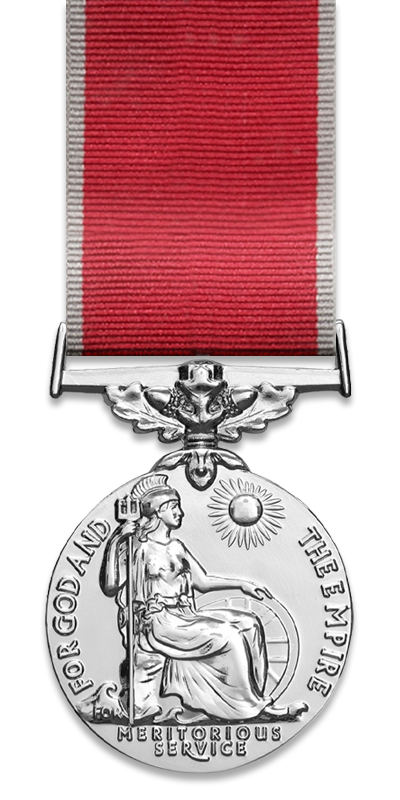
The medal is circular silver, 36 millimetres in diameter, with a straight bar suspender. The obverse shows a seated Britannia surrounded by the motto FOR GOD AND THE EMPIRE, with the words FOR MERITORIOUS SERVICE in the exergue. The reverse bears the royal and imperial cypher of King George VI beneath a crown, with the words INSTITUTED BY KING GEORGE V. The recipient's name is engraved on the rim.
The ribbon
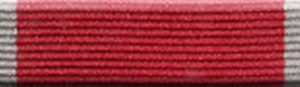
Rose-pink with pearl-grey edges.
The ribbon is rose-pink with pearl-grey edges, the pattern adopted in 1937 in place of the earlier purple. The civil division wears it without the central stripe that marks the military division.
Clasps
A further award of the medal is recognised by a clasp on the ribbon.
Eligibility
The medal was awarded for meritorious civilian service worthy of recognition by the Crown.
- This is the civil division of the George VI issue; the medal recognises meritorious service by those affiliated to, rather than appointed to, the Order of the British Empire;
- Recipients are entitled to the post-nominal letters BEM; a clasp marks a further award, denoted by a silver rosette on the ribbon bar;
- The civil division's ribbon carries no central stripe. As an Imperial award it retains its place in the Australian Order of Wearing.
Order of wear
Imperial awards were the honours of Australia before the Australian honours system was established in 1975, and they retain their place in the Order of Wearing. They are worn after the Australian honours of their kind and among the Imperial awards in the order set by the Australian Order of Wearing, which follows the British order of precedence.
Frequently asked questions
What is the British Empire Medal?
The medal associated with the Order of the British Empire, granted for meritorious civil or military service; its holders are affiliated to the Order rather than appointed to it.
How does it relate to the MBE?
It ranks below the appointments to the Order, including the Member (MBE); a BEM holder later appointed to the Order could wear the insignia of both.
What makes this the George VI civil issue?
The reverse bears the cypher of King George VI, and the civil division's ribbon carries no central stripe; the military division's ribbon does.
Does it carry a post-nominal?
Yes, the letters BEM.
What does the obverse show?
A seated figure of Britannia within the motto FOR GOD AND THE EMPIRE, with FOR MERITORIOUS SERVICE below, shared across the medal's issues.
How is a further award shown?
By a clasp on the ribbon, authorised from 1941, with a silver rosette when the ribbon alone is worn.