
History
The Naval General Service Medal was instituted in 1915 to recognise service by the Royal Navy and Royal Marines in minor campaigns that would not otherwise earn a specific medal, the sea-service counterpart of the Army and RAF's General Service Medal of 1918. Like its counterpart it was never awarded without a clasp, and its clasps span half a century of naval policing: Persian Gulf patrols, the interwar Middle East, minesweeping and bomb-and-mine clearance, Palestine, the Yangtze, Malaya, the Canal Zone, Cyprus and the Near East.
The medal bore the effigy of three successive sovereigns across its life, George V, George VI and Elizabeth II, and from 1920 a mention in despatches was marked by a bronze oak leaf. It and the 1918 GSM were together replaced by the unified General Service Medal in 1962. As an Imperial award it retains its place in the Australian Order of Wearing.
Design & ribbon
The medal
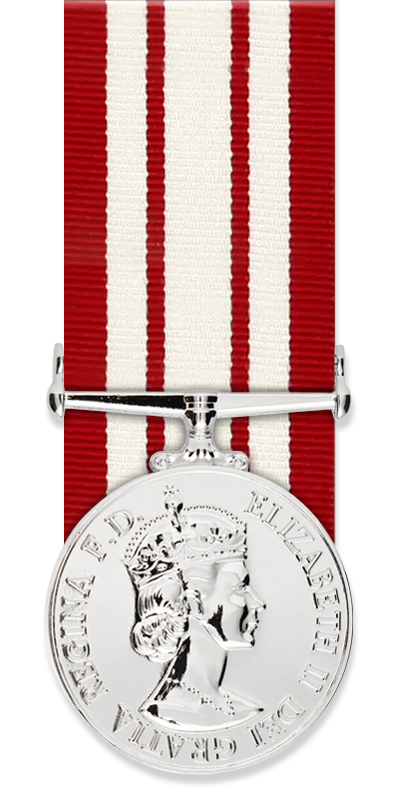
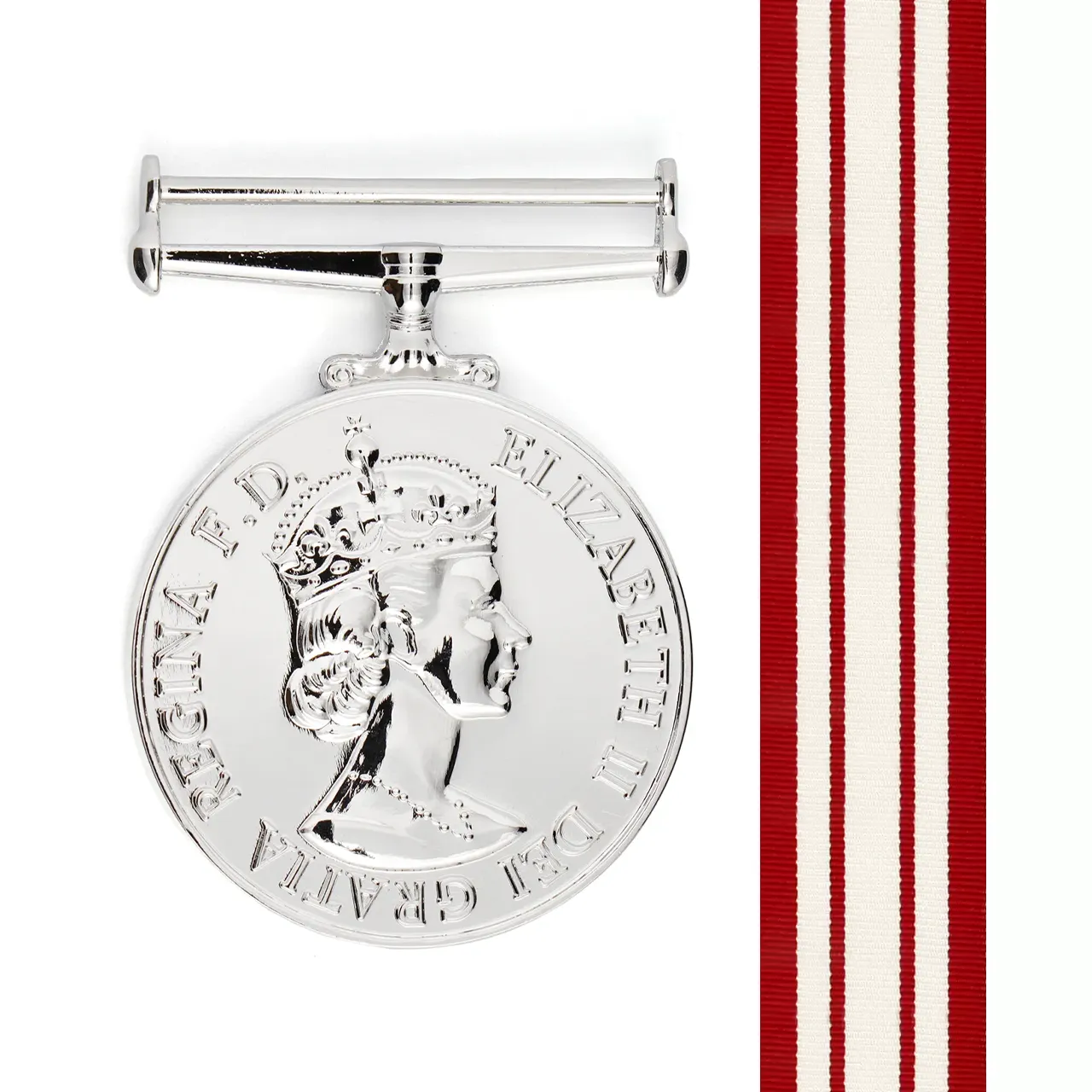
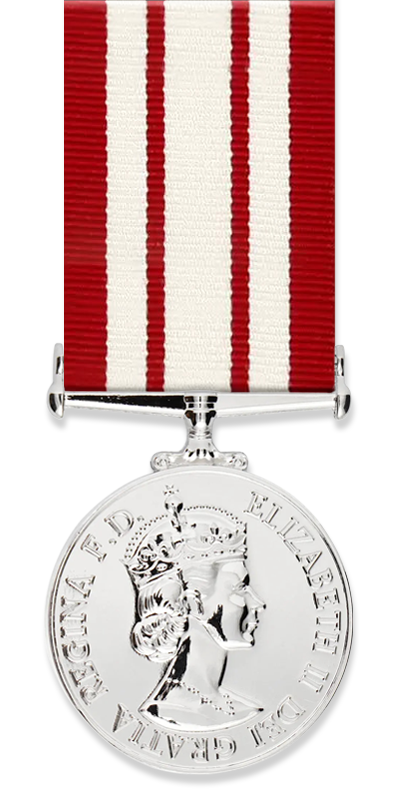
The medal is silver, 36 millimetres in diameter, its obverse bearing the effigy of the reigning sovereign. The reverse, designed by Margaret Winser, shows Britannia in a chariot drawn by two sea-horses, her hand resting on a union shield. The recipient's details are impressed on the edge.
The ribbon
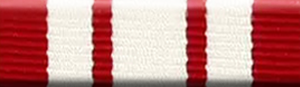
Crimson with three white stripes.
The ribbon is crimson with three white stripes.
Clasps
The medal was never issued without a clasp; the clasp names the operation, and further operations are recognised by additional clasps on the ribbon.

Iraq
For naval service during operations in Iraq between 1919 and 1920.
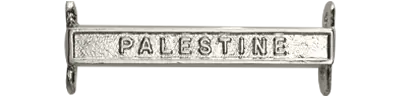
Palestine
For naval service supporting the operations in Palestine between 1936 and 1939.

South East Asia
For naval service during operations in South East Asia between 1945 and 1946.

Malaya
For naval service during the Malayan Emergency between 1948 and 1960.

Cyprus
For naval service during the Cyprus emergency between 1955 and 1959.

Arabian Peninsula
For naval service during operations in the Arabian Peninsula between 1957 and 1960.
Eligibility
The medal was awarded for Royal Navy and Royal Marines service in minor operations for which no separate medal was intended.
- Personnel of the naval service qualified on the conditions of each clasp;
- The medal was never issued without a clasp, and from 1920 a mention in despatches is marked by a bronze oak-leaf emblem; a recipient who served in more than one qualifying operation wore additional clasps;
- It was replaced in 1962 by the unified General Service Medal. As an Imperial award it retains its place in the Australian Order of Wearing.
Order of wear
Imperial awards were the honours of Australia before the Australian honours system was established in 1975, and they retain their place in the Order of Wearing. They are worn after the Australian honours of their kind and among the Imperial awards in the order set by the Australian Order of Wearing, which follows the British order of precedence.
Frequently asked questions
What is the Naval General Service Medal awarded for?
Royal Navy and Royal Marines service in minor operations for which no separate campaign medal was intended, with a clasp naming the operation.
How does it relate to the General Service Medal 1918?
It was the naval counterpart of the army and air force medal; the two were replaced together in 1962 by the unified General Service Medal.
What does its reverse show?
Britannia riding a chariot drawn by two sea-horses, a design by Margaret Winser, distinct from the winged Victory of the army medal.
Did Australians receive it?
Yes, for some clasps, notably the Bomb and Mine Clearance issues awarded for Royal Australian Navy clearance operations.
Is it named to the recipient?
Yes, impressed on the edge with the recipient's details.
Does it carry a post-nominal?
No; it is a campaign medal and carries no post-nominal.