
History
The General Service Medal 1962, sometimes called the Campaign Service Medal, was introduced to replace both the General Service Medal 1918 of the Army and RAF and the Naval General Service Medal of 1915, giving all three services a single campaign medal for minor operations from 1962 onward. It was awarded until 2007, when the Operational Service Medal took its place.
Fourteen clasps were awarded, the medal never issued without one, naming operations from Borneo and the Malay Peninsula through Radfan, South Arabia and Dhofar to Northern Ireland, the last of which accounted for the great majority of awards over its long qualifying period. Australians qualified for the Borneo and Malay Peninsula clasps during the Indonesian Confrontation. Service qualifying after 14 August 1969 also counted toward the Accumulated Campaign Service Medal. As an Imperial award it retains its place in the Australian Order of Wearing.
Design & ribbon
The medal
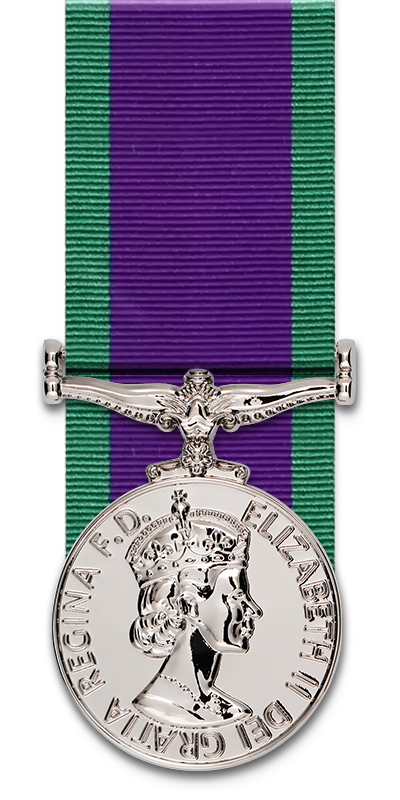
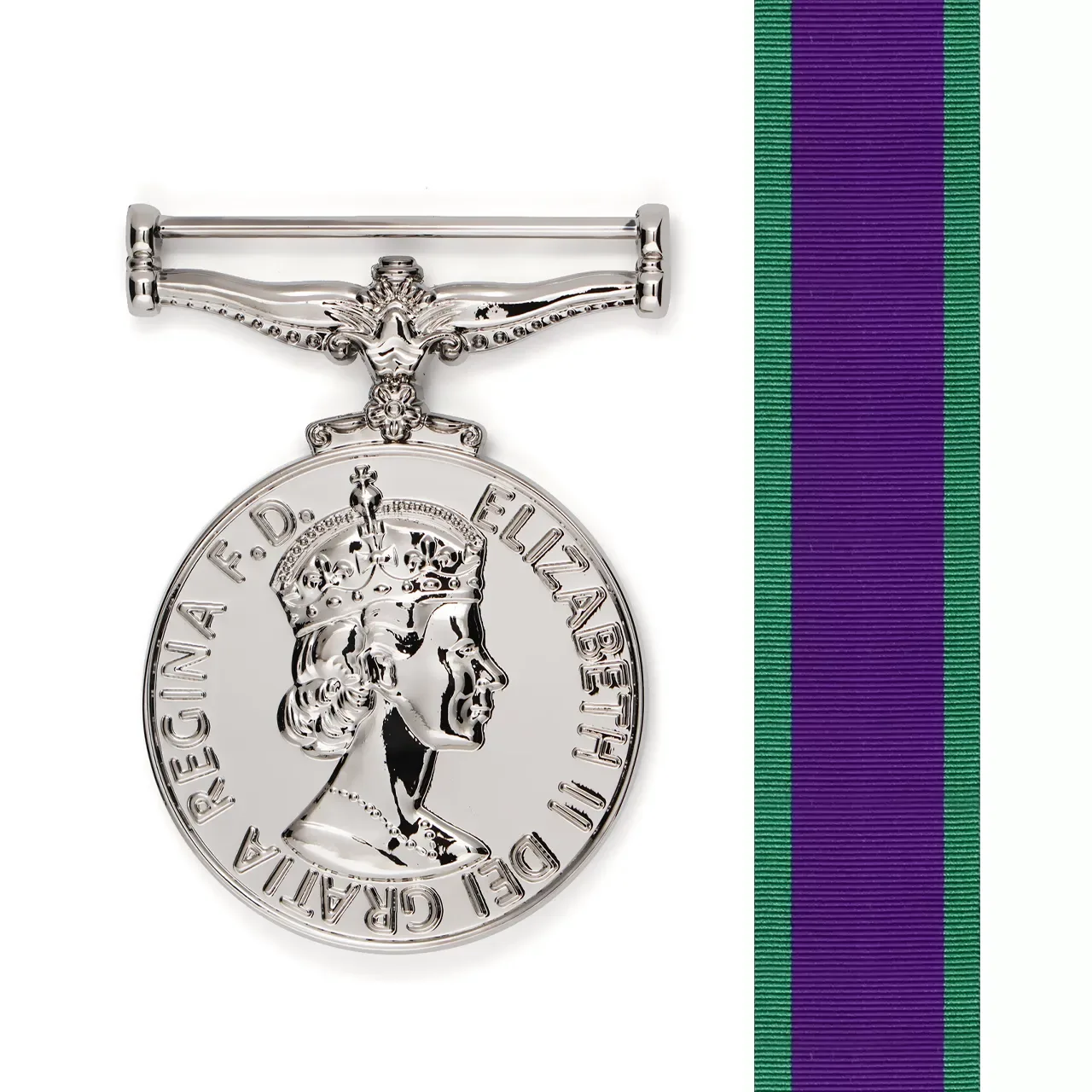
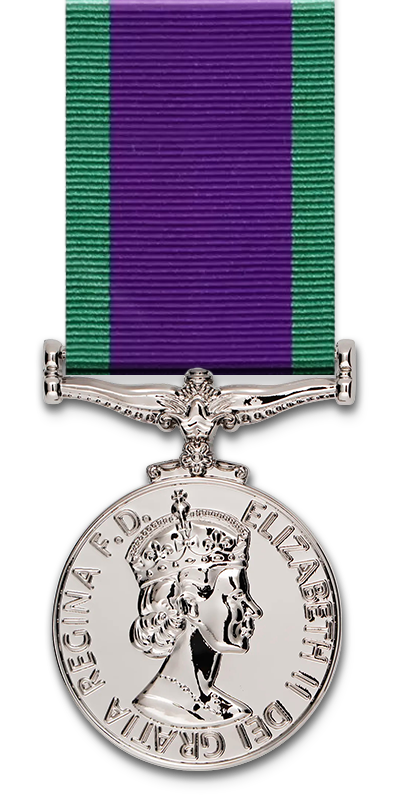
The medal is circular silver, 36 millimetres in diameter, its obverse bearing the crowned effigy of Queen Elizabeth II. The reverse bears the words FOR CAMPAIGN SERVICE beneath a crown, surrounded by a wreath of oak leaves. The recipient's name, rank, number and unit are impressed on the rim.
The ribbon
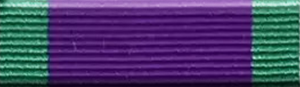
Purple with dark green edge stripes.
The ribbon is purple with a dark green stripe at each edge, the same colours as the GSM 1918-1962 but in different proportions.
Clasps
The medal was never issued without a clasp; the clasp names the operation, and further operations are recognised by additional clasps on the ribbon.
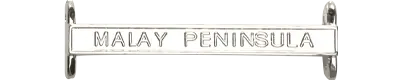
Malay Peninsula
For operational service on the Malay Peninsula between 1957 and 1964, following the Malayan Emergency.
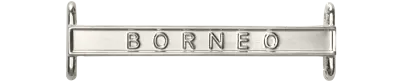
Borneo
For operational service during the Indonesian confrontation in Borneo between 1962 and 1966.

South Vietnam
For operational service in South Vietnam in the early 1960s. This clasp was awarded in very small numbers.

Northern Ireland
For operational service in Northern Ireland from 14 August 1969, awarded for 30 days service. Eligibility ran until 31 July 2007, the longest period of any clasp to this medal.
Eligibility
The medal was awarded for service in minor operations from 1962 onward for which no separate medal was intended.
- Personnel of the Army, Royal Navy, Royal Marines and Royal Air Force qualified on the conditions of each clasp, generally 30 days' service or a set number of operational sorties;
- Fourteen clasps were awarded; the medal was never issued without one, and a mention in despatches or a Queen's Commendation is marked by an oak-leaf emblem; clasps are worn in the order qualified for;
- It was replaced in 2007 by the Operational Service Medal. As an Imperial award it retains its place in the Australian Order of Wearing.
Order of wear
Imperial awards were the honours of Australia before the Australian honours system was established in 1975, and they retain their place in the Order of Wearing. They are worn after the Australian honours of their kind and among the Imperial awards in the order set by the Australian Order of Wearing, which follows the British order of precedence.
Frequently asked questions
What is the General Service Medal 1962 awarded for?
Service in minor operations from 1962 onward for which no separate medal was intended, with a clasp naming the specific operation.
What did it replace?
Both the General Service Medal 1918, worn by the Army and RAF, and the Naval General Service Medal 1915, unifying campaign recognition across all three services.
Which clasps did Australians earn?
Chiefly Borneo and Malay Peninsula, for service during the Indonesian Confrontation of the mid-1960s.
Why is Northern Ireland so common on it?
The Northern Ireland clasp covered service from 1969 to 2007, by far the longest qualifying period, so it accounts for the great majority of the medal's awards.
Is it named to the recipient?
Yes, impressed on the rim with the recipient's details.
Does it carry a post-nominal?
No; it is a campaign medal and carries no post-nominal.