
History
The General Service Medal 1918, usually called the GSM 1918-1962, was instituted to recognise service by the Army and Royal Air Force in the many minor operations for which no separate campaign medal was intended: the constabulary wars of empire between and after the two world wars. It was the land and air counterpart of the Naval General Service Medal of 1915, and like it the medal was never issued without a clasp, the clasp naming the campaign or theatre.
Eighteen clasps were awarded across its life, from the Middle East operations that followed the Great War through Palestine, the Malayan Emergency, the Canal Zone, Cyprus and Arabia. Local forces including police, and units of the Indian Army before 1947, qualified for many of them. In 1962 it and the Naval General Service Medal were together replaced by a single unified General Service Medal. As an Imperial award it retains its place in the Australian Order of Wearing.
Design & ribbon
The medal
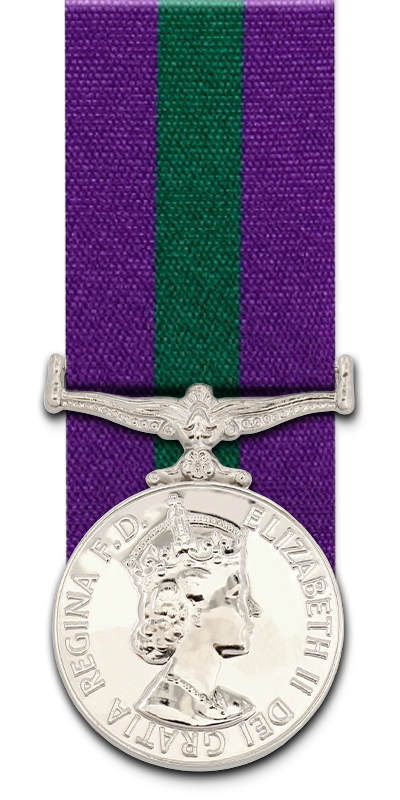
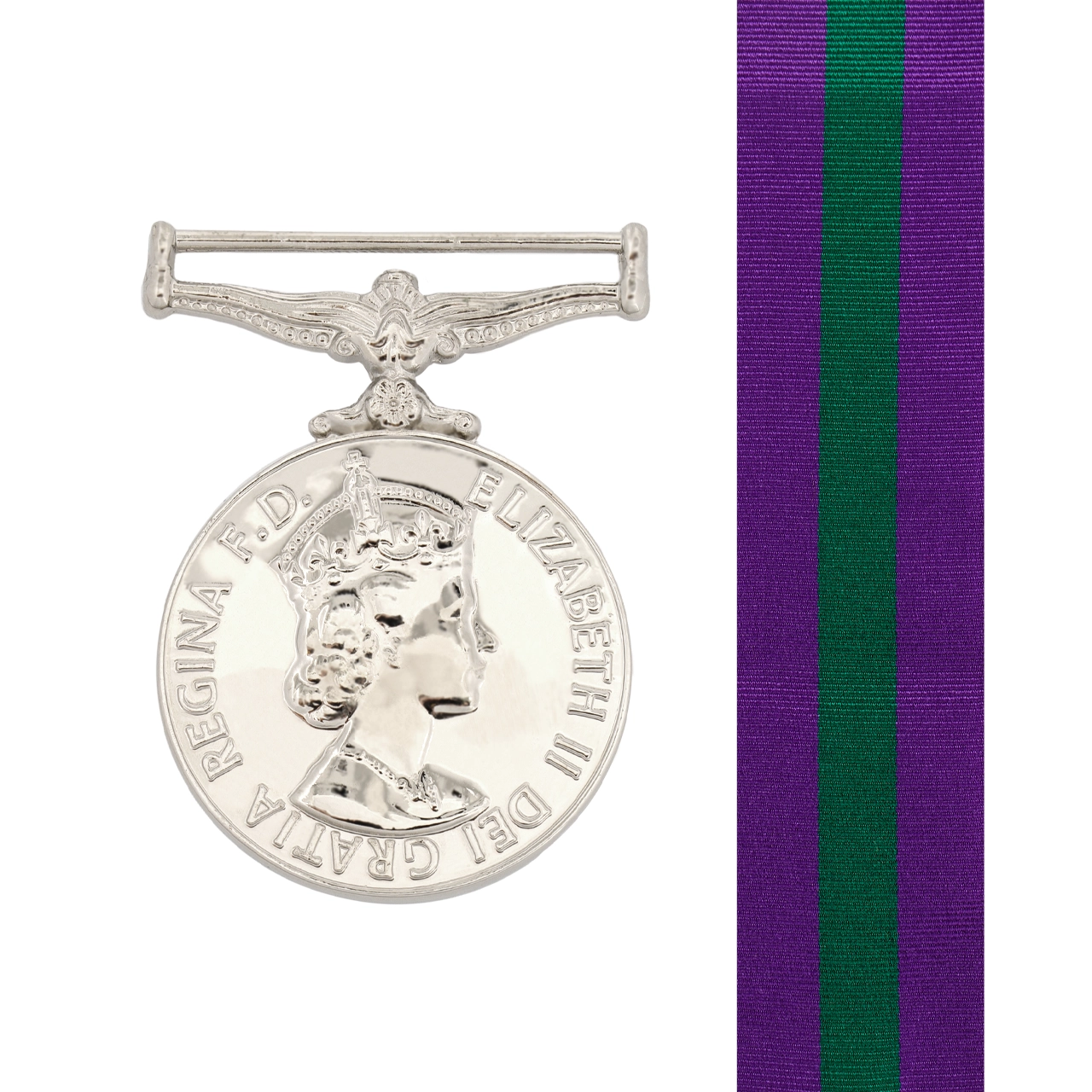
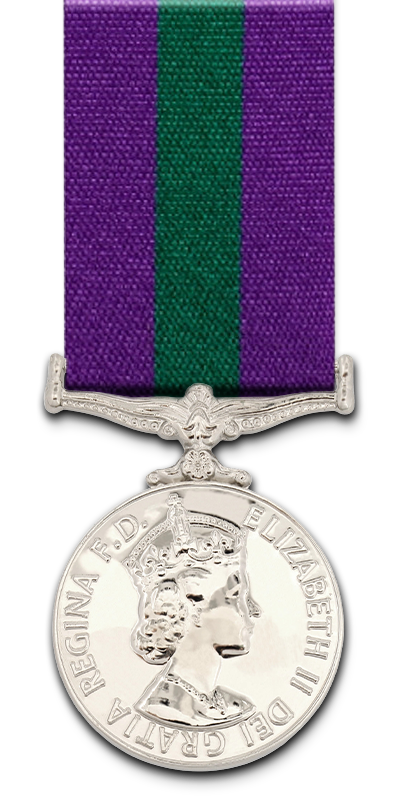
The medal is circular silver, 36 millimetres in diameter, its obverse bearing the crowned effigy of the reigning monarch. The reverse, by Edward Carter Preston, shows the winged figure of Victory in a Corinthian helmet with a trident, bestowing a wreath on the emblems of the Army, a sword, and the Royal Air Force, its wings. The recipient's details are impressed on the rim.
The ribbon
Purple, dark green and purple in three equal stripes.
The ribbon has three equal stripes of purple, dark green and purple.
Clasps
The medal was never issued without a clasp; the clasp names the campaign, and further campaigns are recognised by additional clasps on the ribbon.
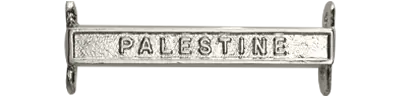
Palestine
For service during the operations in Palestine between 1936 and 1939.
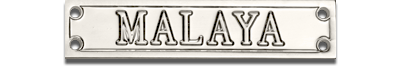
Malaya
For service during the Malayan Emergency between 1948 and 1960.
Eligibility
The medal was awarded for army and air force service in minor operations for which no separate medal was intended.
- Personnel of the Army and Royal Air Force qualified, together with local forces including police and, before 1947, units of the Indian Army, on the qualifying conditions of each clasp;
- Eighteen clasps were awarded across its life; the medal was never issued without one, and a mention in despatches is marked by a bronze oak-leaf emblem;
- It was replaced in 1962 by the unified General Service Medal. As an Imperial award it retains its place in the Australian Order of Wearing.
Order of wear
Imperial awards were the honours of Australia before the Australian honours system was established in 1975, and they retain their place in the Order of Wearing. They are worn after the Australian honours of their kind and among the Imperial awards in the order set by the Australian Order of Wearing, which follows the British order of precedence.
Frequently asked questions
What is the General Service Medal 1918-1962 awarded for?
Army and Royal Air Force service in minor operations for which no separate campaign medal was intended, with a clasp naming the specific campaign or theatre.
How does the clasp system work?
The medal was never issued without a clasp; the clasp identifies the campaign. Service in further campaigns is recognised by additional clasps on the ribbon.
Who qualified?
Personnel of the Army and RAF, and local forces including police, with units of the Indian Army also eligible for many clasps before 1947.
How does it relate to the Naval General Service Medal?
It was the army and air force counterpart of the naval medal; the two were replaced together in 1962 by the unified General Service Medal.
Is it named to the recipient?
Yes, impressed on the rim with the recipient's details.
Does it carry a post-nominal?
No; it is a campaign medal and carries no post-nominal.