
History
The Distinguished Service Medal was established on 14 October 1914 as the third level decoration for gallantry in action by ratings of the Royal Navy, below the standard required for the Victoria Cross or the Conspicuous Gallantry Medal. It was the lower-deck counterpart of the Distinguished Service Cross, which recognised officers and warrant officers, and it rewarded bravery and resourcefulness on active service at sea. From 1916 bars could be authorised for further awards.
It was awarded to ratings up to and including chief petty officer, and its precedence placed it between the George Medal and the Military Medal once those awards existed. About 11,311 medals were awarded between 1914 and 1993, when the reform of the honours system opened the Distinguished Service Cross to all ranks and the Medal was discontinued. Like other reign-spanning awards it carries the effigy of the sovereign of the day. As an Imperial award it retains its place in the Australian Order of Wearing.
Design & ribbon
The medal
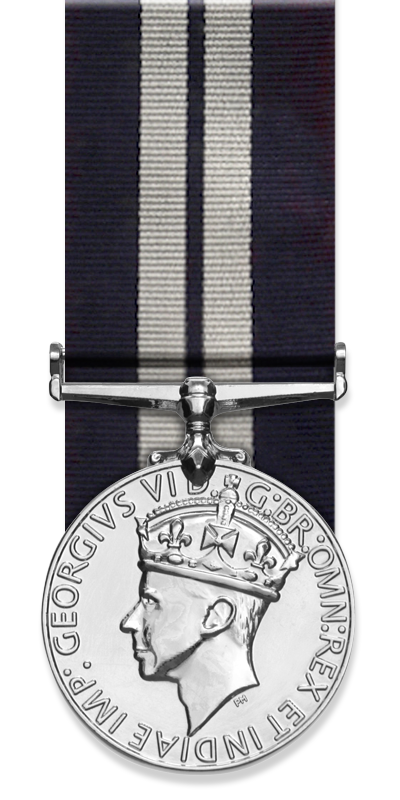
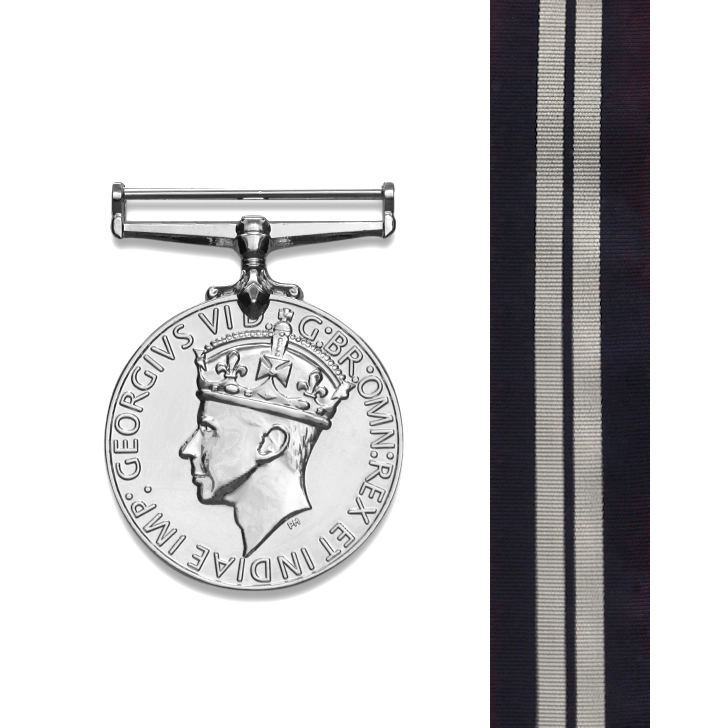
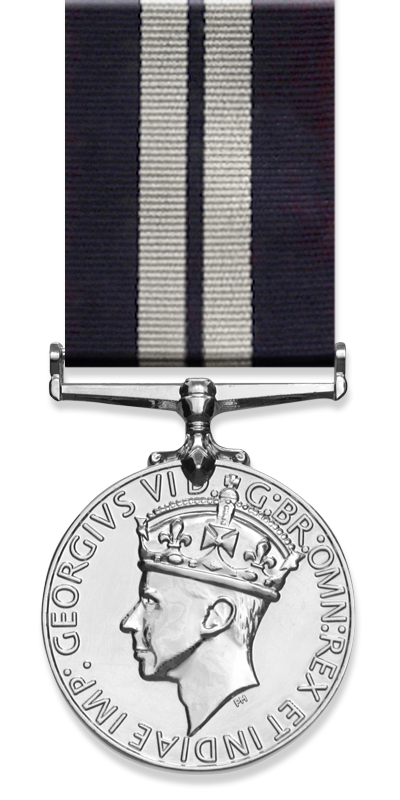
The medal is circular silver, its obverse bearing the crowned effigy of the reigning sovereign. The reverse carries the inscription FOR DISTINGUISHED SERVICE within a laurel wreath surmounted by the royal cypher and crown. The recipient's details are impressed on the rim.
The ribbon
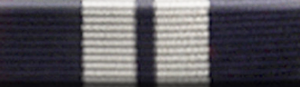
Dark blue with two central white stripes.
The ribbon is dark blue with two central white stripes, the naval colours distinguishing it from the crimson gallantry ribbons of the land services.
Clasps
Further acts of gallantry meriting the medal are recognised by a bar rather than a second medal.
Eligibility
The medal was awarded for bravery and resourcefulness on active service at sea.
- It was awarded to ratings of the Royal Navy up to and including the rank of chief petty officer, and to members of the other services for gallantry at sea, as the counterpart of the Distinguished Service Cross;
- Silver laurelled bars were authorised for subsequent awards from 1916, dated in the First World War and undated in the Second, with a silver rosette worn on the ribbon to indicate each bar; the medal was discontinued in 1993;
- Recipients are entitled to the post-nominal letters DSM. As an Imperial award it retains its place in the Australian Order of Wearing.
Order of wear
Imperial awards were the honours of Australia before the Australian honours system was established in 1975, and they retain their place in the Order of Wearing. They are worn after the Australian honours of their kind and among the Imperial awards in the order set by the Australian Order of Wearing, which follows the British order of precedence.
Frequently asked questions
What is the Distinguished Service Medal awarded for?
Bravery and resourcefulness on active service at sea, by Royal Navy ratings: the lower-deck counterpart of the officers' Distinguished Service Cross.
Why does it carry the date 1914?
It was instituted in October 1914; the master list distinguishes it by that date, as it does the Distinguished Service Cross of the same year.
Who could receive it?
Ratings of the Royal Navy up to and including chief petty officer, and members of the other services for gallantry at sea.
Where did it rank?
Below the Distinguished Service Cross, and between the George Medal and the Military Medal once those awards were established.
How are further awards shown?
By a silver laurelled bar, dated in the First World War and undated in the Second, with a silver rosette when the ribbon alone is worn. One sailor received the medal four times.
Does it carry a post-nominal?
Yes, the letters DSM.