
History
Established on 3 June 1918 with the Royal Air Force, the Air Force Cross is the non-operational counterpart of the Distinguished Flying Cross: it is granted for an act or acts of exemplary gallantry while flying, though not in active operations against the enemy. Test flying, instruction, ferrying, air-sea rescue and the countless hazardous non-combat flights of a century of aviation fall within its reach, and many early awards recognised meritorious service over a period rather than a single act.
Originally for RAF officers and warrant officers, it opened to Fleet Air Arm officers in 1941 and Army officers in 1942, with civilians eligible between 1919 and 1932 and posthumous awards from 1979. Since the 1993 reform all ranks have been eligible and the other ranks' Air Force Medal was discontinued. Around 5,360 Crosses were awarded between 1918 and 2017. As an Imperial award it retains its place in the Australian Order of Wearing.
Design & ribbon
The medal
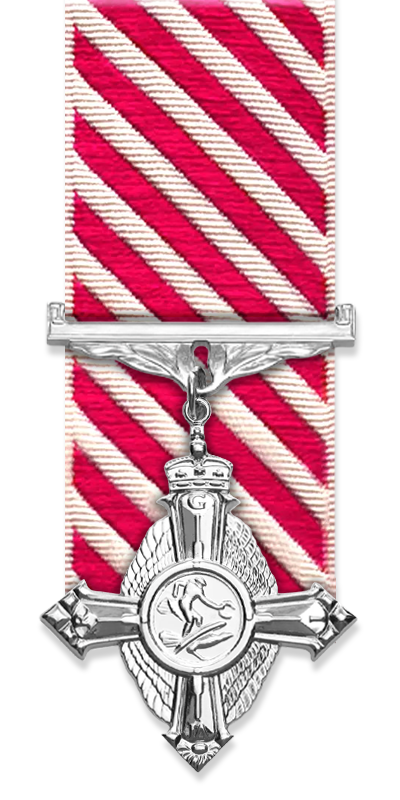
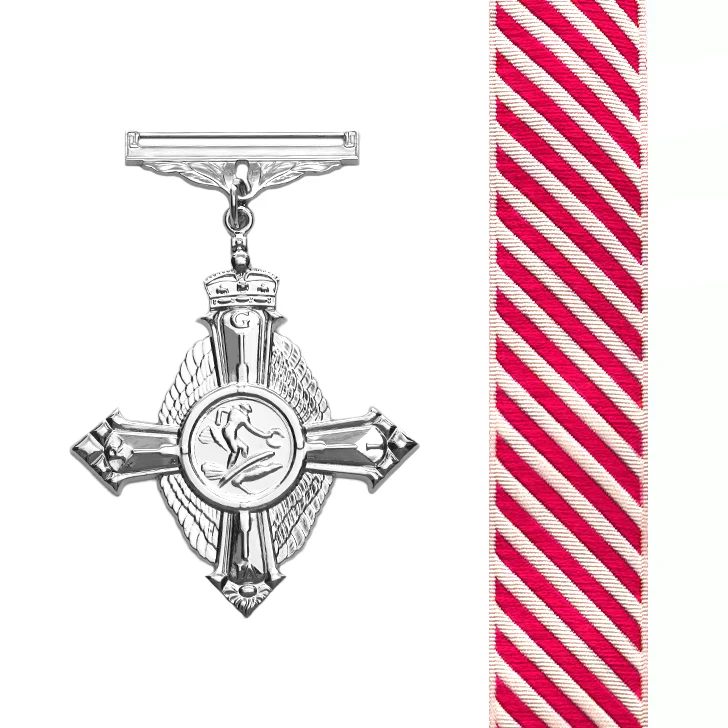
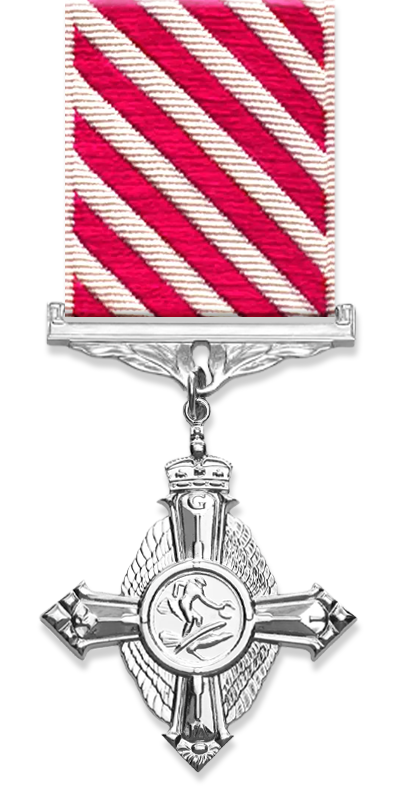
The Cross is silver, formed of thunderbolts in the arms of a cross, the ends terminating in wings, with a central roundel showing Hermes mounted on a hawk in flight bestowing a wreath, the whole surmounted by an imperial crown. The reverse bears the royal cypher above the date 1918, and the suspender is straight and decorated with laurel.
The ribbon

White with broad diagonal red stripes.
The ribbon is white with broad diagonal red stripes, the diagonal pattern adopted in 1919 in place of the original horizontal stripes.
Clasps
Further acts meriting the Cross are recognised by a bar rather than a second cross.
Eligibility
The Cross is awarded for an act or acts of exemplary gallantry while flying, though not in active operations against the enemy.
- Originally for RAF officers and warrant officers, its eligibility widened to the Fleet Air Arm and Army aviation, and since 1993 to all ranks; civilians were eligible from 1919 to 1932;
- A bar denotes a further award, with a silver rosette worn on the ribbon when the ribbon alone is worn; posthumous awards have been possible since 1979;
- Recipients are entitled to the post-nominal letters AFC. As an Imperial award it retains its place in the Australian Order of Wearing.
Order of wear
Imperial awards were the honours of Australia before the Australian honours system was established in 1975, and they retain their place in the Order of Wearing. They are worn after the Australian honours of their kind and among the Imperial awards in the order set by the Australian Order of Wearing, which follows the British order of precedence.
Frequently asked questions
What is the Air Force Cross awarded for?
Exemplary gallantry while flying, though not in active operations against the enemy: hazardous non-combat flying such as test flying, instruction and rescue.
How does it differ from the Distinguished Flying Cross?
The DFC rewards gallantry in operations against the enemy; the AFC rewards gallantry in flying away from the enemy. They were instituted together in 1918 and share the same family of design.
What was its other-ranks companion?
The Air Force Medal, awarded to non-commissioned airmen until 1993, when the AFC opened to all ranks and the Medal was discontinued.
Were civilians ever eligible?
Yes, between 1919 and 1932 civilians could receive the AFC on the same basis as RAF personnel.
How are further awards shown?
By a bar on the ribbon, with a silver rosette worn when the ribbon alone is displayed.
Does it carry a post-nominal?
Yes, the letters AFC.