
History
Instituted on 3 June 1918 alongside the Distinguished Flying Cross, the Distinguished Flying Medal was among the first awards of the new Royal Air Force, created for the non-commissioned airmen, the sergeant pilots, air gunners, observers and flight engineers, whose gallantry while flying in active operations against the enemy matched the officers' standard. Like the Cross it could not be awarded for achievement away from operations.
It was always the rarer decoration: in the RAF's first years only about a hundred were awarded against more than a thousand Crosses, and though the Second World War brought many more, the medal kept its scarcity relative to the Cross. Australian airmen serving in RAF and Commonwealth squadrons were among its recipients. The 1993 reform, which opened the Distinguished Flying Cross to all ranks, discontinued the Medal. As an Imperial award it retains its place in the Australian Order of Wearing.
Design & ribbon
The medal
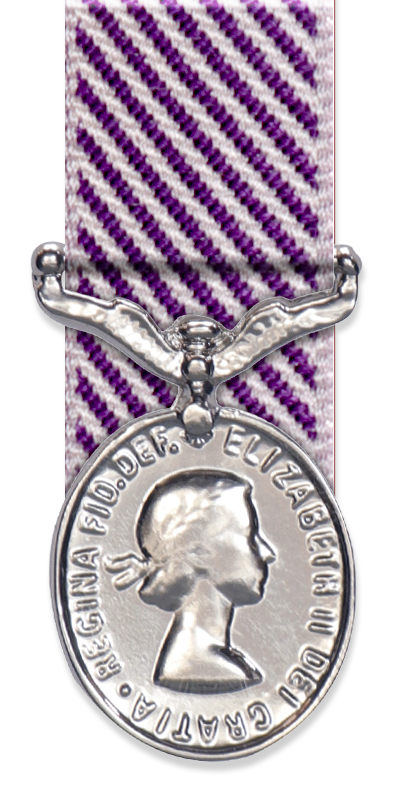
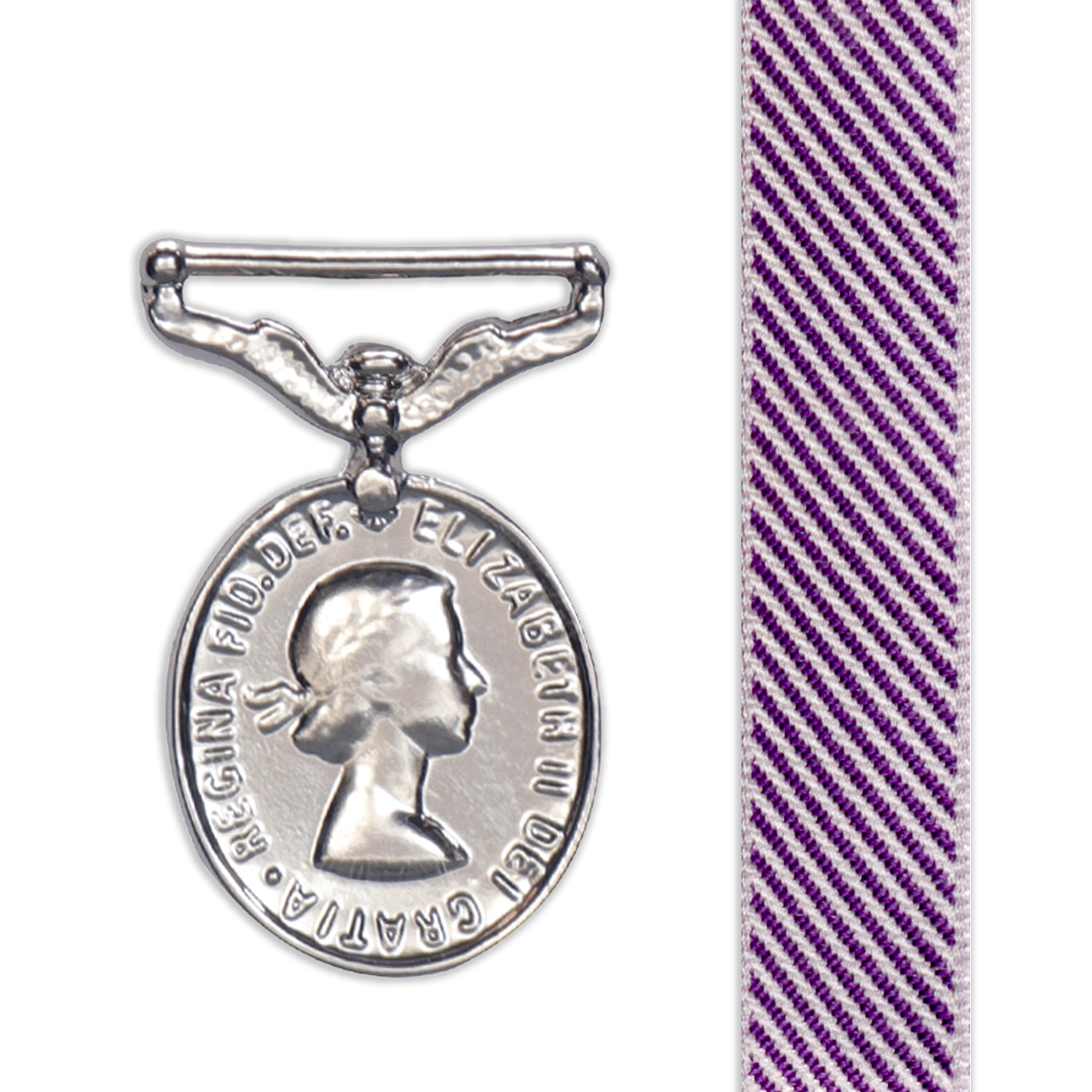
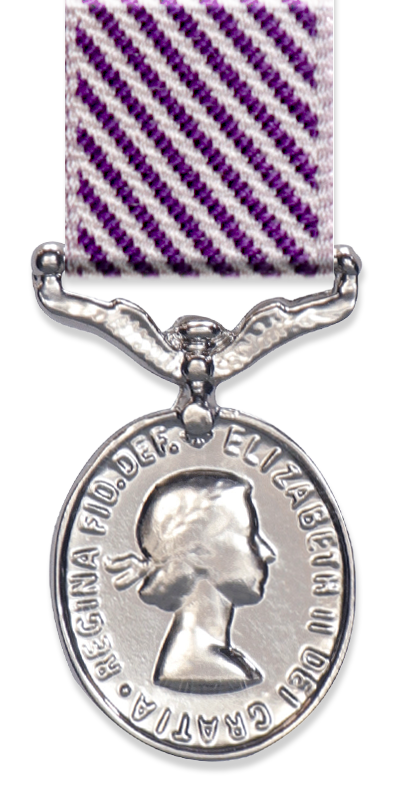
The medal is oval and silver, its obverse bearing the crowned effigy of the reigning sovereign. The reverse shows Athena Nike seated on an aeroplane, a hawk rising from her outstretched hand, with the words FOR COURAGE, and the whole is suspended from a straight bar ornamented with wings.
The ribbon
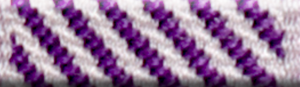
White with narrow diagonal purple stripes.
The ribbon is white with broad diagonal purple stripes narrower than those of the Cross, the diagonal pattern adopted in 1919 in place of the original horizontal stripes.
Clasps
Further acts of gallantry meriting the medal are recognised by a bar rather than a second medal.
Eligibility
The medal was awarded to non-commissioned ranks for an act or acts of valour, courage or devotion to duty while flying in active operations against the enemy.
- It was the other ranks' equivalent of the Distinguished Flying Cross, and could not be awarded for non-operational achievement;
- A bar denoted a further award, with a silver rosette worn on the ribbon when the ribbon alone was worn; the medal was discontinued in 1993;
- Recipients are entitled to the post-nominal letters DFM. As an Imperial award it retains its place in the Australian Order of Wearing.
Order of wear
Imperial awards were the honours of Australia before the Australian honours system was established in 1975, and they retain their place in the Order of Wearing. They are worn after the Australian honours of their kind and among the Imperial awards in the order set by the Australian Order of Wearing, which follows the British order of precedence.
Frequently asked questions
What is the Distinguished Flying Medal awarded for?
Valour, courage or devotion to duty while flying in active operations against the enemy, by non-commissioned ranks: the other ranks' equivalent of the Distinguished Flying Cross.
How does it differ from the Distinguished Flying Cross?
The deed is the same; the difference was rank. The Cross went to commissioned and warrant officers, the Medal to non-commissioned airmen, until 1993 when the Cross opened to all ranks.
Why is it rarer than the Cross?
Fewer non-commissioned airmen were decorated relative to officers; in the RAF's first years only about a hundred Medals were awarded against more than a thousand Crosses.
What does the reverse show?
Athena Nike seated on an aeroplane with a hawk rising from her hand and the words FOR COURAGE, a design shared with the Distinguished Flying Cross's family of air awards.
When was it discontinued?
In 1993, when the honours review opened the Distinguished Flying Cross to all ranks and ended the separate medal.
Does it carry a post-nominal?
Yes, the letters DFM.