
History
Established on 3 August 1983 by Secretary of Defense Caspar Weinberger, the Joint Service Achievement Medal completed the joint family of decorations by giving the combatant commands and defense agencies an award for their junior people: members below the grade of colonel whose achievement or meritorious service in a joint activity deserved recognition, but below the threshold of the Joint Service Commendation Medal. In American precedence it stands above the achievement medals of the individual services.
Its recipients are the action officers, non-commissioned officers and specialists of the joint staffs and task forces, and Australians posted into United States joint headquarters have been among them. For an Australian its wear follows the foreign awards rules, with approval and a place after all Australian honours in order of the date of award.
Design & ribbon
The medal
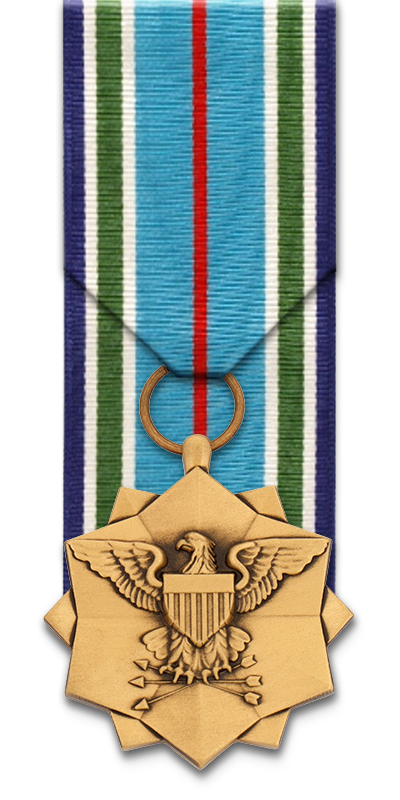
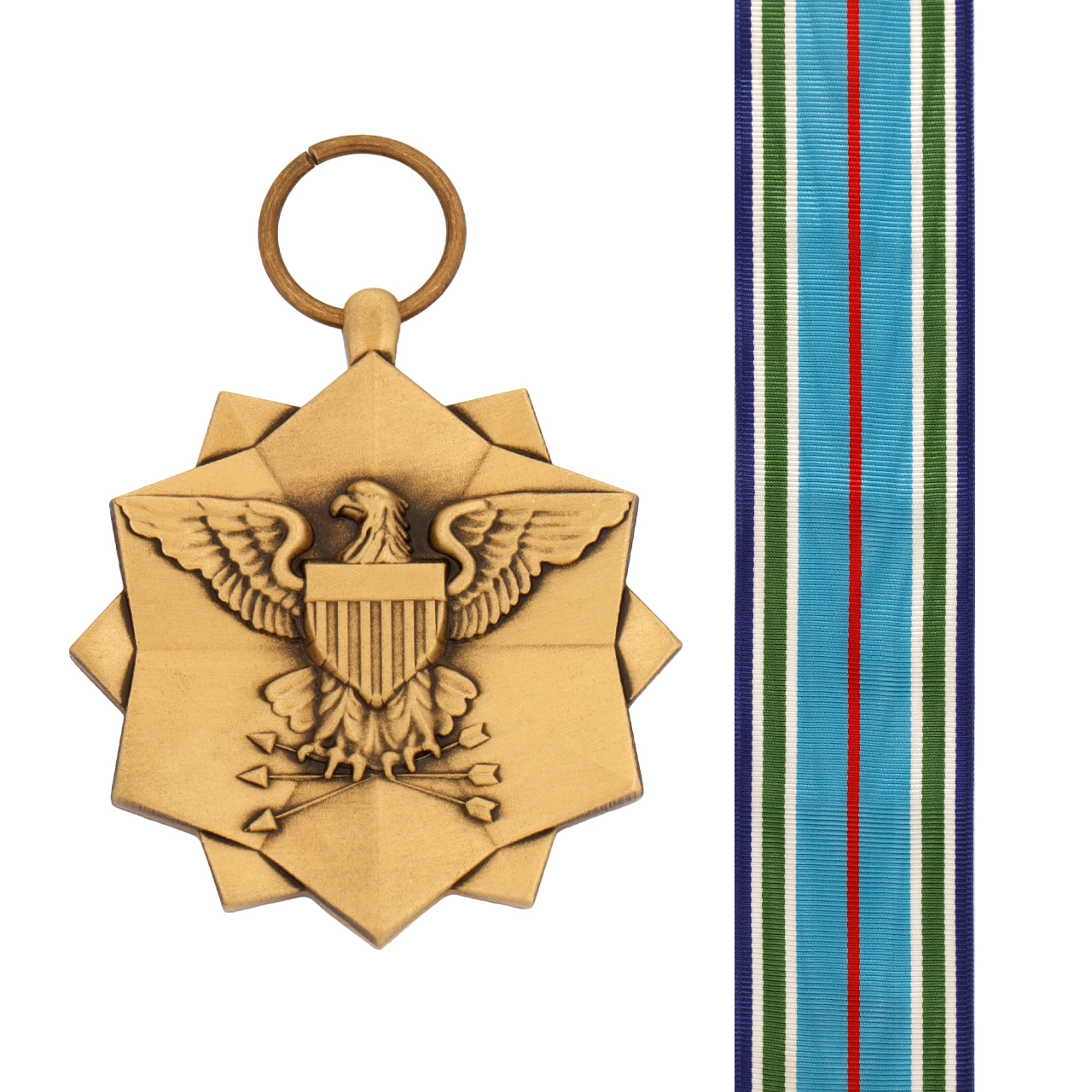
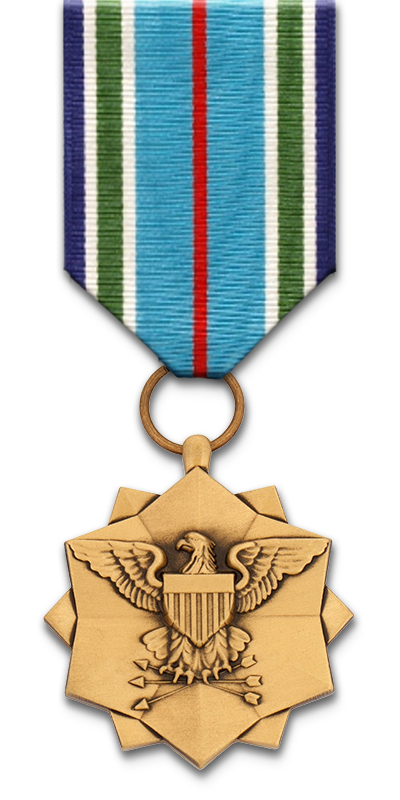
The medal is bronze, a star of twelve points with an eagle holding three arrows superimposed at its centre: the eagle from the seal of the Secretary of Defense, in whose name the medal is awarded, the arrows for readiness to defend by land, sea and air, and the points for vigilance in all directions. The reverse carries JOINT SERVICE around the top and ACHIEVEMENT AWARD around the base, with space at the centre for the recipient's name.
The ribbon
Red at the centre, stepping out through light blue, white, green and blue.
The ribbon has a centre stripe of red flanked on each side by stripes of light blue, white, green, white and blue.
Clasps
Further awards are marked on the ribbon in the American fashion rather than by additional medals.
Eligibility
The medal is awarded in the name of the United States Secretary of Defense for outstanding achievement or meritorious service in a joint activity, of a degree below that required for the Joint Service Commendation Medal.
- Members of the United States armed forces below the grade of colonel, assigned to a joint activity, are eligible;
- Additional awards are denoted by bronze oak leaf clusters, with a silver cluster worn in place of five bronze;
- For Australians, acceptance and wear require approval through the foreign awards process, with the medal worn after all Australian honours in order of the date of award. There is no post-nominal in Australian usage.
Order of wear
Foreign and international awards approved for acceptance and wearing are worn after all Australian honours and awards, in order of the date of award. The precise arrangement should be confirmed against the current Australian Order of Wear.
Frequently asked questions
What is the Joint Service Achievement Medal awarded for?
Outstanding achievement or meritorious service while assigned to a United States joint activity, below the threshold of the Joint Service Commendation Medal. It is awarded in the name of the Secretary of Defense to members below the grade of colonel.
What counts as a joint activity?
Organisations where elements of more than one American service perform joint missions: the Joint Staff, the combatant commands, defense agencies and joint task forces.
How did Australians come to hold it?
Through embedded and exchange postings in American joint headquarters and task forces during the coalition era.
How are multiple awards shown?
By bronze oak leaf clusters, with a silver cluster replacing five bronze.
Where does it sit in American precedence?
Above the achievement medals of the individual services and below the Joint Service Commendation Medal.
Can an Australian wear it on a rack?
With government approval through the foreign awards process: after all Australian honours and awards, in order of the date of award.