
History
The Australian gallantry decorations were established on 15 January 1991 by Letters Patent, replacing the Imperial awards. Two things changed with them: the decorations apply equally to all three Services, and the level of the award is determined by the quality of the action, not the rank of the person who performed it. The Star of Gallantry stands second, below only the Victoria Cross, taking the place once filled by the Distinguished Service Order in its gallantry role for officers, and by the Distinguished Conduct Medal and Conspicuous Gallantry Medals for other ranks.
It is awarded for acts of great heroism or conspicuous gallantry in action in circumstances of great peril. The first awards were made in 2006 to special forces soldiers for Afghanistan, and the decoration has also reached back in time: retrospective awards have followed reviews of past recognition, among them the Star of Gallantry to the commander of Delta Company at Long Tan.
Design & ribbon
The medal
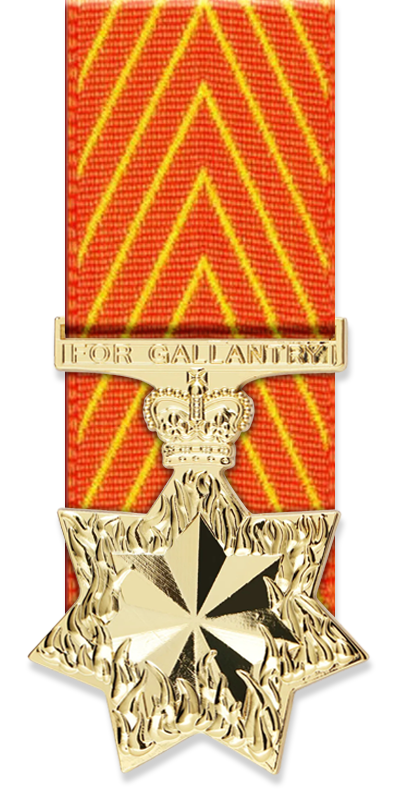
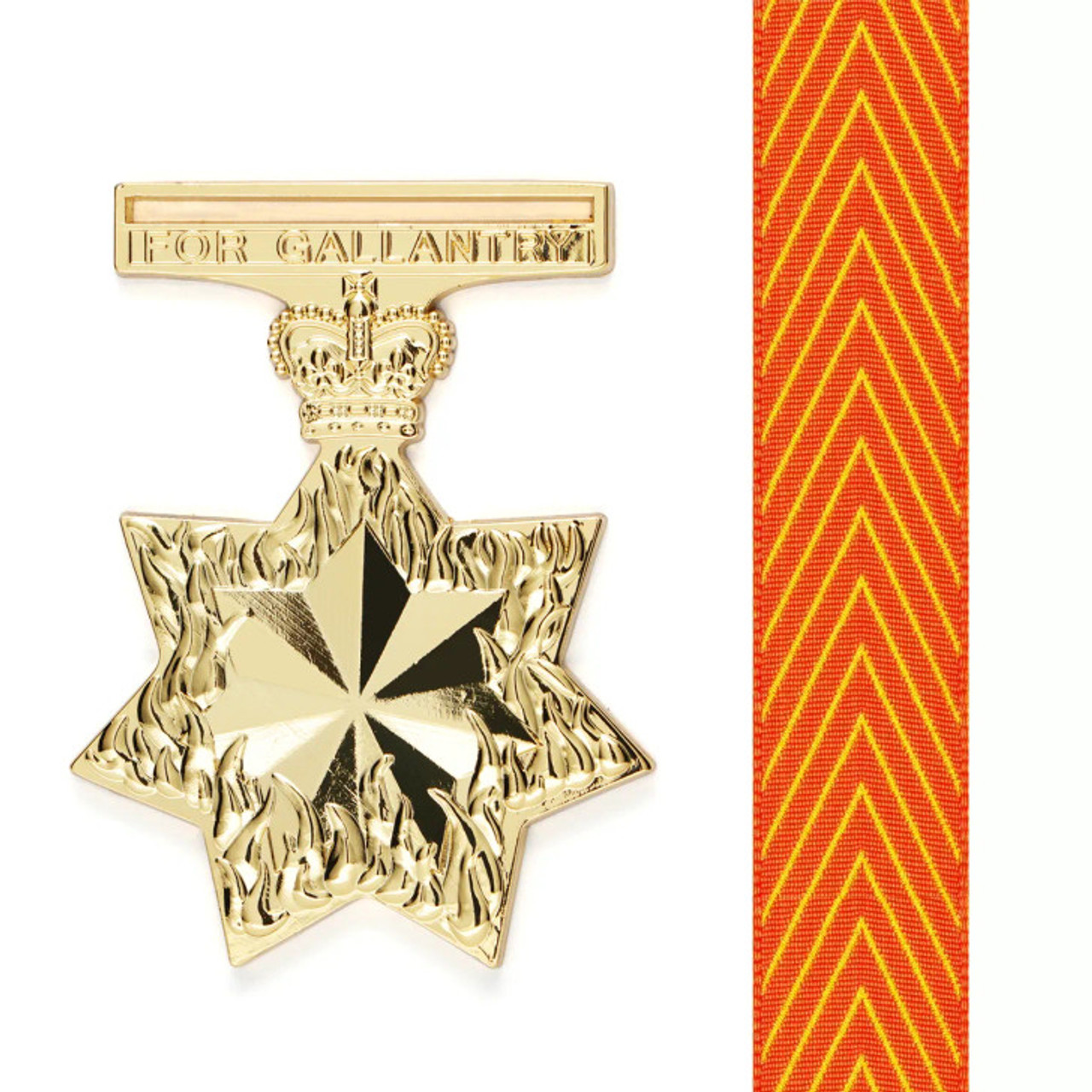
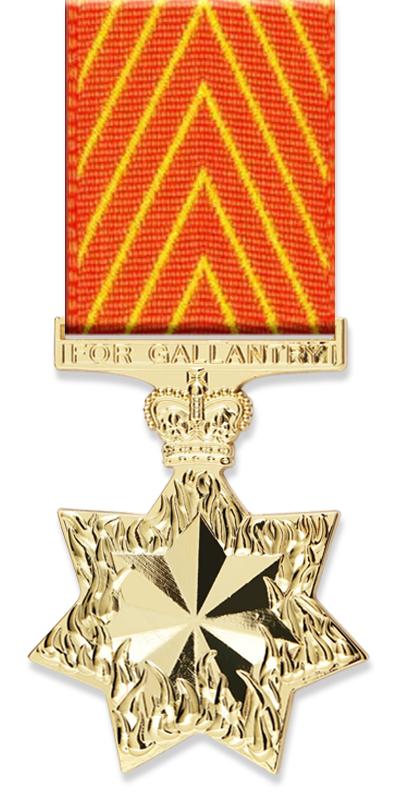
The Star of Gallantry is a gold plated silver Federation Star ensigned with the Crown of Saint Edward. The obverse bears a smaller Federation Star surrounded by stylised flames, representing action under fire. The reverse has a horizontal panel for the recipient's details on a stepped background. The suspension bar is inscribed FOR GALLANTRY on both the obverse and the reverse.
The ribbon

Chevrons of deep and light orange, worn with the points upward.
The 32 millimetre ribbon has a design of bold chevrons of deep orange alternating with chevrons of light orange, and is worn with the points of the chevrons facing upwards.
Clasps
A further award of the decoration is denoted by a bar worn on the ribbon.
Eligibility
The decoration is awarded by the Governor-General on the recommendation of the Minister for Defence, for acts of great heroism or conspicuous gallantry in action in circumstances of great peril.
- All ranks of the Australian Defence Force are eligible, and the decoration may be awarded to other persons determined by the Minister;
- The decoration may be awarded posthumously;
- Recipients are entitled to the post-nominal SG, with and Bar added for a further award.
Order of wear
The decoration is worn among the gallantry and distinguished service decorations, interleaved with the Imperial awards of equivalent standing. The precise neighbours in the order of wear should be confirmed against the current Australian Order of Wear.
Frequently asked questions
What is the Star of Gallantry awarded for?
Acts of great heroism or conspicuous gallantry in action in circumstances of great peril. It is the second highest gallantry decoration in the Australian system, below only the Victoria Cross.
Which Imperial awards did it replace?
The Distinguished Service Order in its role as a gallantry award to officers, and the Distinguished Conduct Medal and the Conspicuous Gallantry Medals as the second level awards to other ranks and ratings.
Can any rank receive it?
Yes. The Australian gallantry decorations carry no rank restrictions; the level of the award is determined by the quality of the action rather than the rank of the person.
When was it first awarded?
The first awards were made in 2006 to special forces soldiers for actions in Afghanistan. Retrospective awards have also been made, including to the commander of Delta Company at the Battle of Long Tan.
What do the ribbon and flames represent?
The obverse shows a Federation Star within stylised flames, representing action under fire, and the ribbon's orange chevrons are worn points upward.
Does it carry a post-nominal?
Yes: SG, with and Bar added for a subsequent award.