
History
The Victoria Cross was created by Queen Victoria in 1856, made retrospective to 1854 to cover the Crimean War, and awarded to Australians under the Imperial honours system for more than a century: 96 Australians received it, 91 while serving with Australian forces, with 64 awards in the First World War alone, nine of them at Gallipoli. The last Imperial award to an Australian went to Warrant Officer Keith Payne for gallantry in Vietnam in 1969.
When Australia built its own gallantry decorations in 1991, the Victoria Cross was the one award retained: the Victoria Cross for Australia was approved by Letters Patent on 15 January 1991, making Australia the first Commonwealth realm to institute the Cross within its own system. It is identical to the original and is still supplied by Hancocks of London from the same metal. Six awards have been made, three posthumously: the first in 2009 to Trooper Mark Donaldson of the Special Air Service Regiment for gallantry in Afghanistan, and the most recent retrospectively, including the 2020 upgrade for Ordinary Seaman Edward Sheean of HMAS Armidale, the Navy's first, and a 2024 award for gallantry in Vietnam in 1968. In all, 102 Australians have received the Cross.
Design & ribbon
The medal
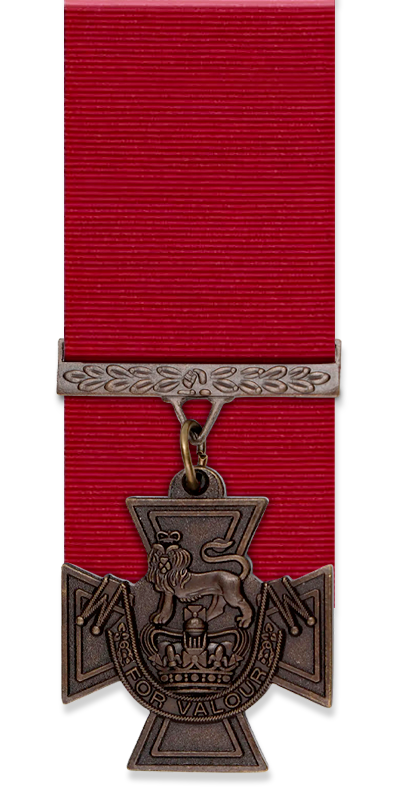
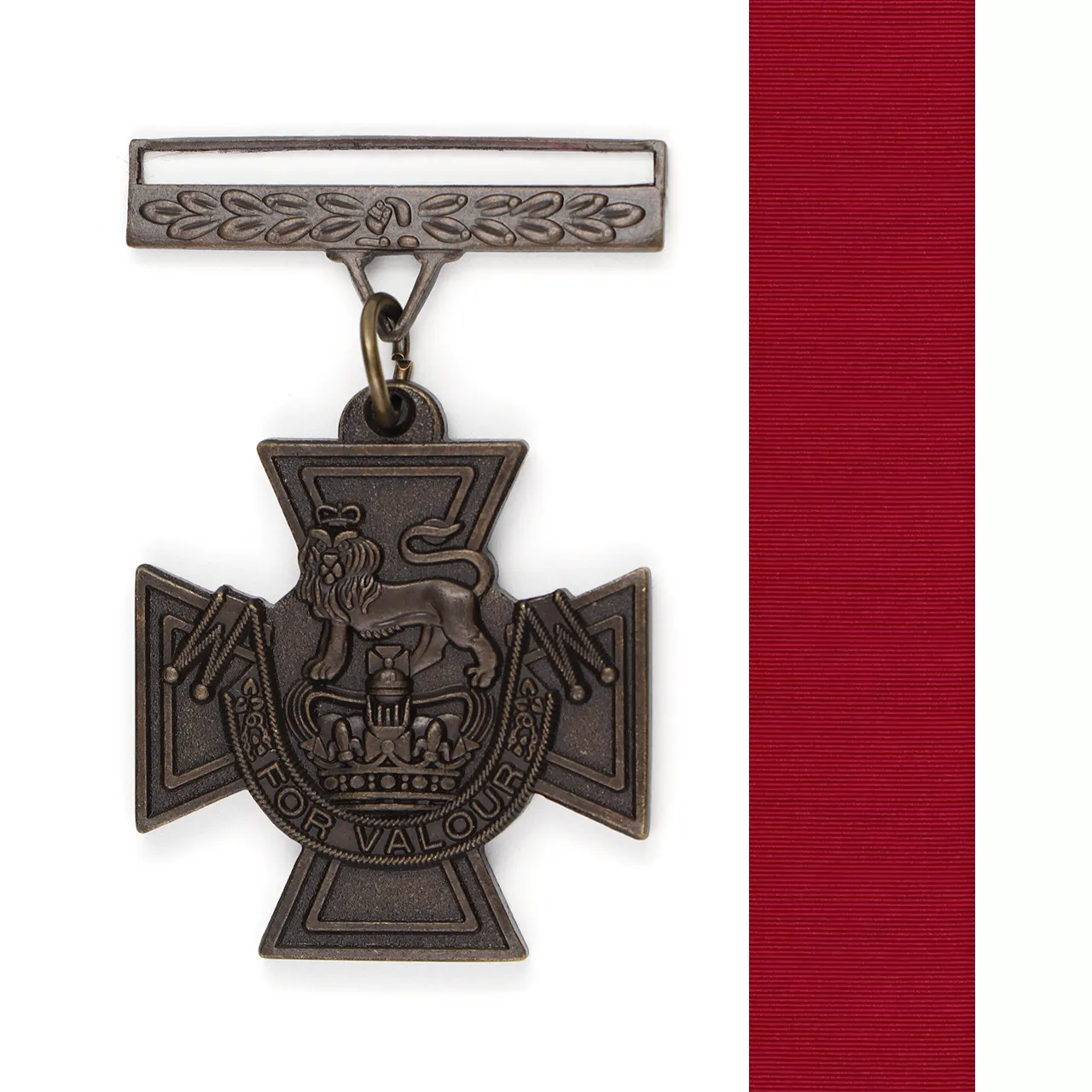
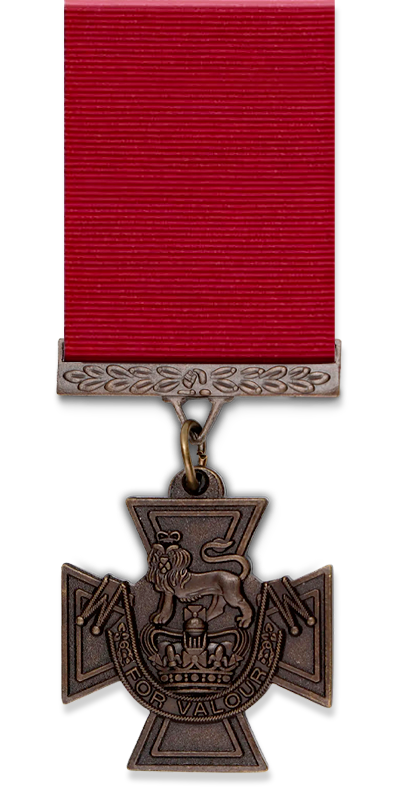
The Cross is bronze, by tradition cast from the metal of cannon captured in the Crimean War, of which sufficient remains for a number of new crosses. Described in the original warrant as a Maltese Cross, its shape is closer to a cross pattee. The obverse bears a crowned lion standing upon the Royal Crown, with the words FOR VALOUR on a semicircular scroll below. The reverse has the date of the act engraved within a circle at the centre, and the Cross hangs by a ring from a seriffed V attached to a suspension bar decorated with laurel leaves.
The ribbon
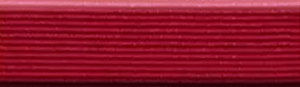
Plain crimson, 38 millimetres wide, with a miniature cross worn on the ribbon bar alone.
The ribbon is crimson and 38 millimetres wide. When the ribbon alone is worn, a ribbon bar emblem in the form of a miniature replica of the Cross is worn upon it.
Clasps
A subsequent award of the Cross to the same person is made as a bar, worn on the ribbon.
Eligibility
The Victoria Cross for Australia is awarded by the Governor-General, with the approval of the Sovereign, on the recommendation of the Minister for Defence. It is the decoration for according recognition to persons who, in the presence of the enemy, perform acts of the most conspicuous gallantry, or daring or pre-eminent acts of valour or self-sacrifice, or display extreme devotion to duty.
- The Cross may be awarded to a person of any rank in any Service, and may be awarded posthumously;
- Recipients are entitled to the post-nominal VC, which precedes all other post-nominals;
- The Victoria Cross for Australia shares equal precedence with the Imperial Victoria Cross, and both are worn before every other honour and award.
Order of wear
The Victoria Cross, including the Victoria Cross for Australia, stands first in the Australian Order of Wearing, before every other honour and award, with the George Cross following it. The placement should be confirmed against the current Australian Order of Wear.
Frequently asked questions
What is the Victoria Cross awarded for?
The most conspicuous gallantry, or a daring or pre-eminent act of valour or self-sacrifice, or extreme devotion to duty, in the presence of the enemy. It may be awarded to a person of any rank in any Service, and may be awarded posthumously.
What is the difference between the Victoria Cross and the Victoria Cross for Australia?
The Victoria Cross for Australia, approved on 15 January 1991, is Australia's own award within its honours system. It is identical to the Imperial original, cast from the same metal, and the two share equal precedence at the head of the order of wear.
How many Australians have received it?
102: 96 under the Imperial system, the last being Keith Payne for Vietnam in 1969, and six awards of the Victoria Cross for Australia, three of them posthumous, beginning with Mark Donaldson in 2009 for Afghanistan.
Who recommends the award?
The Victoria Cross for Australia is awarded by the Governor-General, with the approval of the Sovereign, on the recommendation of the Minister for Defence.
Is the metal really from captured cannon?
By tradition the Cross is cast from the bronze of cannon captured in the Crimean War, and sufficient metal remains for a number of new crosses. Historians have debated the guns' true origin, but every Cross is still cast from the same historic block.
What does a second award look like?
A bar worn on the crimson ribbon, with the post-nominal VC and Bar. Only three double awards exist in the history of the Cross, none of them Australian.