
History
On 11 November 1998, eighty years to the day after the guns fell silent on the Western Front, the Prime Minister announced a medal for the last Australians of the First World War. The 80th Anniversary Armistice Remembrance Medal was established on 27 January 1999 and minted in record time, and each of the 71 surviving Australian veterans of the Great War was presented with the medal for Anzac Day 1999.
It was the first commemorative medal in the Australian honours system, and among the most tightly held: no medal in this library was issued to fewer people. It honours the veterans who survived to see the 80th anniversary of the Armistice and who had been, as the Governor-General's office put it, a living reminder of that war for generations of Australians. Each medal was engraved with the veteran's name, and examples now rest in collections including the Australian War Memorial.
Design & ribbon
The medal
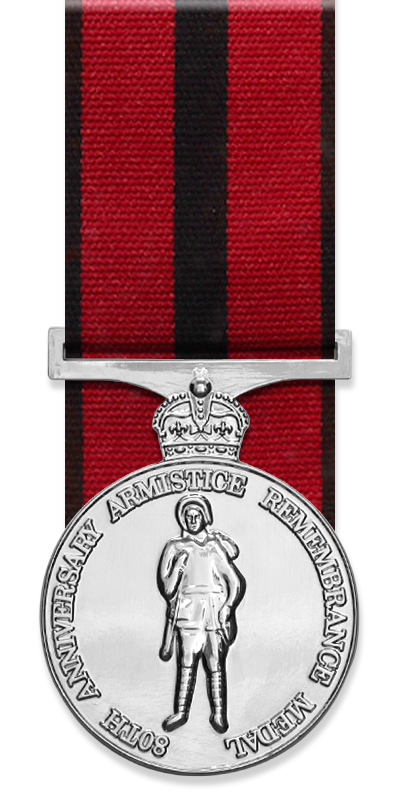
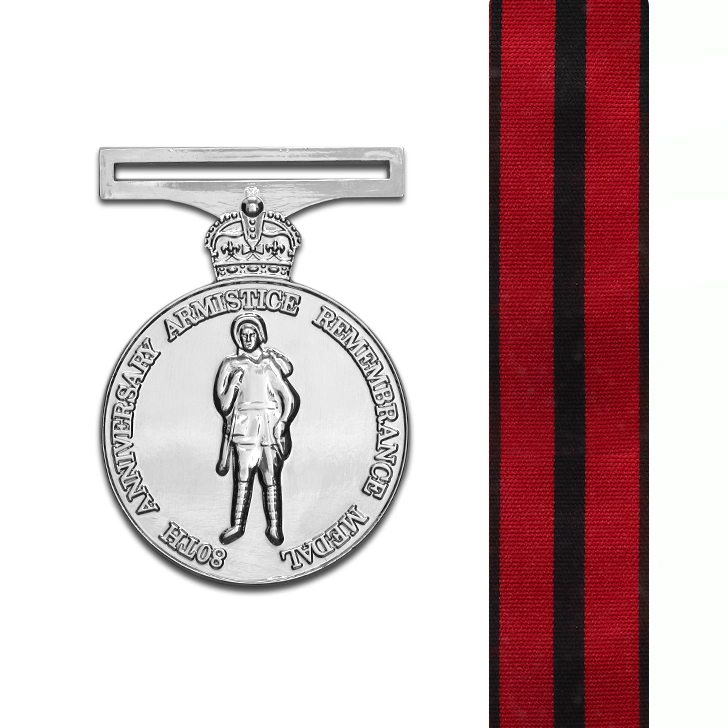
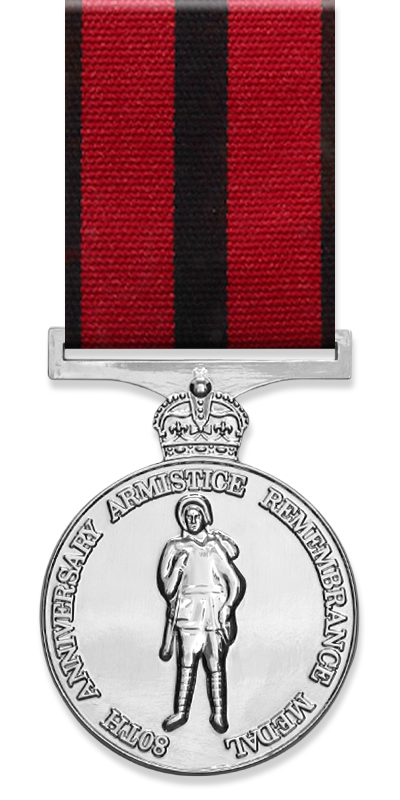
The medal is nickel-silver, ensigned with the Crown of King George V, the sovereign at the time of the First World War. The obverse has a raised central replica of the Bullecourt Digger, with the words 80th Anniversary Armistice Remembrance Medal around the perimeter. The reverse shows the Federation Star over the central inscription Lest We Forget, surrounded by two sprays of golden wattle that cross at the base.
The ribbon
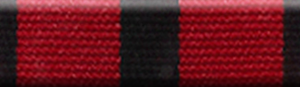
Black and red, the colours of the Flanders poppy of Remembrance Day.
The ribbon has a central black stripe flanked by red and black stripes. Red and black are the colours of the Flanders poppy, worn as a mark of respect on Remembrance Day.
Eligibility
The medal was a one-off issue, awarded by the Governor-General to Australia's surviving veterans of the First World War.
- Eligibility extended to all veterans of the First World War who were still alive on 11 November 1998, the 80th anniversary of the Armistice;
- A total of 71 medals were issued, presented for Anzac Day 1999;
- Each medal was engraved with the recipient's name; there is no post-nominal.
Order of wear
The medal is worn among the Coronation, Jubilee, Remembrance and Commemorative medals, after the service awards and before the Australian long service awards. The precise neighbours in the order of wear should be confirmed against the current Australian Order of Wear.
Frequently asked questions
Who received the 80th Anniversary Armistice Remembrance Medal?
All 71 Australian veterans of the First World War who were still alive on 11 November 1998, the 80th anniversary of the Armistice. The medals were presented for Anzac Day 1999.
Why does it carry the Crown of King George V?
George V was the sovereign at the time of the First World War, so the medal is ensigned with his crown rather than that of the reigning monarch of 1999.
What is the figure on the front?
A raised replica of the Bullecourt Digger, the memorial statue of an Australian soldier at Bullecourt on the Western Front in France.
Was it the first of its kind?
Yes. It was the first commemorative medal created within the Australian honours system, followed by the Australian Sports Medal in 1999 and the Centenary Medal in 2001.
What do the ribbon colours mean?
The black and red are the colours of the Flanders poppy, worn as a mark of respect on Remembrance Day.
Does it carry a post-nominal?
No.