
History
The United Nations Mission in Liberia, UNMIL, was established in September 2003 to monitor the ceasefire that followed the resignation of President Charles Taylor and the end of the second Liberian civil war. A large force of military and police, it supported the transition to peace, the reform of the security forces and the return of stability, and superseded the earlier United Nations Observer Mission in the country. The mission ran until 2018.
The mission drew troops, observers and police from many nations. The medal was awarded for the qualifying period of service; a numeral marks a further tour. As a foreign award it takes its place in the Australian Order of Wearing among the United Nations medals, worn by those Australians whose service qualified.
Design & ribbon
The medal
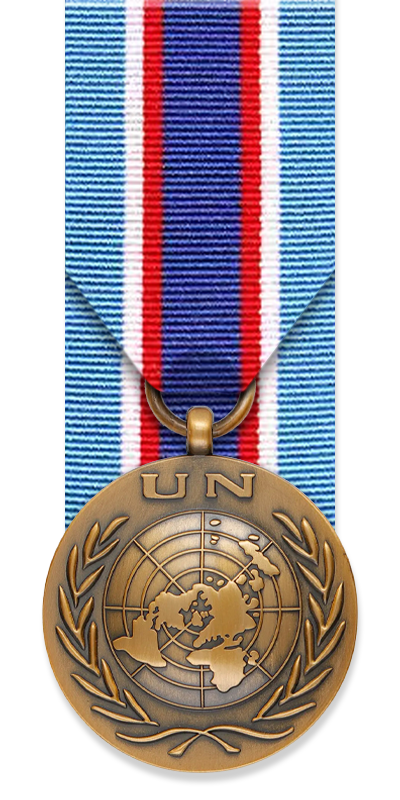
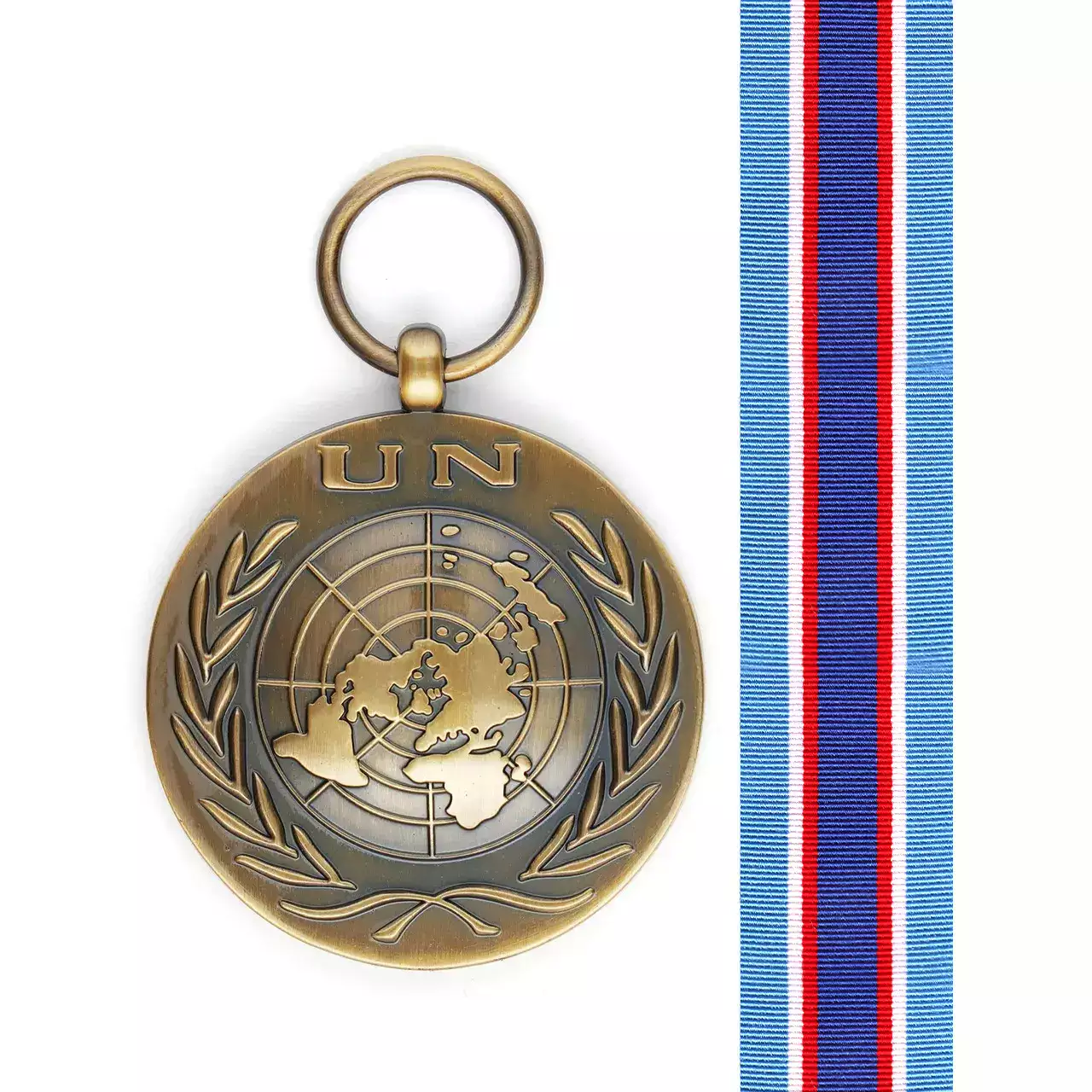
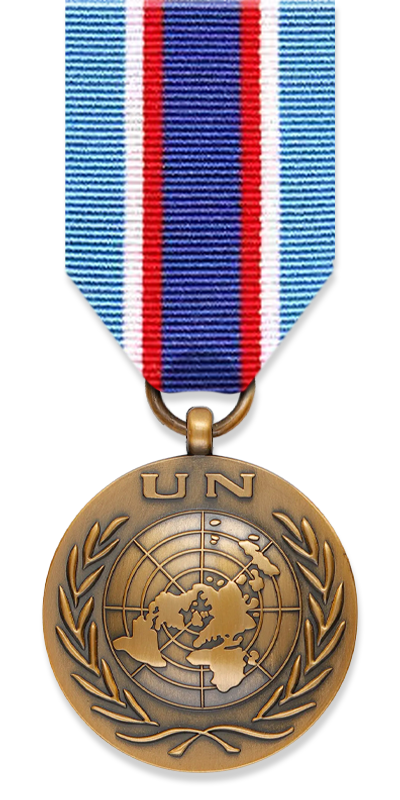
The medal follows the standard United Nations design: a circular bronze medallion 35 millimetres in diameter, the obverse bearing the emblem of the United Nations, a world map seen from the north pole within a wreath of olive branches, surmounted by the letters UN. The reverse carries the words IN THE SERVICE OF PEACE in relief. United Nations medals are issued unnamed, and the mission is identified by the colours of the ribbon.
The ribbon
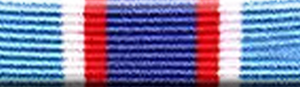
UN blue and white with a red and blue centre.
The ribbon has two outer bands of United Nations blue for the presence of the United Nations in Liberia, then two bands of white for the dawn of peace and progress, and red and dark blue bands in the centre for the colours of the Liberian national flag.
Clasps
United Nations Number 1
A silver numeral worn on the ribbon of the medal. United Nations numerals record the number of qualifying periods of service completed with the mission.
United Nations Number 2
A silver numeral recording a second qualifying period of service with the mission.
United Nations Number 3
A silver numeral recording a third qualifying period of service with the mission.
United Nations Number 4
A silver numeral recording a fourth qualifying period of service with the mission.
Eligibility
The medal is awarded for service with the United Nations Mission in Liberia.
- The qualifying period of service with the mission between 2003 and 2018 is required;
- The mission monitored the ceasefire and supported the transition to peace after the second Liberian civil war;
- A numeral on the ribbon marks a further tour. As a foreign award it takes its place in the Australian Order of Wearing among the United Nations medals.
Order of wear
United Nations medals are awarded by the United Nations and accepted and worn by Australians who served the mission. In the Australian Order of Wearing they are worn after Australian honours and campaign awards, among the foreign awards, in the sequence set for United Nations service, which generally follows the dates of the missions.
Frequently asked questions
What is the UN Liberia Medal awarded for?
Service with the United Nations Mission in Liberia, UNMIL, established in 2003 to monitor the ceasefire and support the transition to peace after the second Liberian civil war, until 2018.
What do the ribbon colours mean?
United Nations blue for the United Nations presence, white for the dawn of peace and progress, and red and dark blue in the centre for the colours of the Liberian national flag.
What earlier mission did it follow?
It superseded the earlier United Nations Observer Mission in Liberia, taking on a much larger role after the second civil war.
What is the qualifying period?
The set qualifying period of service with the mission.
How is a further tour shown?
By a numeral attached to the ribbon.
Is it named to the recipient?
No; United Nations medals are issued unnamed.