
History
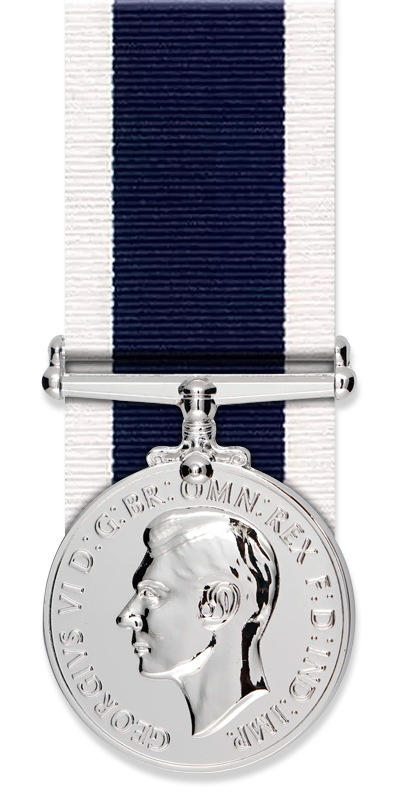
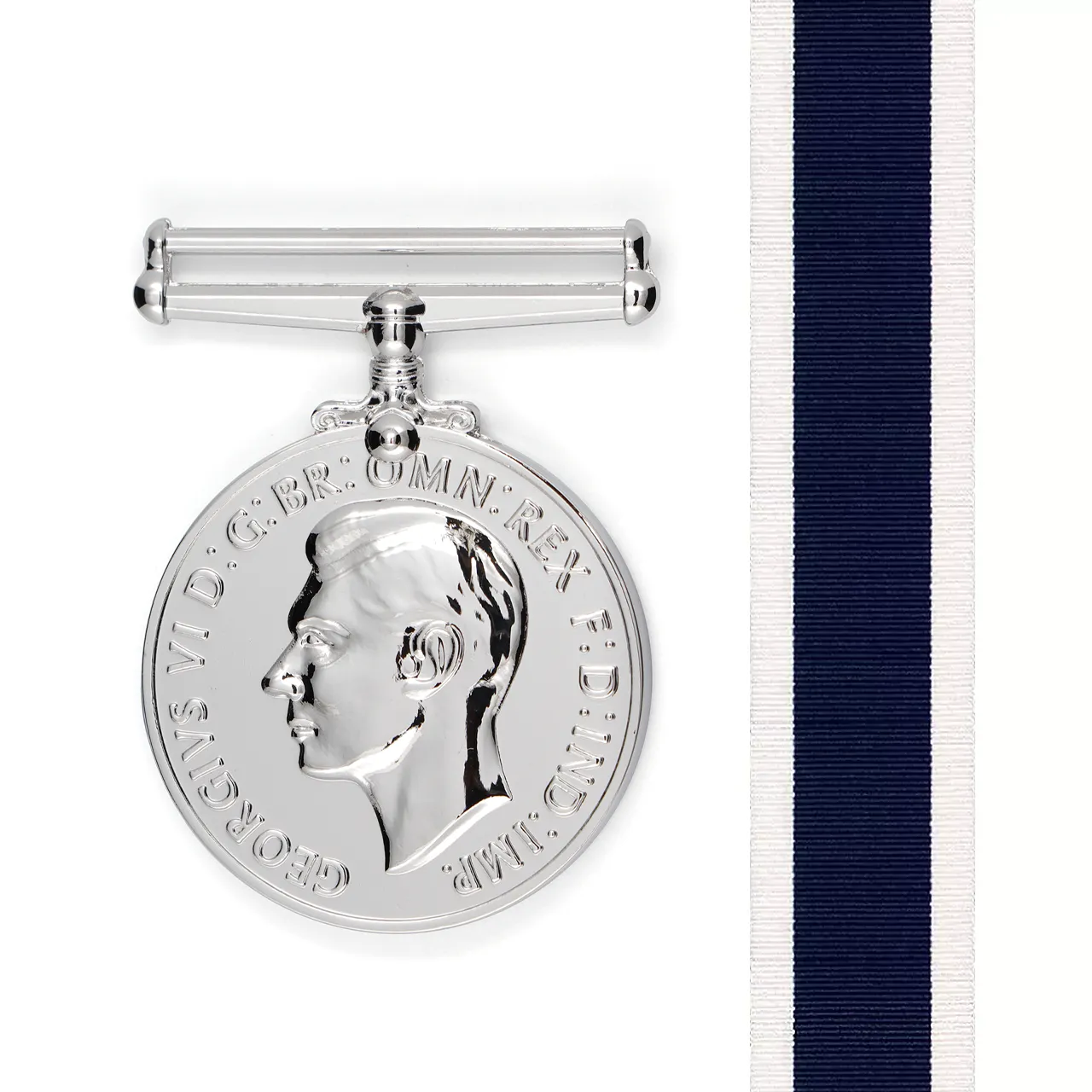
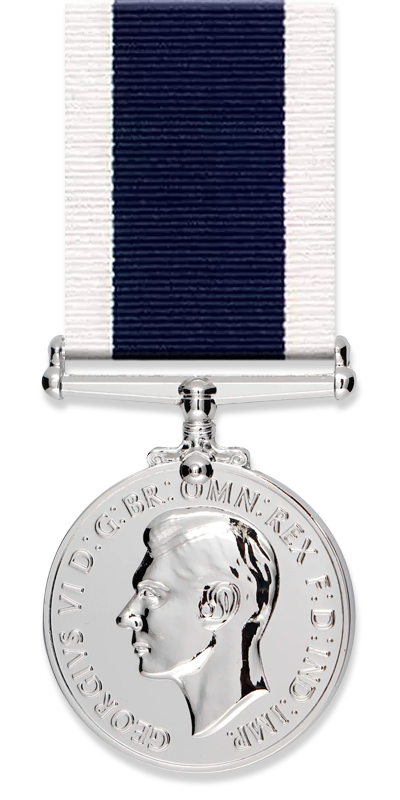
This is the regular navy's Long Service and Good Conduct Medal of the reign of King George VI, from 1936 to 1952, carrying his effigy. The award itself, instituted in 1831, is described more fully on the main page; this issue belongs to the era of the Second World War and its aftermath, and passed into use with the Royal Australian Navy.
Fifteen years of reckonable service holding all three good conduct badges was required, free of barring offences. The medal keeps its constant reverse, the three-masted sailing man-of-war within a knotted cable, unchanged since 1831. As an Imperial award it retains its place in the Australian Order of Wearing.
Design & ribbon
The medal
The medal is silver, its obverse bearing the effigy of King George VI and its reverse the image of a three-masted man-of-war at anchor within a cable tied in a reef knot, with the inscription FOR LONG SERVICE AND GOOD CONDUCT. The recipient's details, including the name of the ship or establishment, are impressed on the rim.
The ribbon
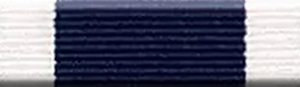
Dark blue with white edge stripes.
The ribbon is dark blue with a white stripe at each edge.
Clasps
Further long service is recognised by a clasp on the ribbon.

Long Service and Good Conduct Bar
A clasp is awarded for a further qualifying period of long and good service beyond the first; when the ribbon alone is worn, a silver rosette denotes the clasp.
Eligibility
The George VI issue was awarded on the criteria of the Royal Naval Long Service and Good Conduct Medal.
- Petty officers and ratings of the Royal Navy and non-commissioned officers and men of the Royal Marines qualified after 15 years of reckonable service holding all three good conduct badges, free of barring offences;
- A clasp is awarded for a further period of service, denoted by a silver rosette on the ribbon bar;
- As an Imperial award it retains its place in the Australian Order of Wearing.
Order of wear
Long service and efficiency awards recognise years of service rather than a campaign. In the Australian Order of Wearing they are worn after coronation and jubilee medals and among the long service awards by their own order of precedence.
Frequently asked questions
What makes this the George VI issue?
The effigy of King George VI on the obverse, current through his reign from 1936 to 1952.
What is the medal awarded for?
Long naval service of very good character by petty officers and ratings and by Royal Marines, after 15 years of reckonable service holding all three good conduct badges.
What does its reverse show?
A three-masted sailing man-of-war at anchor within a knotted cable, a design essentially unchanged since 1831.
How does it differ from the reserve medal?
This is the regular navy's medal with the sailing man-of-war reverse; the reserve ratings' medal has the HMS Dreadnought reverse and an R.N.R. rim mark.
Is it named to the recipient?
Yes, impressed on the rim with the recipient's details and the name of the ship or establishment.
Does it carry a post-nominal?
No; long service medals for ratings carry no post-nominal.