
History
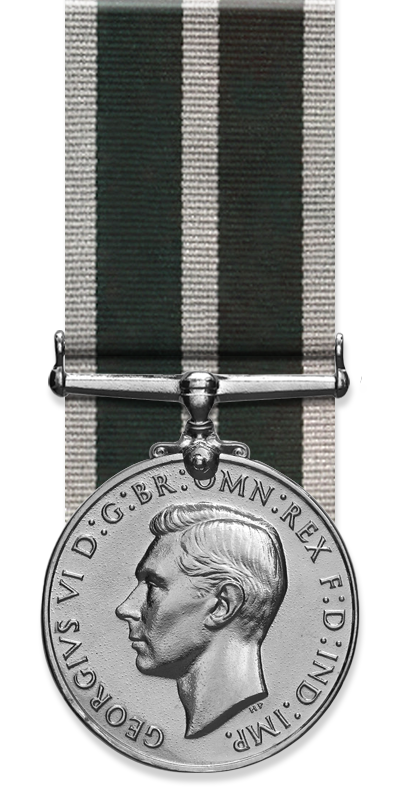
This is the Royal Naval Reserve Long Service and Good Conduct Medal of the reign of King George VI, from 1936 to 1952, carrying his effigy. The award itself, instituted in 1908 for the ratings of the Royal Naval Reserve, is described more fully on the main page; this issue belongs to the era of the Second World War and its aftermath, when the naval reserves were called on as never before.
Fifteen years of reserve service was required. The medal keeps its Dreadnought reverse and its motto, and is distinguished from its sister reserve medals by the abbreviation R.N.R. on the rim. As an Imperial award it retains its place in the Australian Order of Wearing.
Design & ribbon
The medal
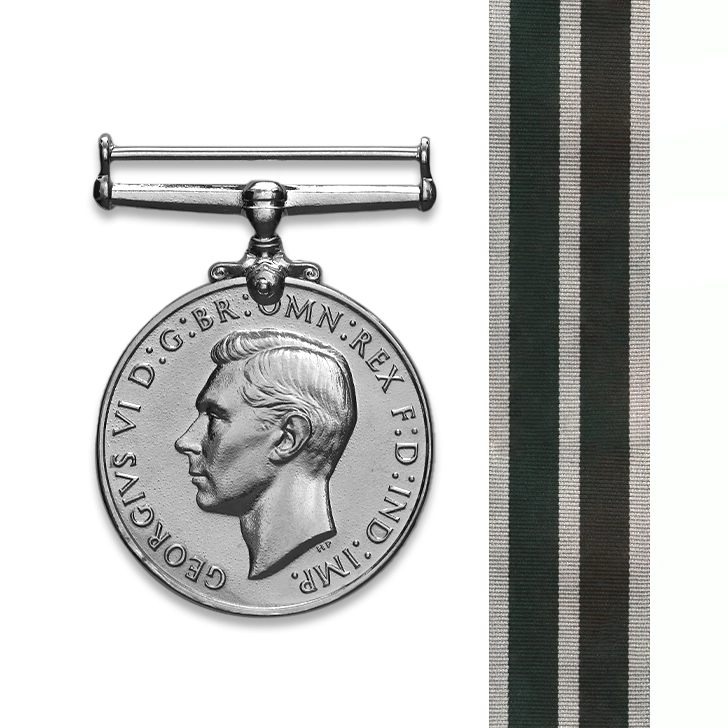
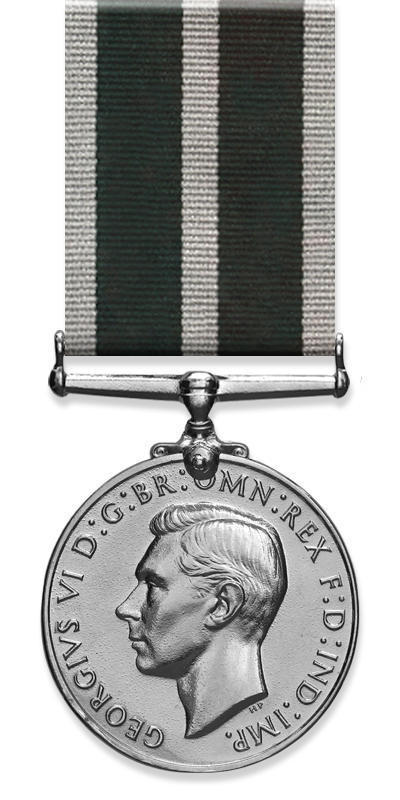
The medal is silver, 36 millimetres in diameter, its obverse bearing the effigy of King George VI. The reverse shows the battleship HMS Dreadnought steaming, with the motto DIUTURNE FIDELIS, faithful over a long time. The recipient's details, followed by R.N.R., are impressed on the rim.
The ribbon
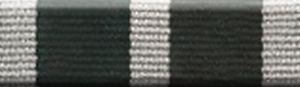
Dark green with dark blue and red edge stripes.
The ribbon is dark green with narrow edge stripes of dark blue and dark red, introduced in 1919 in place of the original plain green; the blue represents the sea, the red the Royal crimson and the green the old Volunteer ribbon.
Clasps
Further long service is recognised by a clasp on the suspension.

Long Service and Good Conduct Bar
A clasp is awarded for a further qualifying period of long and good service beyond the first; when the ribbon alone is worn, a silver rosette denotes the clasp.
Eligibility
The George VI issue was awarded on the criteria of the Royal Naval Reserve Long Service and Good Conduct Medal.
- Fifteen years of service was required of a reserve rating during the reign of King George VI, from 1936 to 1952;
- A clasp is awarded for a further period of service; the medal bears R.N.R. on the rim;
- As an Imperial award it retains its place in the Australian Order of Wearing.
Order of wear
Long service and good conduct medals recognise years of unblemished service rather than a campaign. In the Australian Order of Wearing they are worn after coronation and jubilee medals and among the long service awards by their own order of precedence.
Frequently asked questions
What makes this the George VI issue?
The effigy of King George VI on the obverse, current through his reign from 1936 to 1952.
What is the medal awarded for?
Long service by ratings of the Royal Naval Reserve: fifteen years of reserve service.
What does its reverse show?
The battleship HMS Dreadnought under the motto DIUTURNE FIDELIS, faithful over a long time.
How is it distinguished from sister medals?
By the abbreviation R.N.R. impressed after the recipient's name, marking it as the Royal Naval Reserve version.
Is it named to the recipient?
Yes, impressed on the rim with the recipient's details followed by R.N.R.
Does it carry a post-nominal?
No; long service medals for ratings carry no post-nominal.