
History
The Order of Australia was instituted on 14 February 1975 by Queen Elizabeth II as an Australian society of honour for according recognition to Australian citizens and other persons for achievement or meritorious service, ending the nation's reliance on the Imperial honours. The King is Sovereign Head of the Order and the Governor-General its Chancellor. Changes of 24 May 1976 added the Medal of the Order below Member and a Knight and Dame level above Companion, and renamed the Civil Division the General Division; the knighthoods were abolished in 1986, briefly restored in 2014 and closed again in 2015.
In the Military Division the Member is appointed for exceptional service or performance of duty. It is the most frequently made appointment in the division after the Medal, recognising commanding officers, senior warrant officers and specialists whose sustained excellence in commands, projects and postings stands clearly above the high standard the Defence Force already expects. Appointments are recommended by the Minister for Defence and announced in the Australia Day and King's Birthday lists.
Design & ribbon
The medal
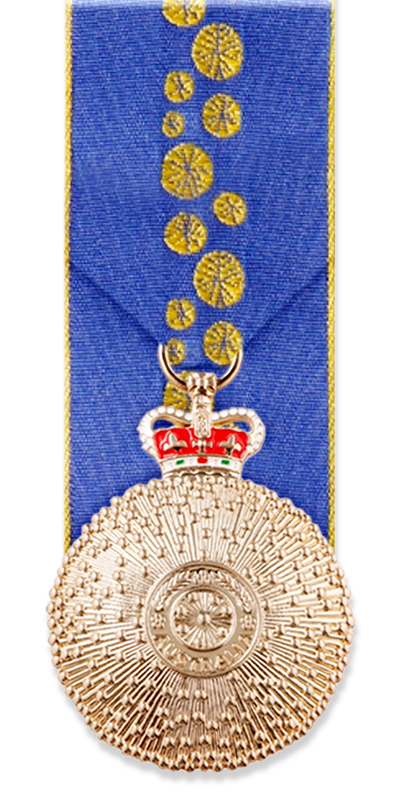
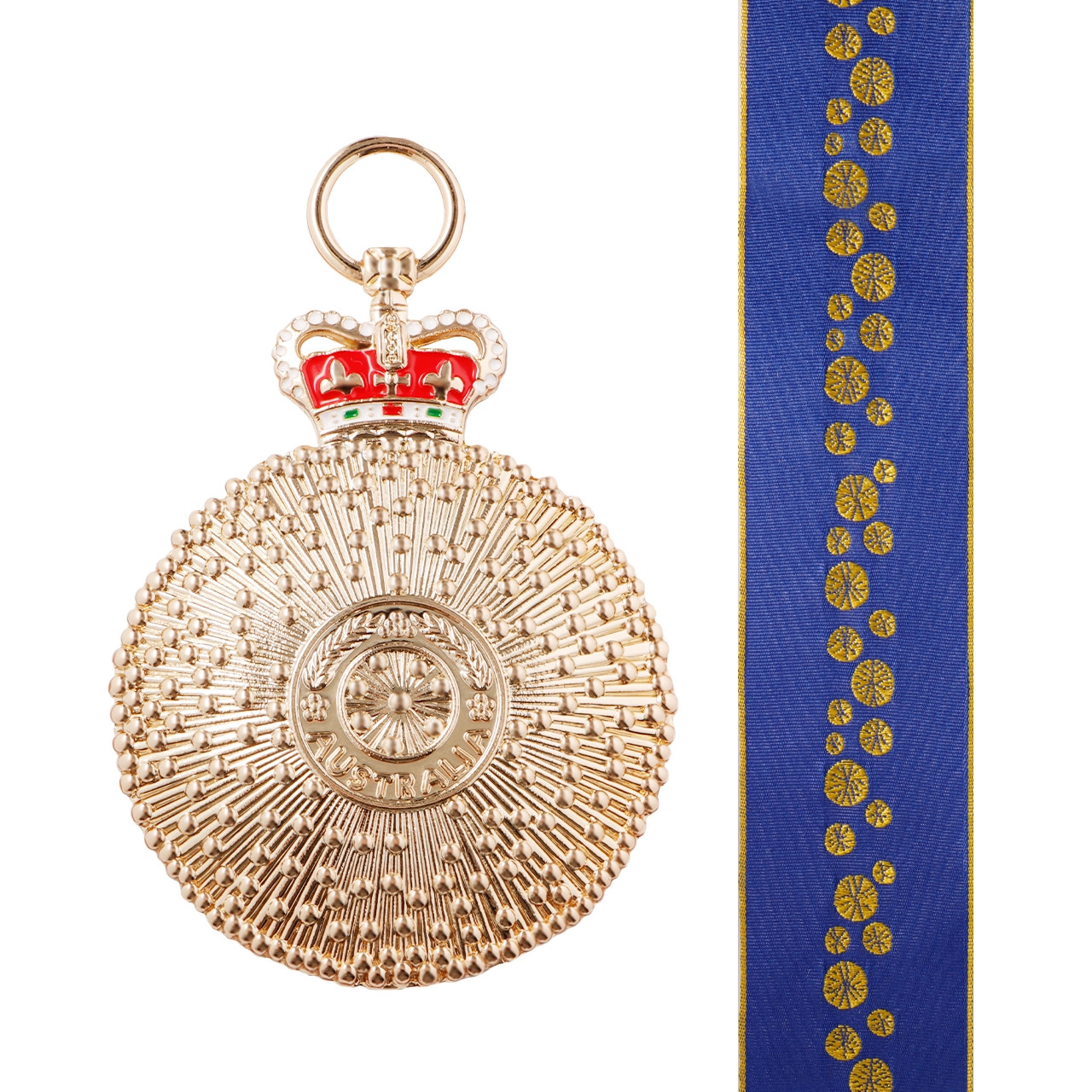
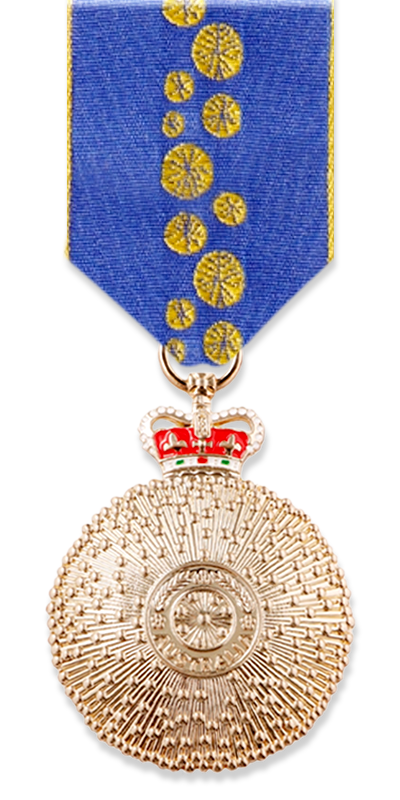
The insignia of the Order, designed by Stuart Devlin, is a single flower head of mimosa rendered as a convex disc, with a central ring for the sea above the word AUSTRALIA and two branches of mimosa. The Member's badge is gilt and is worn on the ribbon at the chest by men and on a bow at the shoulder by women, with a lapel pin bearing a blue enamelled centre. The insignia is identical in both divisions.
The ribbon
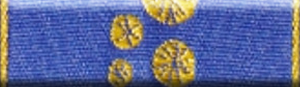
The Order's blue and gold mimosa, edged in gold for the Military Division.
The ribbon is royal blue with a central band of scattered gold mimosa blossoms, edged with gold bands 1.5 millimetres wide: the gold edges are the mark of the Military Division, the insignia itself being identical in both divisions.
Eligibility
Appointments in the Military Division are made by the Governor-General on the recommendation of the Minister for Defence, for exceptional service or performance of duty.
- The criteria require the same level of achievement as the General Division, designed to reflect military service;
- Appointments are announced in the honours lists each January and June;
- Recipients are entitled to the post-nominal AM. A person may hold appointments in both divisions and wear both, with the General Division appointment taking precedence.
Order of wear
The Order's grades are worn among the orders of chivalry and decorations, interleaved with the Imperial awards of equivalent standing. A General Division appointment takes precedence over the equivalent appointment in the Military Division. The precise neighbours should be confirmed against the current Australian Order of Wear.
Frequently asked questions
What is the Member in the Military Division awarded for?
Exceptional service or performance of duty: the Military Division counterpart of significant service, typically recognising commanding officers and senior specialists whose sustained work stands clearly above the expected standard.
Who recommends the appointment?
The Minister for Defence, with appointments made by the Governor-General and announced in the Australia Day and King's Birthday honours lists.
How does it differ from the Conspicuous Service Cross?
The CSC recognises outstanding devotion or achievement in non-warlike situations, often for a particular posting or project; the Member of the Order recognises exceptional service assessed across a career or command.
How do I tell the divisions apart?
By the gold edges on the Military Division ribbon; the insignia is otherwise identical.
How is it worn?
On the ribbon at the chest by men and on a bow at the shoulder by women, with a blue enamelled lapel pin for daily wear.
Does it carry a post-nominal?
Yes: AM.