
History
The Belgian Croix de Guerre was established in October 1915 to recognise acts of heroism performed on Belgian soil during the First World War, by individuals of the Belgian forces and of the allied armies fighting to free the invaded kingdom. It was awarded for the period of the 1914-1918 war, and a later version was created for the Second World War.
Australians who fought in Belgium, in the long battles around Ypres, at Messines and Passchendaele, were among the allied soldiers who received it. The level of the citation is marked by a device on the ribbon. As a foreign award it is worn in the Australian Order of Wearing after Australian and Commonwealth honours.
Design & ribbon
The medal
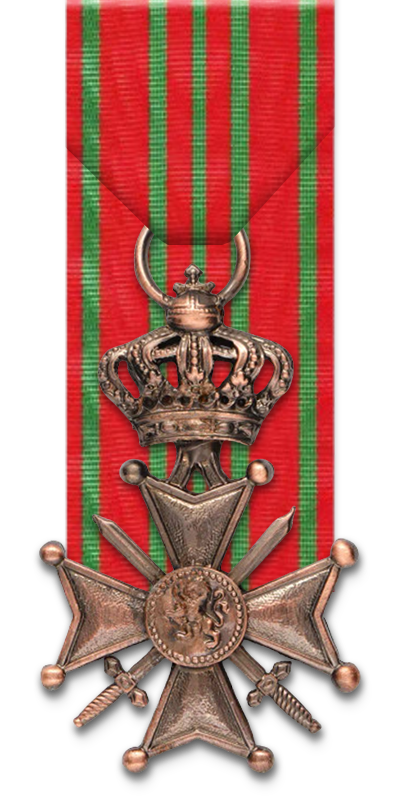
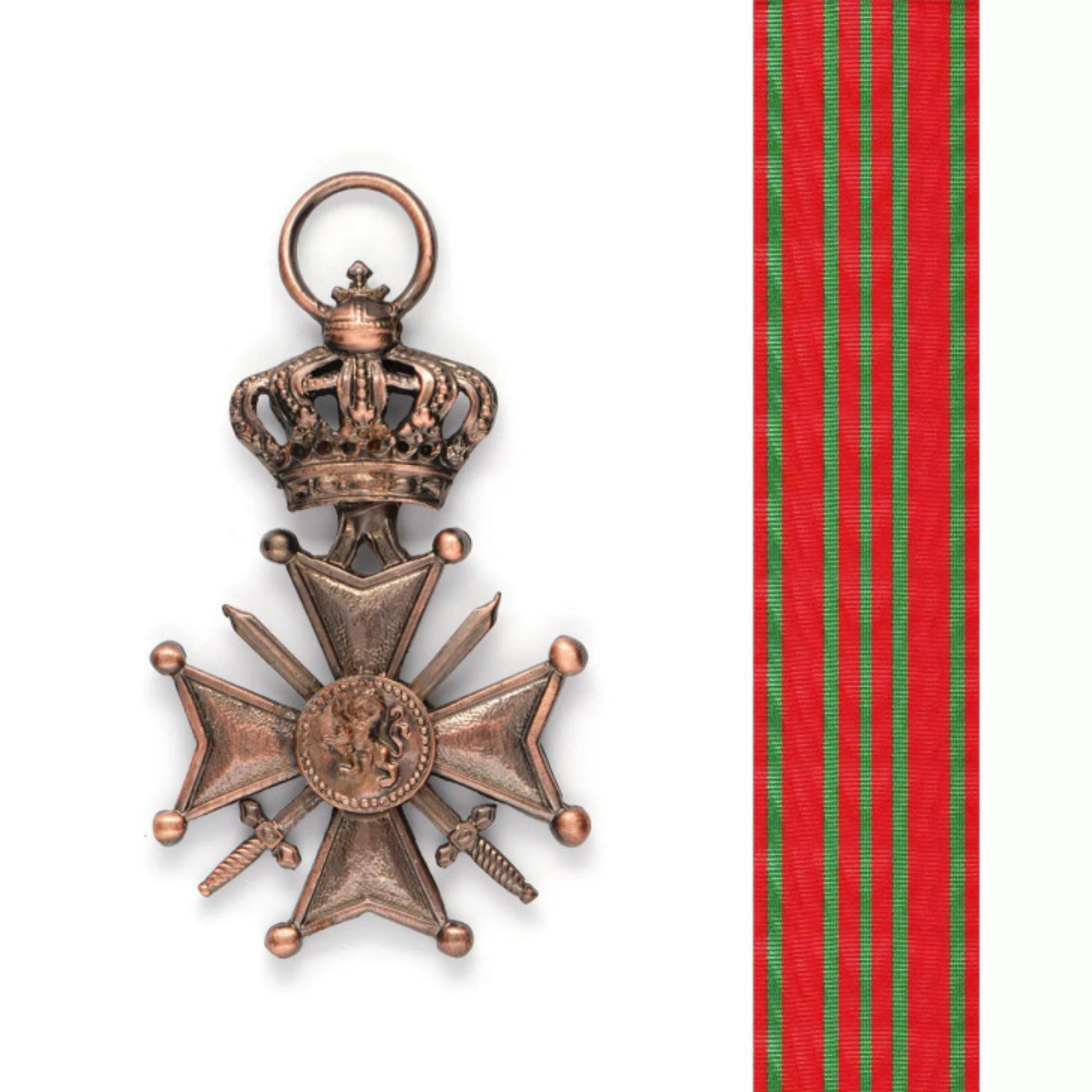
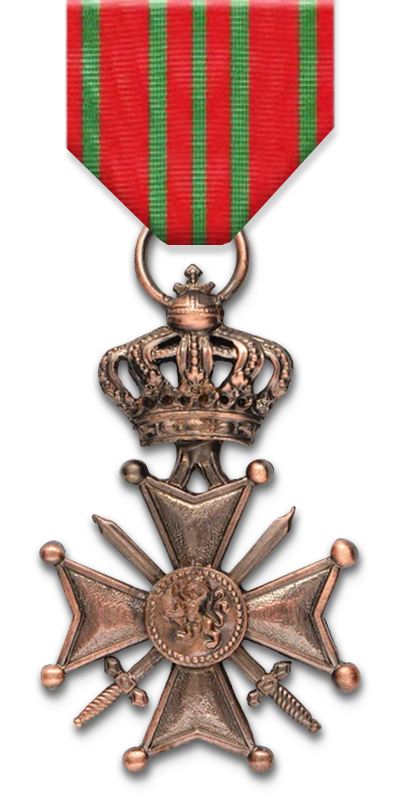
The medal is a bronze cross of Maltese form, with two swords crossed behind it and a lion at the centre, and it is joined to the ribbon by a crown. The level of the citation is shown by a device on the ribbon, a bronze palm marking a mention in the dispatches of the army.
The ribbon
Red with narrow green stripes.
The ribbon is red with narrow green stripes.
Eligibility
The cross was awarded for acts of heroism performed on Belgian soil during the First World War.
- Individuals of the Belgian forces and of the allied armies who performed a qualifying act of heroism in Belgium were eligible; Australians who fought around Ypres, Messines and Passchendaele were among the recipients;
- The level of the citation is marked by a device on the ribbon, such as a bronze palm for a mention at army level;
- As a foreign award it is worn in the Australian Order of Wearing after Australian and Commonwealth honours.
Order of wear
In the Australian Order of Wearing, foreign awards are worn after Australian honours and Commonwealth awards, in the order set for foreign awards, generally by the date of the service for which they were given. A foreign award is worn only where its acceptance and wear have been approved.
Frequently asked questions
What is the Belgian Croix de Guerre 1914-1918 awarded for?
Acts of heroism performed on Belgian soil during the First World War, by individuals of the Belgian forces and of the allied armies.
Why did Australians receive it?
Australians fought in Belgium in the battles around Ypres, at Messines and Passchendaele, and were among the allied soldiers granted the cross for heroism there.
What does the medal look like?
A bronze cross of Maltese form with two swords crossed behind it and a lion at the centre, joined to the ribbon by a crown.
What do the ribbon devices mean?
They mark the level of the citation, such as a bronze palm for a mention in the dispatches of the army.
Is there a Second World War version?
Yes; a later version of the cross was created for heroism in the Second World War, distinct from this 1914-1918 award.
How is it worn in Australia?
As a foreign award, after Australian and Commonwealth honours in the Australian Order of Wearing.