
History
The Army Long Service and Good Conduct Medal was instituted by King William IV in 1830, the oldest British long service medal still awarded. It rewarded warrant officers, non-commissioned officers and men of the regular army for long and unblemished service, and in 1895 Queen Victoria authorised the governments of the colonies to adopt it for their own permanent forces, which is how it entered Australian use. In 1930 the United Kingdom version was reconstituted as the Medal for Long Service and Good Conduct (Military), with territorial versions for the Dominions.
The qualifying period was long, 18 years and later 15, of service free of disciplinary entry, and a clasp could be earned for further service. The medal's obverse changed with each sovereign, and its crimson ribbon, plain until 1917 and then edged in white, is among the most familiar in the system. As an Imperial award it retains its place in the Australian Order of Wearing.
Design & ribbon
The medal
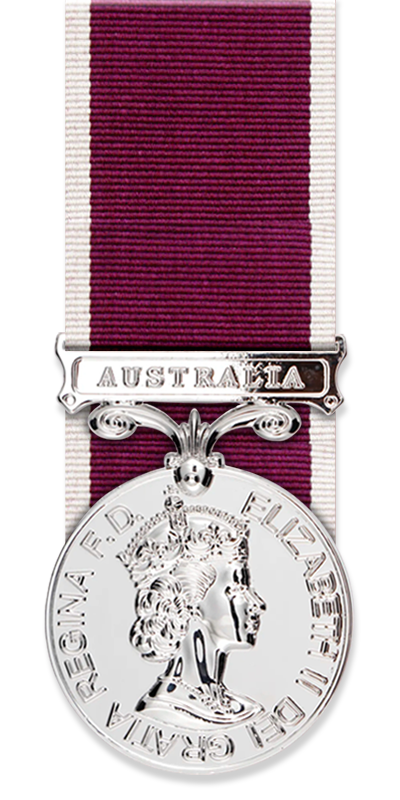
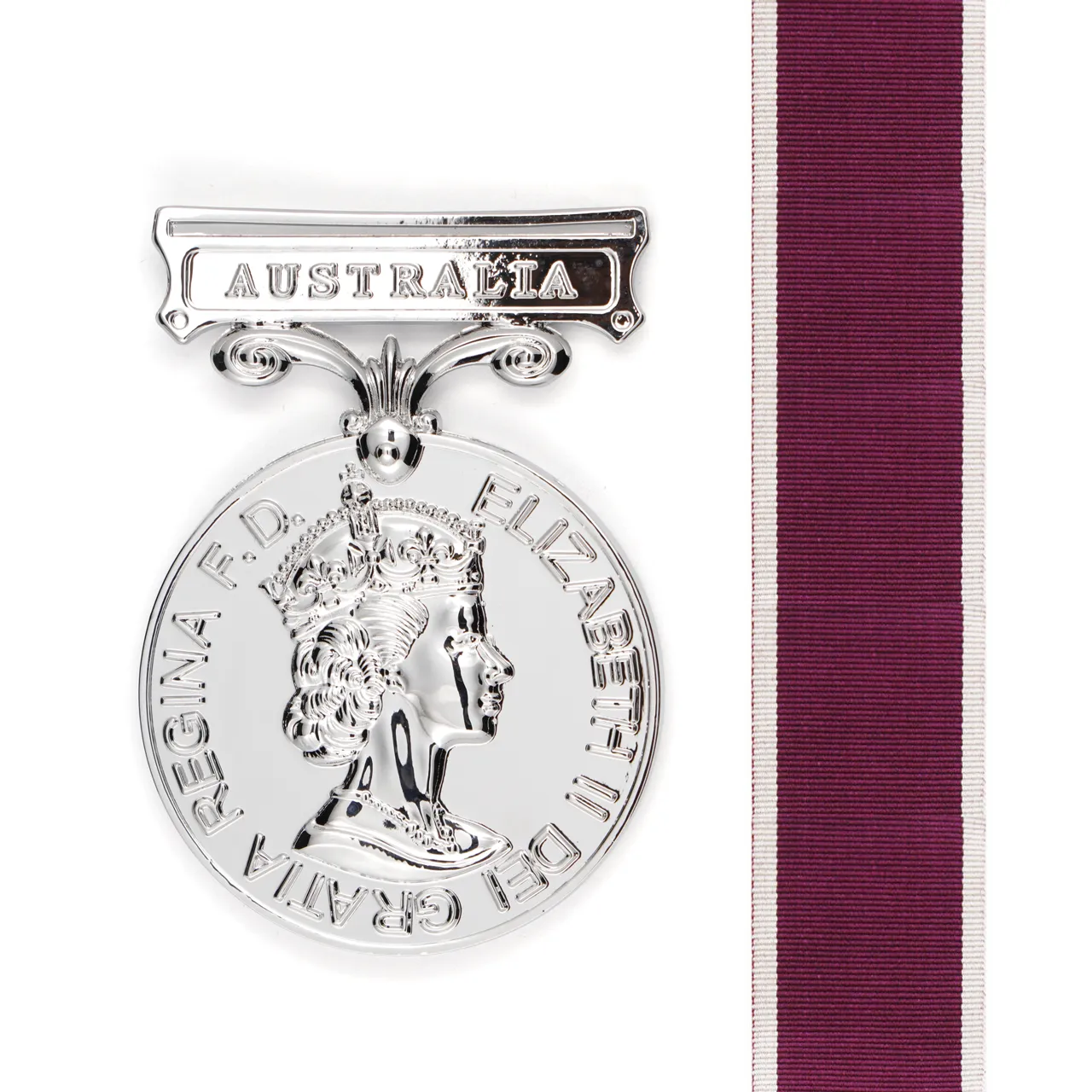
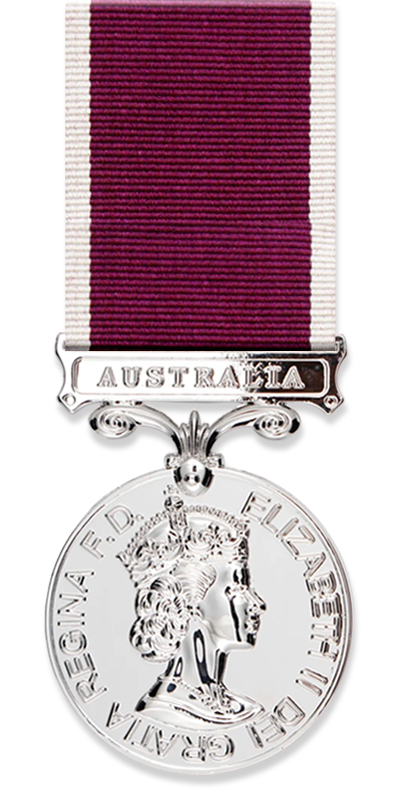
The medal is silver, 36 millimetres in diameter, its obverse bearing the effigy of the reigning sovereign, and its reverse the inscription FOR LONG SERVICE AND GOOD CONDUCT. A bar naming the force is fitted at the suspension, and the recipient's details are impressed on the rim.
The ribbon
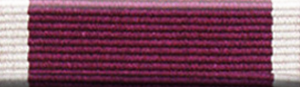
Crimson with white edge stripes.
The ribbon is crimson with a white stripe at each edge, the white edges added in 1917 to what had been a plain crimson ribbon.
Clasps
Further long service is recognised by a clasp on the ribbon.

Long Service and Good Conduct Bar
A clasp is awarded for a further qualifying period of long and good service beyond the first; when the ribbon alone is worn, a silver rosette denotes the clasp.
Eligibility
The medal was awarded for long and unblemished regular army service.
- Warrant officers, non-commissioned officers and men of the regular army qualified after a long period of service, 18 years and later 15, free of disciplinary entry; from 1895 the colonies could award it to their own permanent forces;
- A clasp is awarded for a further period of service, denoted by a silver rosette on the ribbon bar; the medal is issued named;
- As an Imperial award it retains its place in the Australian Order of Wearing.
Order of wear
Long service and good conduct medals recognise years of unblemished service rather than a campaign. In the Australian Order of Wearing they are worn after coronation and jubilee medals and among the long service awards by their own order of precedence.
Frequently asked questions
What is the Army Long Service and Good Conduct Medal awarded for?
Long and unblemished regular army service by warrant officers, non-commissioned officers and men, after a long qualifying period free of disciplinary entry.
How old is the award?
It was instituted in 1830 by King William IV and is the oldest British long service medal still being awarded.
How did it come to be awarded in Australia?
In 1895 Queen Victoria authorised colonial governments to adopt the medal for their own permanent military forces.
What was the qualifying period?
Long service free of disciplinary entry: 18 years historically, later reduced to 15, with a clasp for a further period.
Is it named to the recipient?
Yes, impressed on the rim with the recipient's details.
Does it carry a post-nominal?
No; long service and good conduct medals for other ranks carry no post-nominal.