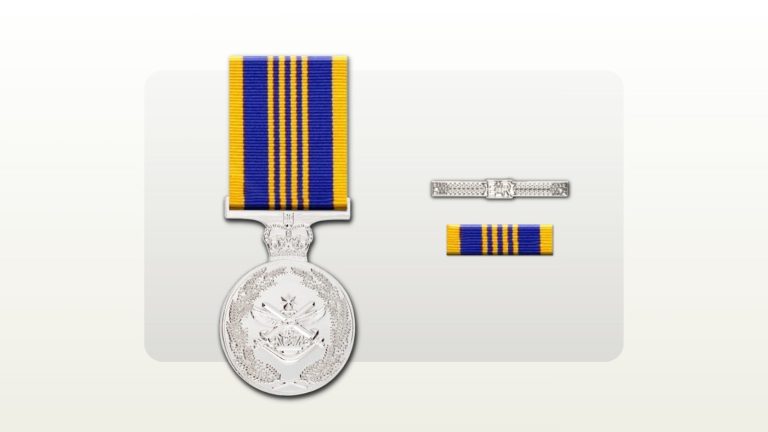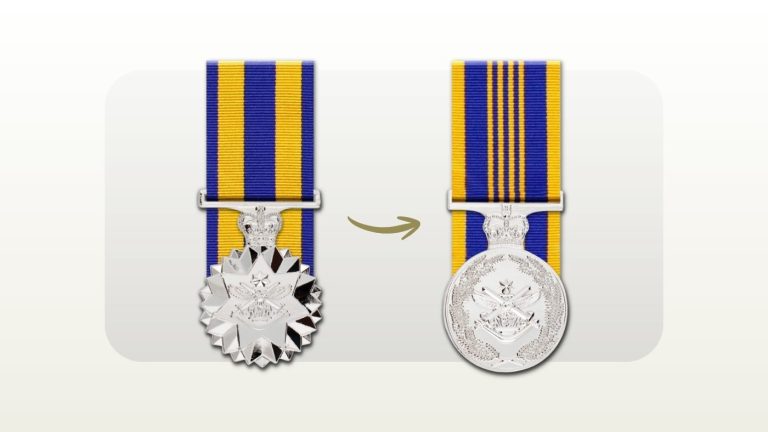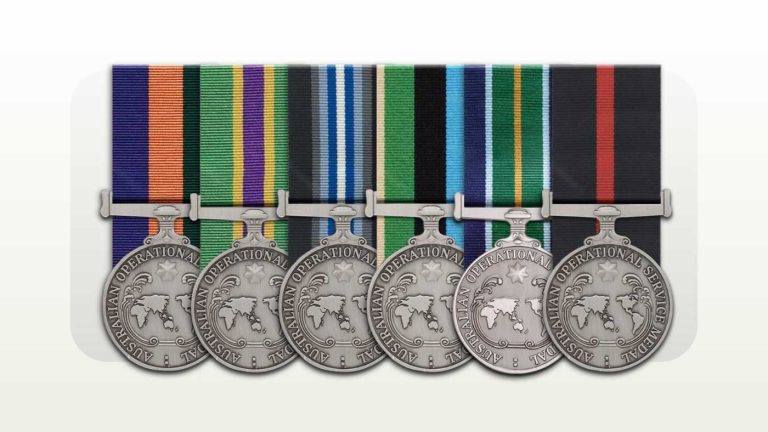
You search for a medal and several similar options appear. One has dates in its name. Another shows a different monarch. A third looks familiar but carries a different ribbon. Which one belongs in your rack?
Start by separating three questions: which award was granted, which design represents it, and which product format you need. A different award, a design variation and a miniature are not the same kind of choice.
This guide helps you identify the correct medal version before adding it to your order. The aim is to match confirmed recognition, not to choose the closest-looking image or use a catalogue listing as proof of entitlement.
Copy the full award name, including dates and issuing country
Use the exact wording in award correspondence or other reliable records. Keep any date range, national title and clasp name. If the record uses an abbreviation, confirm what it means before expanding it in your order.
For example, Defence lists the Defence Medal among Imperial awards for Second World War service. The Australian Defence Medal is a separate Australian award with its own qualifying-service rules. They are not two styles of the same medal.[1][2]
Include the issuing country or organisation where relevant. A shared campaign name is not enough to identify the award. Keep the original wording beside any shorthand you use while researching.
Check the service period, not just when the medal arrived
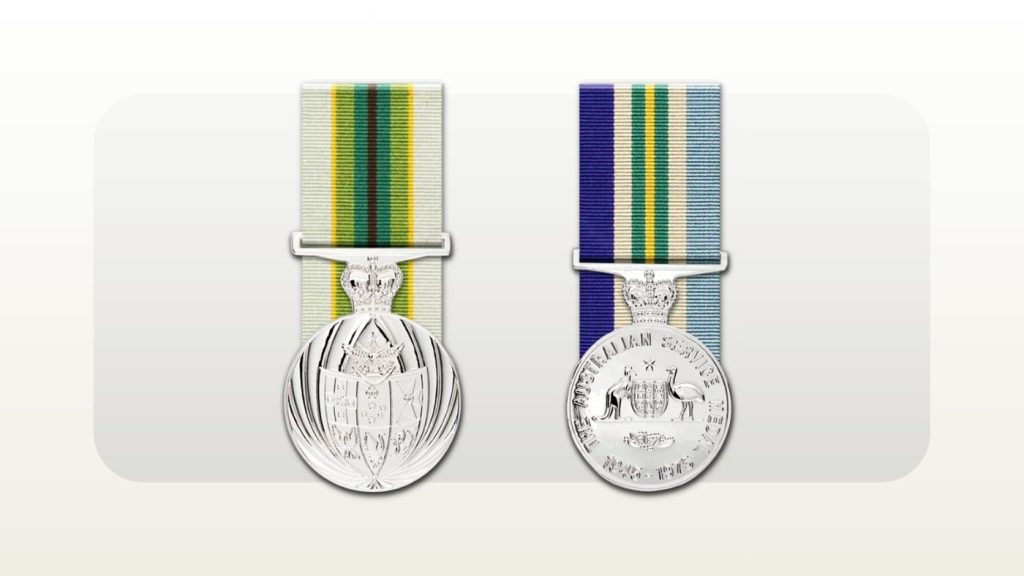
The year a medal was introduced or received may be much later than the service it recognises. Defence records that the Australian Service Medal 1945-75 was approved in 1995 for declared non-warlike operations in an earlier period.[3]
By comparison, the Australian Service Medal without that date range was established in 1988 for service from February 1975. The two official titles identify separate awards, not an older and newer finish you can choose between.[4]
Do not select a medal simply because its dates seem to fit a posting. Check the relevant operation and clasp requirements too. A service year can help narrow your research, but it does not establish entitlement on its own.[3][6]
A different royal portrait can belong to the same award
A design change does not always create a new award. The New Zealand Defence Force's description of the Imperial General Service Medal 1918-62 records six different royal portraits used over its lifetime. The front is called the obverse; the back is the reverse.[5]
That is a different situation from the two Australian Service Medals above. When recreating an issued set, ask the supplier to match the documented design rather than automatically choosing the newest portrait. An unfamiliar portrait is a reason to investigate, not proof that the medal is wrong.
Read the clasp and ribbon details with the medal name
A clasp is the small metal bar attached to a medal's ribbon. For the Australian Service Medal, it names the theatre or action recognised. Further awards in other areas are shown by additional clasps, rather than another identical medal.[6]
Record the complete combination: award, date range where applicable, ribbon and each confirmed clasp or emblem. Avoid a note that says only "service medal with bar".
Treat ribbon colours as one clue, not the whole answer. Compare the medal's inscriptions and design with the official description as well. If the ribbon and medal appear inconsistent, ask for identification before selecting a replacement.
Photograph both sides without altering the medal
Take a clear photograph of the whole medal, followed by its front, back, ribbon and visible clasp wording. Record any readable naming on the rim or reverse. Keep the original photographs alongside your notes, rather than relying only on cropped catalogue screenshots.
Do not polish an unidentified medal just to reveal more detail. Defence warns that cleaning can remove surface metal or damage the sharpness of a design. Reduce handling and seek advice if a ribbon or fitting seems fragile.[7]
Photographs help compare appearance. They do not, by themselves, establish who earned the award or authenticate the object. If a detail is hidden or unreadable, write "not yet confirmed" instead of filling the gap.
Choose full-size, miniature or ribbon bar after confirming the award
Rack Builder's published process separates award selection from choosing a product format, including full-size medals, miniatures and ribbon bars. Keep those decisions separate in your notes too.[8]
A miniature is a smaller representation of the medal. A ribbon bar represents the award through its ribbon rather than a hanging medal. Ordering both does not mean adding the same award twice to one wearable group.
Also state whether you are supplying an original or ordering a replica. Defence notes that replicas can be purchased for wear or display while originals remain safely stored. That choice concerns the physical item, not a new entitlement.[7]
Use this hypothetical checklist to avoid a similar-name mistake
Imagine a family whose Defence correspondence confirms the Australian Service Medal 1945-1975 with the PNG clasp. They want one miniature replica while keeping the original at home. This is a hypothetical selection example, not an assessment of anyone's service.
Their note could look like this:
| What to check | Recorded choice in this example |
|---|---|
| Exact award | Australian Service Medal 1945-1975, not the separate Australian Service Medal. |
| Confirmed clasp | PNG, recorded in the fictional correspondence; check it against the official Papua New Guinea clasp entry. |
| Design comparison | Compare the original with the official description, including the 1945-1975 inscription on the front. |
| Product requested | One miniature replica with the confirmed clasp. Do not assume a full-size set or ribbon bar is also required. |
| Unresolved detail | Ask the supplier about any missing version or unclear product label before ordering. |
The dated inscription and Papua New Guinea clasp entry are documented by Defence. The family circumstances and product choice are illustrative. The table is a selection checklist, not a complete medal group or an order-of-wear diagram.[3]
Ask Defence about recognition and the supplier about the product
Send an entitlement question to the relevant awarding authority. For Defence awards, a full assessment can be requested by members, former members or families seeking a list of entitled awards.[9]
For a product question, show the supplier the confirmed award details and explain the mismatch. For example: "My paperwork gives this full title, but the listing does not show the dates. Is this the matching medal, and which clasp option should I select?"
That wording separates a question about the product listing from a question about what was awarded. Ask for the discrepancy to be resolved before authorising production.
Check the exact selection before reviewing the whole rack
Read each selected item against your notes: full title, date range, design where relevant, clasp details, format and quantity. A tidy preview is not a substitute for checking the names behind it.
Then check the complete group against the Australian Order of Wearing Honours and Awards. The Governor-General's published order explains where awards sit in the sequence; it is a separate reference from identifying your medal's physical version.[10]
Rack Builder support accepts product and missing-medal enquiries. Include your saved-rack reference or order number when available. Do not substitute a similar medal just to complete checkout.[11]
Start with the confirmed award and make each product choice match it. Explore how Rack Builder works, or contact the support team when a version needs clarification. A precise selection gives the mounting team a clearer brief and helps you order the representation you intended.[8][11]
To turn your confirmed award list into a complete group, see our guide to building a medal rack from a service record.
Sources
Source pages reviewed 13 October 2026. Numbered citations in the article open the sources below.
- Department of Defence: Defence Medal Imperial award identity, Second World War qualifying period and design.
- Department of Defence: Australian Defence Medal Separate Australian award, qualifying-service rules and design.
- Department of Defence: Australian Service Medal 1945-75 Approval in 1995, earlier service period, identifying inscription and Papua New Guinea clasp.
- Department of the Prime Minister and Cabinet: Australian Service Medal Established in 1988 for service from February 1975; not the 1945-1975 award.
- New Zealand Defence Force: The General Service Medal 1918-62 Six portrait designs within the Imperial award. NZ wearing rules are not applied to Australia.
- Department of Defence: Australian Service Medal Named clasps and additional clasps for further awards in other areas.
- Department of Defence: Caring for medals Risks from cleaning and handling; replicas for wear or display while originals are stored.
- Rack Builder: How it works Published award selection, format comparison and order-review workflow.
- Department of Defence: Application process Full assessments for members, former members and families; supporting information.
- Governor-General: Australian Order of Wearing Honours and Awards Official pathway to the national wearing sequence, separate from identifying a physical variant.
- Rack Builder: Support Product, format and missing-medal enquiries; saved-rack or order references.