
History
The Philippine Liberation Medal was created by the Commonwealth Army of the Philippines in December 1944, as the Japanese were being driven from the islands, and a full size medal was added in 1945. It was awarded to the forces of the Philippine Commonwealth and their allies who took part in the liberation of the Philippines between 17 October 1944 and 2 September 1945. A bronze star is added to the ribbon for each additional qualifying action.
In August 1994, at the fiftieth anniversary of the Battle of Leyte Gulf, the Philippine Government offered the medal to Australian veterans who had served in the campaign. Australian participation involved more than four thousand personnel of the Army, Navy and Air Force, most of them sailors in the ships that fought at Leyte and Lingayen. Eligibility is certified by Defence, and the medal is granted through the Philippine Embassy. As a foreign award it is worn after Australian honours.
Design & ribbon
The medal
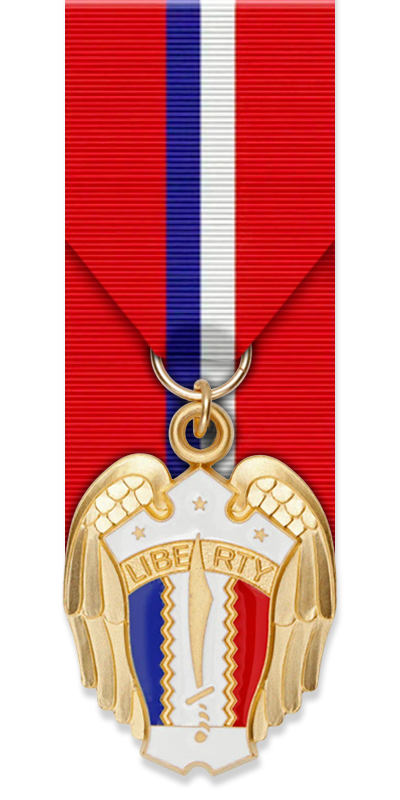
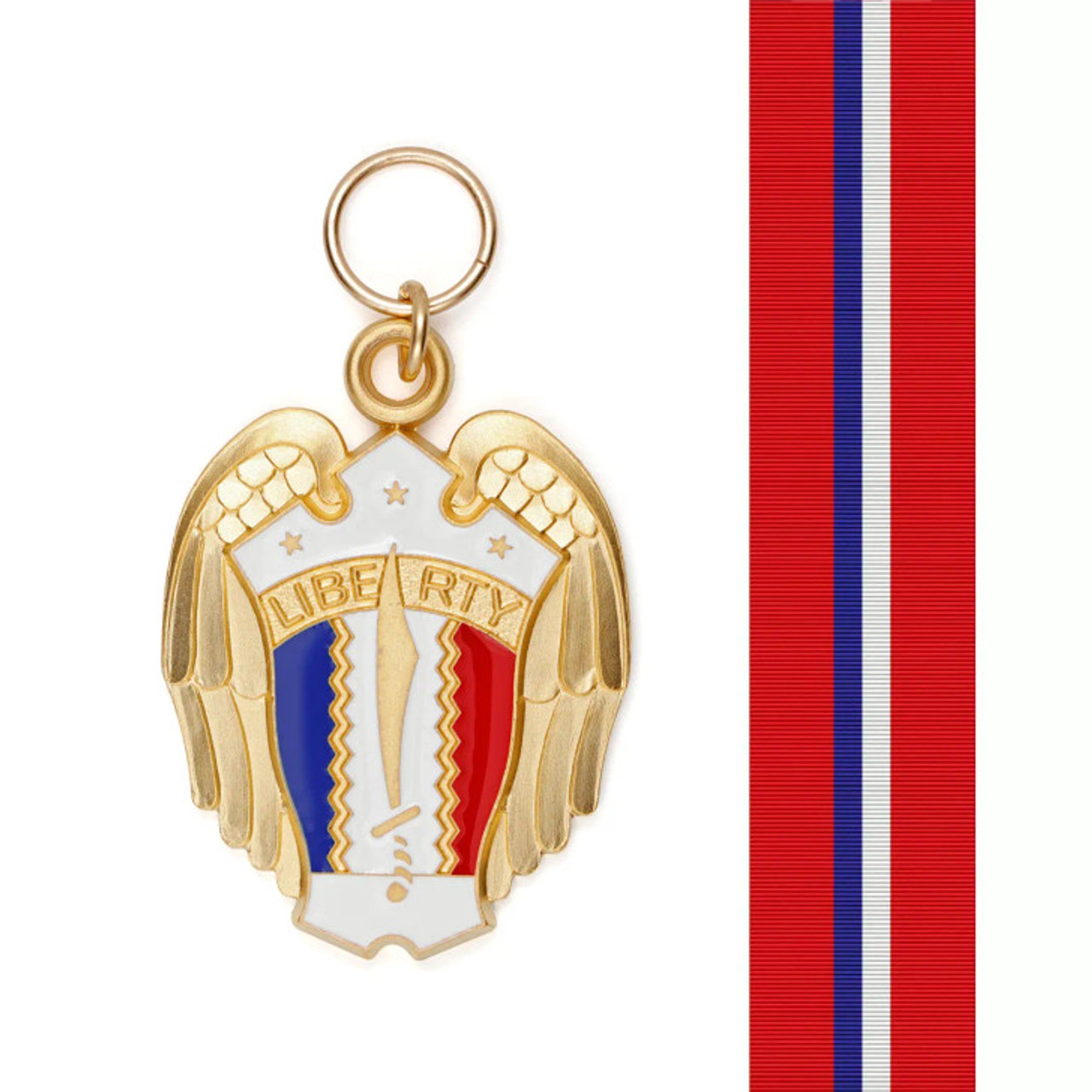
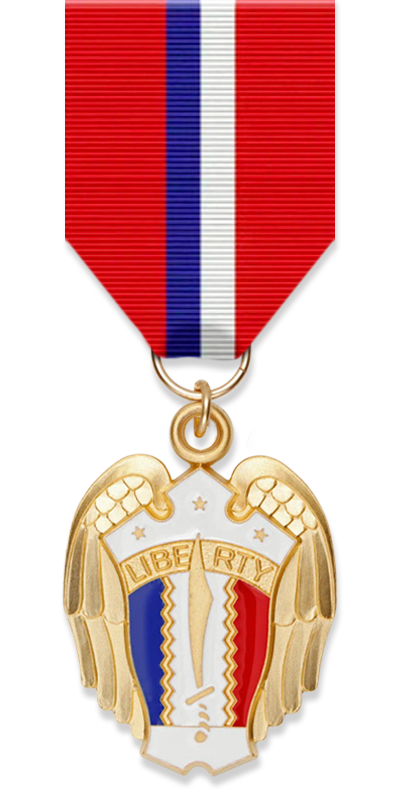
The medal is a gold coloured medallion shaped as a pair of wings framing an enamelled shield in red, white and blue, the colours of the Philippine flag. Across the top of the shield a white chevron carries three gold stars above a banner reading LIBERTY, and in the white centre stands a golden tabak, a Filipino sword, blade upward. The reverse reads FOR THE LIBERATION OF THE PHILIPPINES.
The ribbon
Red with a blue and white stripe, the Philippine colours.
The ribbon is red with an off centre pair of blue and white stripes, the colours of the Philippine flag. A bronze star is worn on it for each additional qualifying action.
Eligibility
The medal was awarded for service in the liberation of the Philippines from the Japanese.
- Taking part in the initial landings on Leyte and adjoining islands from 17 to 20 October 1944 qualified;
- So did any engagement against the enemy during the campaign, on Leyte or on other islands;
- So did service in the Philippines, or on ships in Philippine waters, for at least thirty days in the period;
- A bronze star is worn for each additional qualifying action, and Australian veterans were offered the medal in 1994, their service certified by Defence;
- As a foreign award it is worn in the Australian Order of Wearing after Australian and Commonwealth honours.
Order of wear
In the Australian Order of Wearing, foreign awards are worn after Australian honours and Commonwealth awards, in the order set for foreign awards, generally by the date of the service for which they were given. A foreign award is worn only where its acceptance and wear have been approved.
Frequently asked questions
What was the Philippine Liberation Medal awarded for?
Service in the liberation of the Philippines from the Japanese between 17 October 1944 and 2 September 1945, to the forces of the Philippine Commonwealth and their allies.
What is the Australian connection?
In 1994, at the fiftieth anniversary of the Battle of Leyte Gulf, the Philippines offered the medal to Australian veterans of the campaign, more than four thousand personnel, most of them sailors.
How does a veteran qualify?
By taking part in the initial Leyte landings, by any engagement against the enemy during the campaign, or by thirty days service in the Philippines or in Philippine waters.
What do the bronze stars mean?
A bronze star is worn on the ribbon for each additional qualifying action beyond the first.
What does the medal show?
A winged shield in the red, white and blue of the Philippine flag, with three stars, a banner reading LIBERTY, and a golden tabak sword; the reverse reads FOR THE LIBERATION OF THE PHILIPPINES.
How is it worn in Australia?
As a foreign award it is worn after Australian and Commonwealth honours, in the order set for foreign awards.