
History
The New Zealand Service Medal 1946-1949 was instituted in 1995 to recognise New Zealand personnel who served in the occupation forces in Japan after the Second World War, chiefly with the force known as J Force, between March 1946 and March 1949. In 2002 the Royal Warrant was amended to include service from September 1945, taking in the crews of the cruisers Gambia and Achilles in Japanese waters at the war's end.
It was awarded to all who served with the occupation forces, military and civilian, and its institution half a century after the events righted a long absence of recognition for that service. As a New Zealand campaign medal it is worn in the Australian Order of Wearing among the foreign awards.
Design & ribbon
The medal
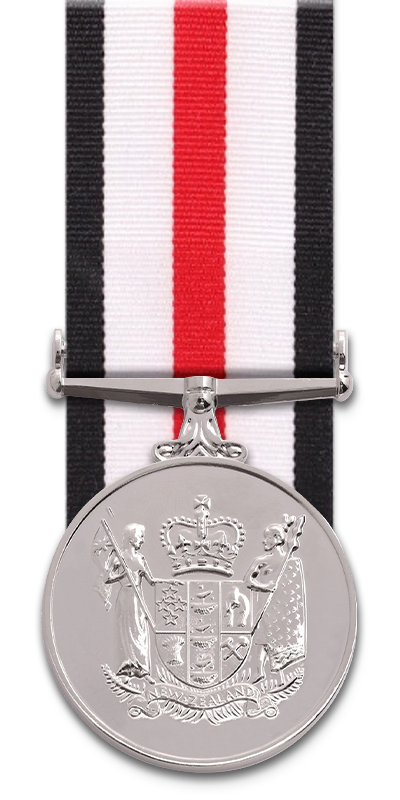
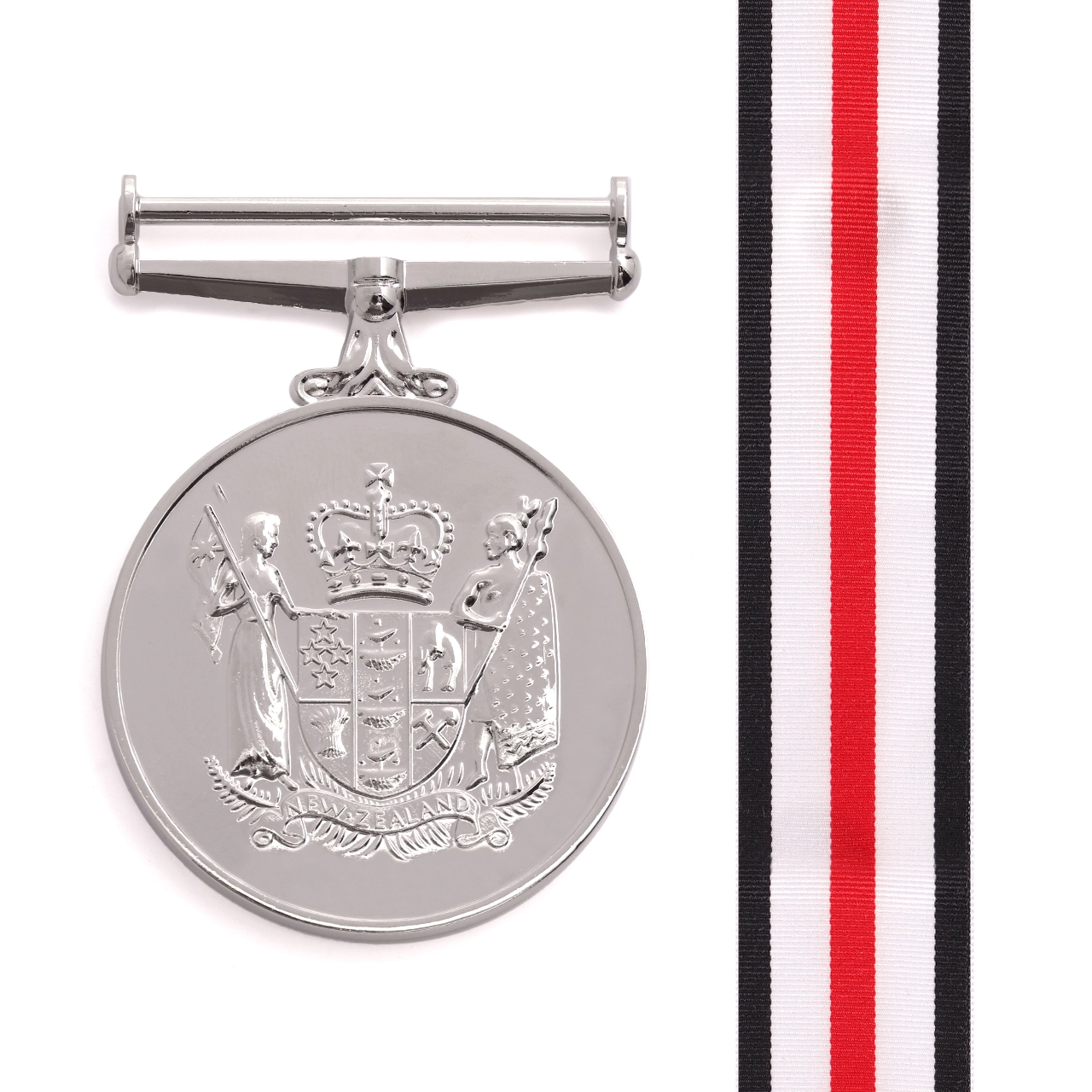
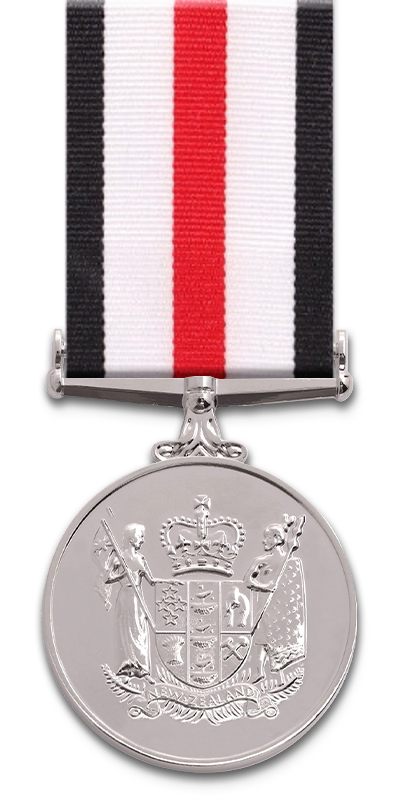
The medal is circular. The obverse bears the New Zealand Coat of Arms. The reverse carries the inscription FOR SERVICE TO NEW ZEALAND 1946-1949 with a fern frond below. The recipient's details are engraved on the rim.
The ribbon
White with a red centre and black edges.
The ribbon is 32 millimetres wide, white with a central red stripe and black stripes at the edges; the stripes represent the national colours of New Zealand, black and white, and of Japan, red and white.
Eligibility
The medal is awarded for service in the occupation forces in Japan after the Second World War.
- New Zealand personnel, military and civilian, who served with the occupation forces between March 1946 and March 1949 qualify;
- A 2002 amendment extended eligibility back to September 1945, including the crews of the cruisers Gambia and Achilles in Japanese waters;
- As a New Zealand campaign medal it is worn in the Australian Order of Wearing among the foreign awards.
Order of wear
These are New Zealand campaign medals. In the Australian Order of Wearing they are worn among the foreign awards, after Australian honours and awards. In the New Zealand system they are worn in order of the date of the qualifying service.
Frequently asked questions
What is the New Zealand Service Medal 1946-1949 awarded for?
Service by New Zealanders in the occupation forces in Japan after the Second World War, chiefly with J Force, between 1946 and 1949, later extended back to 1945.
What do the ribbon colours mean?
White with a central red stripe and black edges; the colours represent the national colours of New Zealand, black and white, and of Japan, red and white.
Why was it instituted so long after the events?
It was created in 1995 to give recognition, half a century on, to the New Zealanders who served in the occupation of Japan, whose service had not been separately marked.
What does the reverse show?
The inscription FOR SERVICE TO NEW ZEALAND 1946-1949 with a fern frond below, and the obverse bears the New Zealand Coat of Arms.
Who could receive it?
All who served with the occupation forces, military and civilian, including the crews of the cruisers Gambia and Achilles in Japanese waters.
How is it worn in Australia?
As a New Zealand campaign medal, among the foreign awards in the Australian Order of Wearing.