
History
The New Zealand General Service Medal 1992 (Warlike) was authorised in 1992 for New Zealanders who had served in warlike operations for which no separate New Zealand or British Commonwealth campaign medal had been issued. It was the first occasion, outside the two World Wars and the Vietnam War, that New Zealand had struck a war or warlike service medal of its own, and the design and colours of its ribbon were drawn from the New Zealand Medal of the colonial wars of the 1840s and 1860s, deliberately linking it to the beginnings of the country's military history.
Each operation was represented by a clasp, and the medal was never issued without one. By the time it was replaced by the New Zealand General Service Medal 2002, four clasps had been issued for warlike operations between 1956 and 1991. As a New Zealand campaign medal it is worn in order of the date of qualifying service.
Design & ribbon
The medal
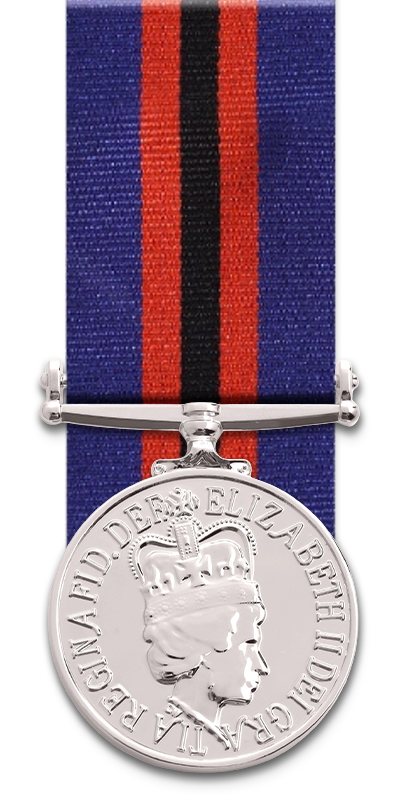
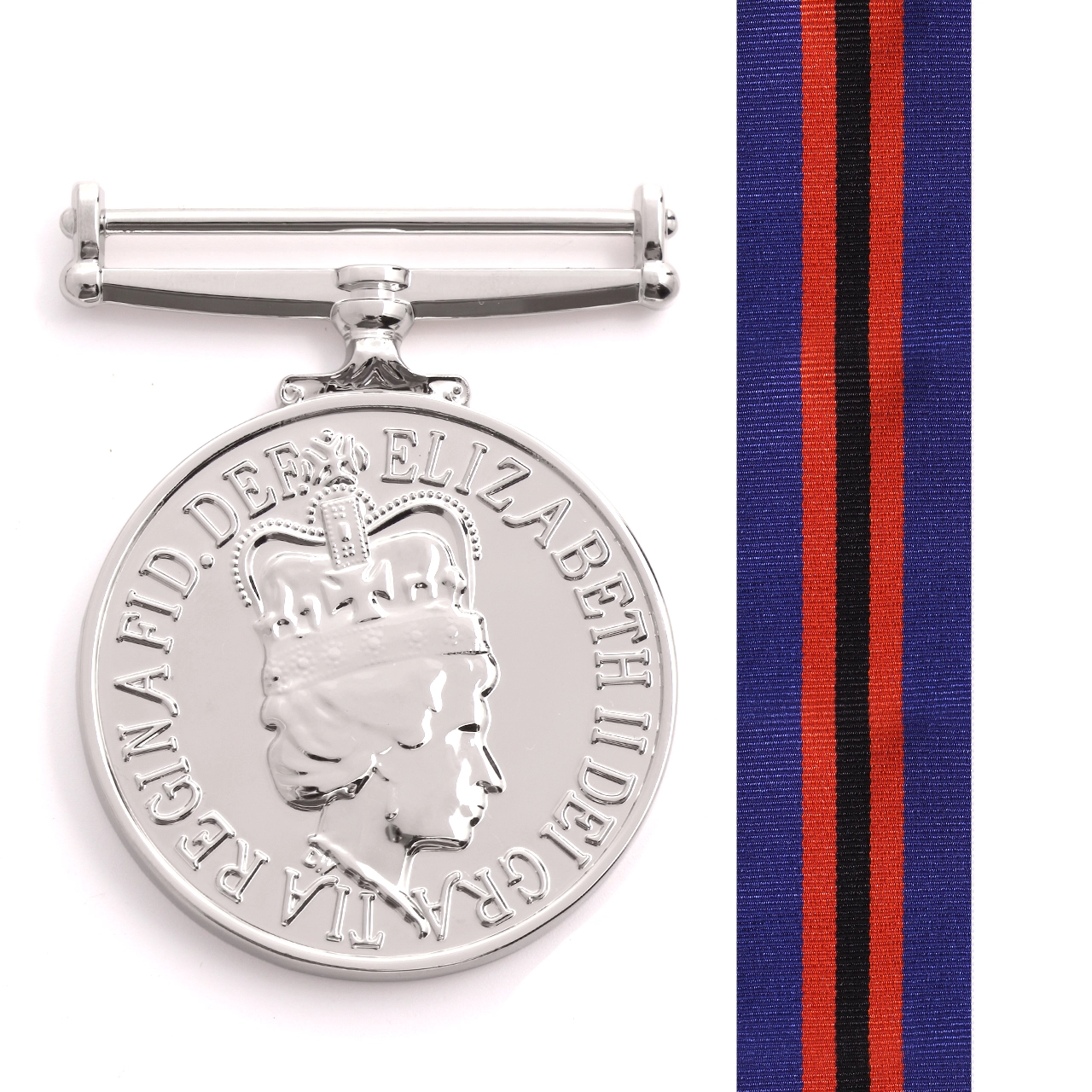
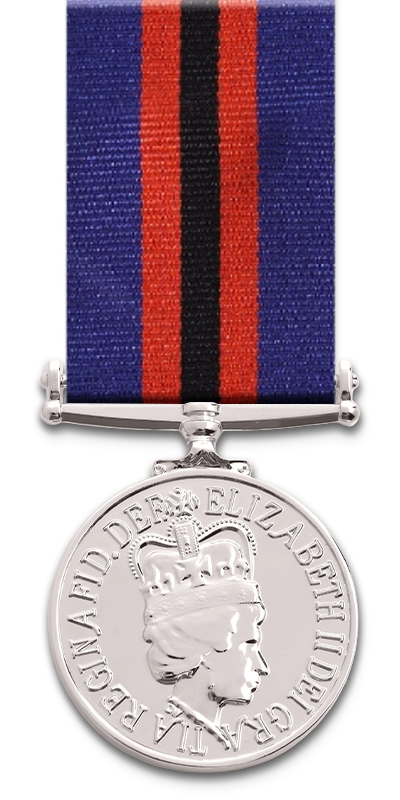
The medal is silver and circular. The obverse bears the crowned effigy of Queen Elizabeth II with the legend ELIZABETH II DEI GRATIA REGINA FID DEF. It is always worn with a clasp naming the operation, and the recipient's details are engraved on the rim. The silver metal distinguishes the warlike medal from the bronze of the non-warlike version.
The ribbon
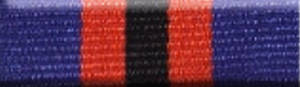
Dark blue with a light red centre and black stripe.
The ribbon is 32 millimetres wide, dark blue with a light red centre and a narrow central black stripe; the colours are based on the New Zealand Medal of 1869. The black central stripe distinguishes the warlike medal from the non-warlike version, which has a white one.
Clasps
Each operation is represented by a clasp; the medal is never issued without one.
Korea 1954-57
For qualifying warlike service in Korea between 1954 and 1957.

Arabian Gulf
For qualifying warlike service in the Arabian Gulf.

Sinai
For qualifying warlike service in the Sinai.

Bougainville
For qualifying warlike service on Bougainville.
Eligibility
The medal was awarded for warlike operations for which no separate New Zealand or British Commonwealth campaign medal was issued.
- Members of the New Zealand forces who served in a qualifying warlike operation between 1956 and 1991 were eligible, subject to the conditions of each clasp;
- Four clasps were issued, and the medal was never issued without one; it was replaced by the New Zealand General Service Medal 2002 for later operations;
- As a New Zealand campaign medal it is worn in order of the date of the qualifying service.
Order of wear
In the New Zealand Order of Wear, campaign and operational medals are worn in the order of the date of the qualifying service, so two recipients may mount the same medals in a different order depending on when they served. On an Australian rack these New Zealand awards are mounted according to the wearer's own national honours system.
Frequently asked questions
What is the New Zealand General Service Medal 1992 (Warlike) awarded for?
Warlike operations involving New Zealand forces between 1956 and 1991 for which no separate New Zealand or British Commonwealth campaign medal had been issued.
Why is its ribbon based on the New Zealand Medal?
As New Zealand's first war or warlike service medal outside the World Wars and Vietnam, it was linked deliberately to the New Zealand Medal of the colonial wars to reflect the country's military heritage.
How is it distinguished from the non-warlike version?
The warlike medal is silver with a black central ribbon stripe; the non-warlike medal is bronze with a white central stripe.
What clasps were issued?
Four: Near East, Malaya 1960-64, Vietnam and Kuwait; the medal was never issued without a clasp.
What replaced it?
The New Zealand General Service Medal 2002, which uses a different ribbon for each operation.
How is it worn?
As a New Zealand campaign medal, in order of the date of the qualifying service.